20ft vs 40ft vs 40HQ: which container to book
Published by Aeonix Trade.
Last fact-checked: November 10, 2026.
A buyer of floor tile and a buyer of cushion covers can both be told "book a container." They are not asking the same question. The tile runs out of weight while the box still looks empty. The covers run out of space while the weight is nowhere near a limit. The outside of the box is a published size. The kilograms you may put in the one that shows up are not a single number this page can print.
How to measure the cartons is CBM. Booking the whole box, even when you do not fill it, is what FCL means. Sharing the box is what LCL means. The weight the ship will not sail without is VGM. The page that holds the terms and the papers together is Incoterms and shipping documents.
The external sizes in one carrier booklet
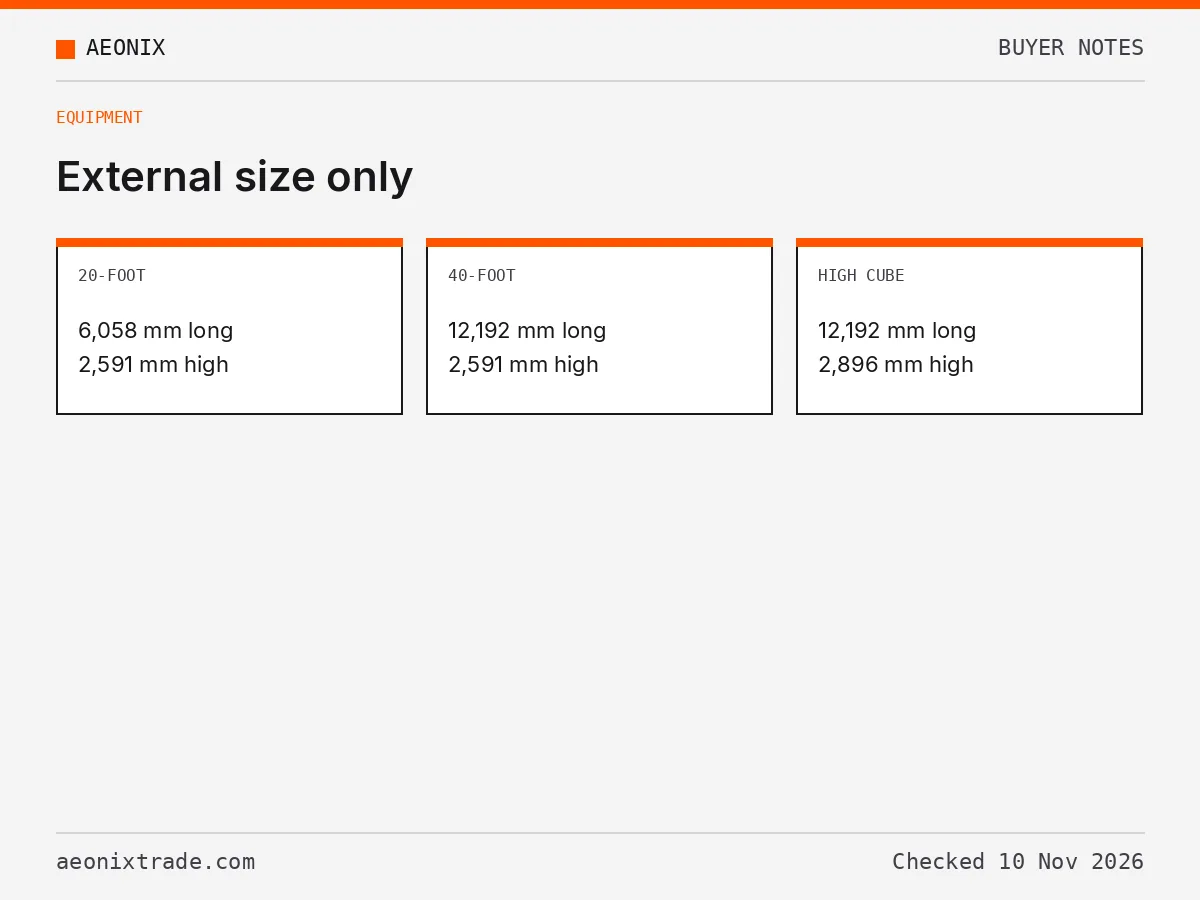
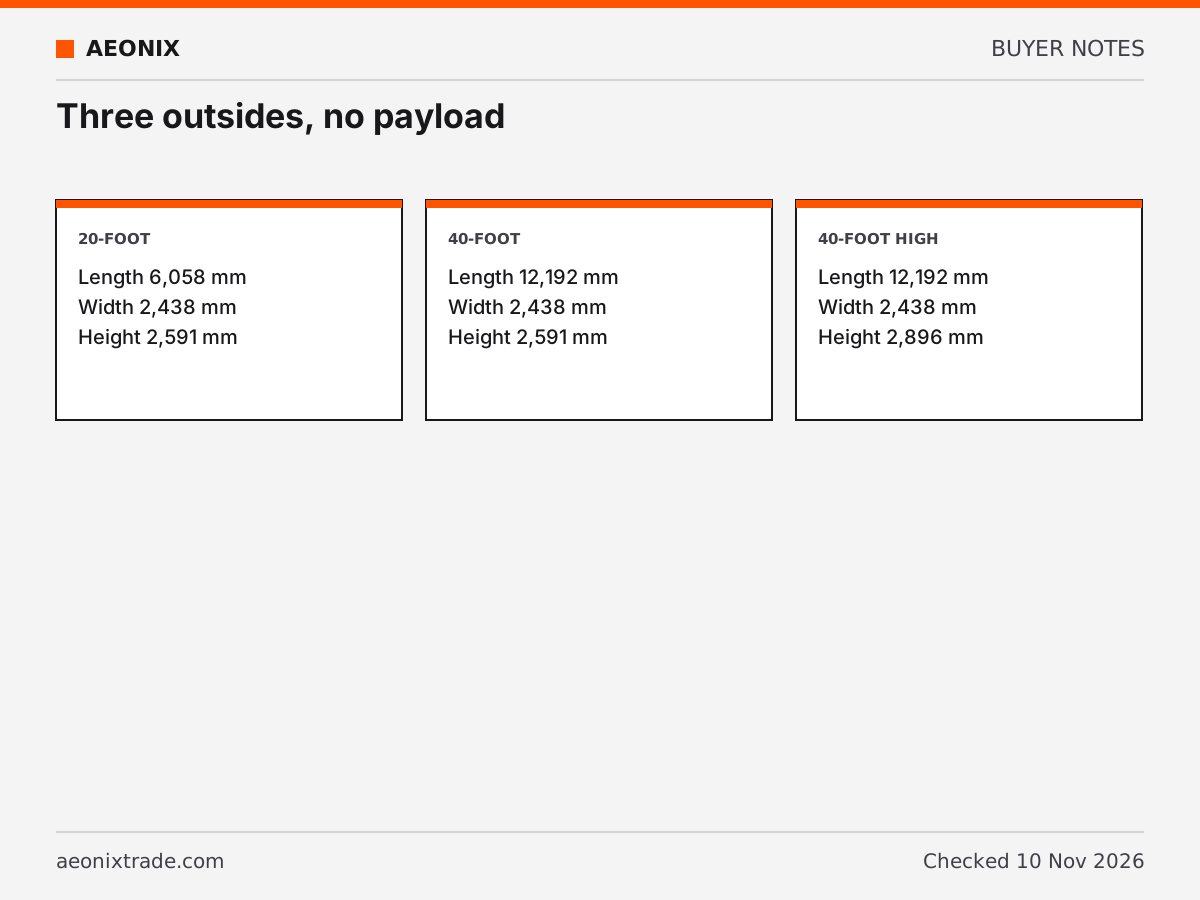
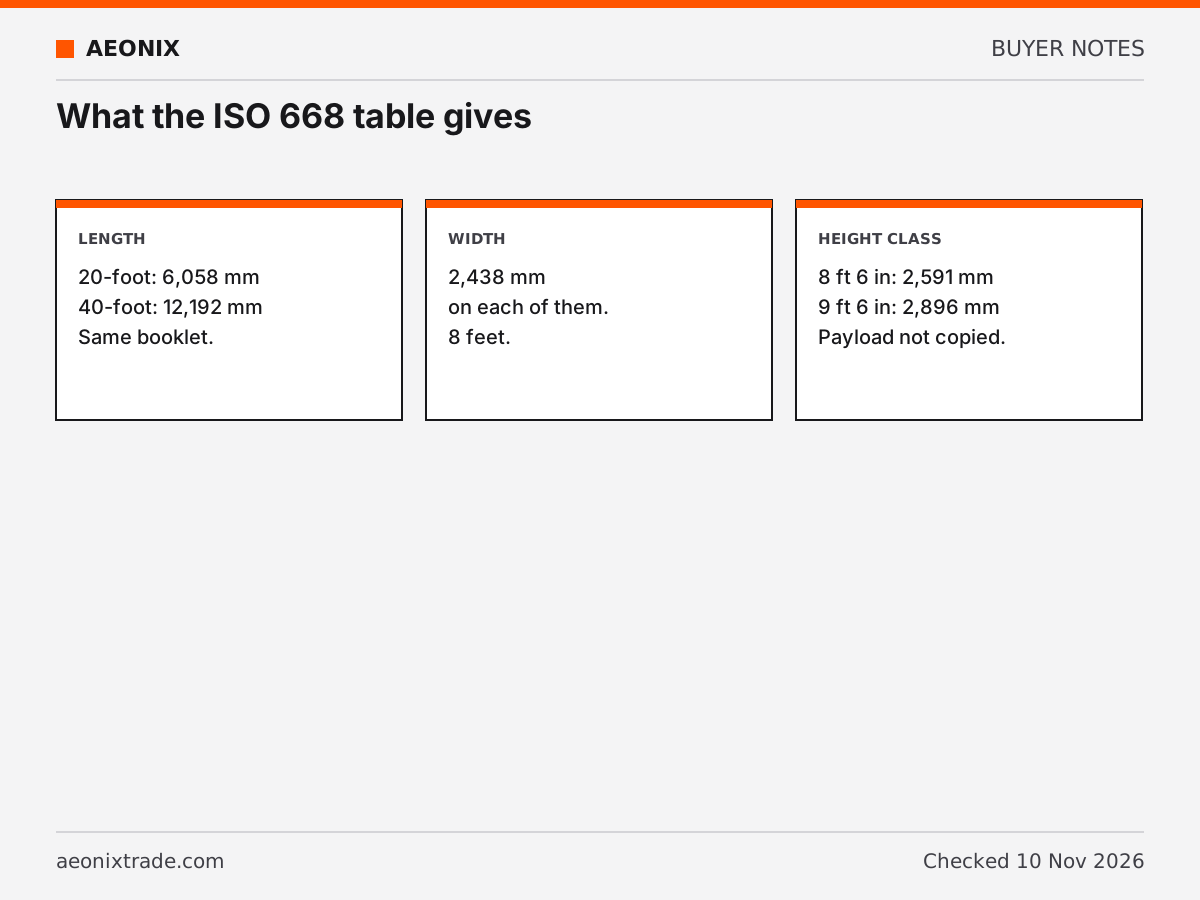
The Hapag-Lloyd container specification, read on 10 November 2026, prints a table it attributes to ISO 668. The external lengths in that table are 6,058 mm for a 20-foot box and 12,192 mm for a 40-foot box. The external width is 2,438 mm. The external heights are 2,591 mm for the 8 ft 6 in class and 2,896 mm for the 9 ft 6 in class. The same introduction says the series on display are a sample of the fleet, that the later pages are nominal figures with a production tolerance, and that road and rail weight limits are a question for the local office.
ISO's own catalogue page returned an access error the same day, so these millimetres are cited from the carrier booklet, not from a copy of the standard. The booklet also prints maximum gross weights as "up to" figures and then shows more than one series. This article does not pick a kilogram. A payload copied from one series would be the wrong series on the next booking.
| External size in that ISO 668 table | What to ask before you book it | |
|---|---|---|
| 20-foot | Length 6,058 mm. Width 2,438 mm. Height class 2,591 mm, the 8 ft 6 in box. | Whether the cargo hits weight before it hits space. The answer is a VGM against this booking's equipment, not a number from a brochure sample. |
| 40-foot | Length 12,192 mm. Same width. Same 8 ft 6 in height class. | Whether you need the length, or whether you are paying for air because the cartons are light. |
| 40-foot high cube | Same 12,192 mm length and 2,438 mm width. Height class 2,896 mm, the 9 ft 6 in box. | Whether the extra external height is usable on the road and under the bridges on this route. The booklet tells you to check inland limits locally. |
A box in international transport also carries a safety approval. The IMO page on the International Convention for Safe Containers, opened the same day, says containers used in international transport must be safety-approved, and that the approval is shown on a safety approval plate which other contracting states should recognize. The plate is not a cargo capacity. The Bureau International des Containers publishes the size-and-type marks and the data-plate notes. Neither of those pages replaces the equipment named on your booking.
Dense cargo, bulky cargo
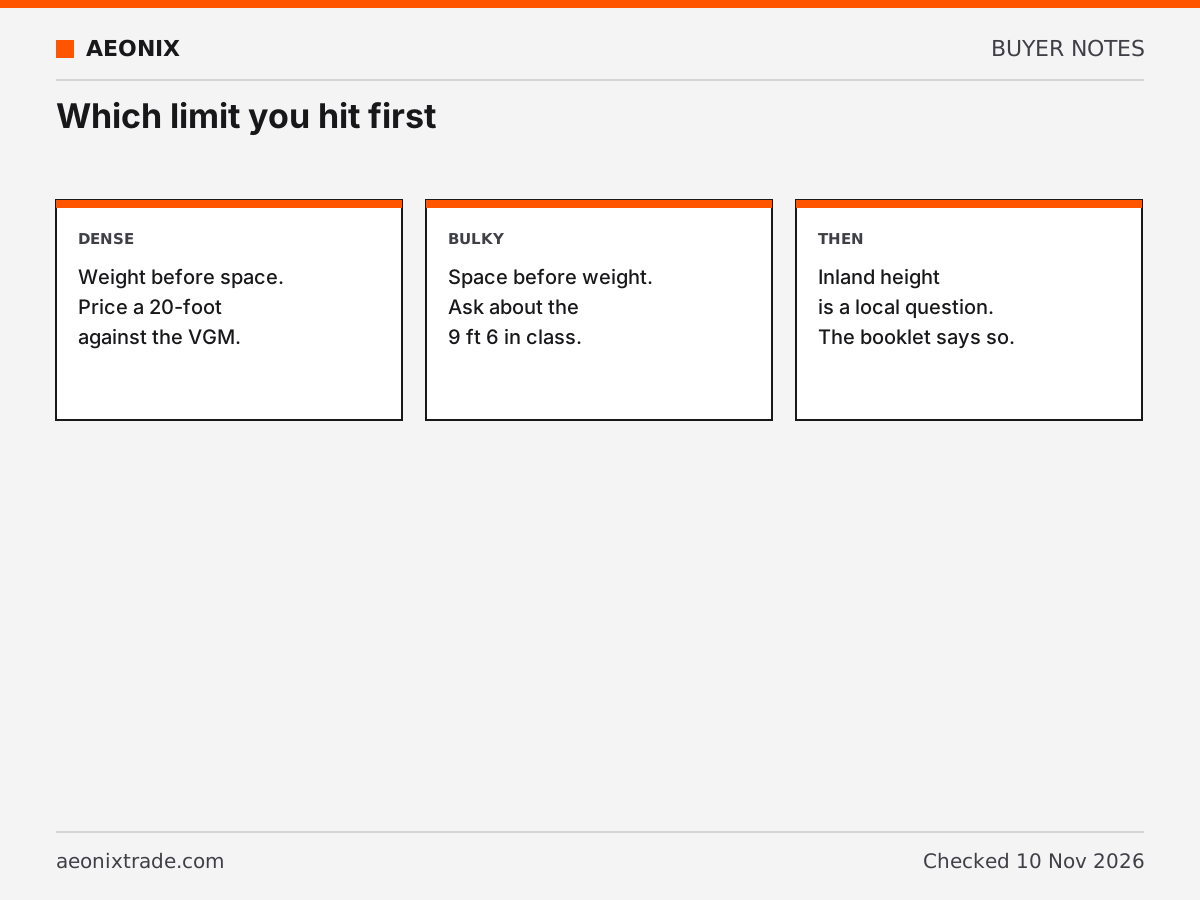
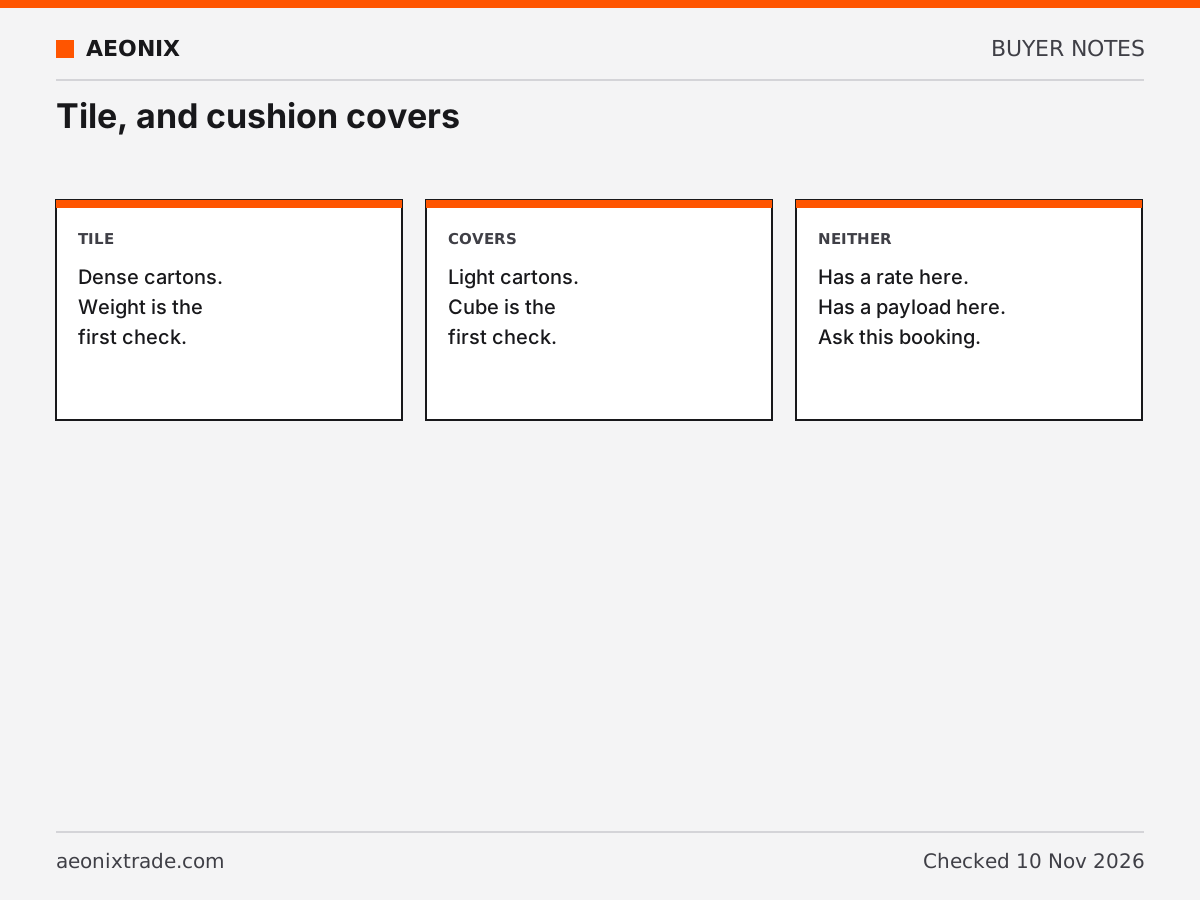
Weigh the question before you name a length. If the cartons are dense, the limit you will meet first is weight, and the 20-foot box is the one to price against the verified gross mass. If the cartons are bulky, the limit you will meet first is space, and the extra height class is the question, after you have measured the cartons the way the CBM page describes. Neither sentence is a rule that tile always takes a 20-foot box. It is the order of the two checks.
The high cube is not a heavier box by definition. The booklet's sample series do not line up that way, which is why no payload is printed here. Inland height is a separate check from the ship's equipment list. A 9 ft 6 in box that the ship will take can still be the wrong box for a bridge on the last mile. Ask. Do not infer it from the external height.
Tile in one booking, covers in another
The tile buyer has carton weights from the packing list and still does not have a VGM. The packing-list weight is not the VGM. That distinction is the VGM page. Until someone weighs the packed box, including the tare, a 20-foot booking is a hypothesis. The cushion buyer has a cube from the outside of the cartons and a lot of unused weight. A 40-foot high cube is a hypothesis too, until the forwarder confirms that this route will hand over that height class and that the warehouse door will take it.
When the question is not a whole box
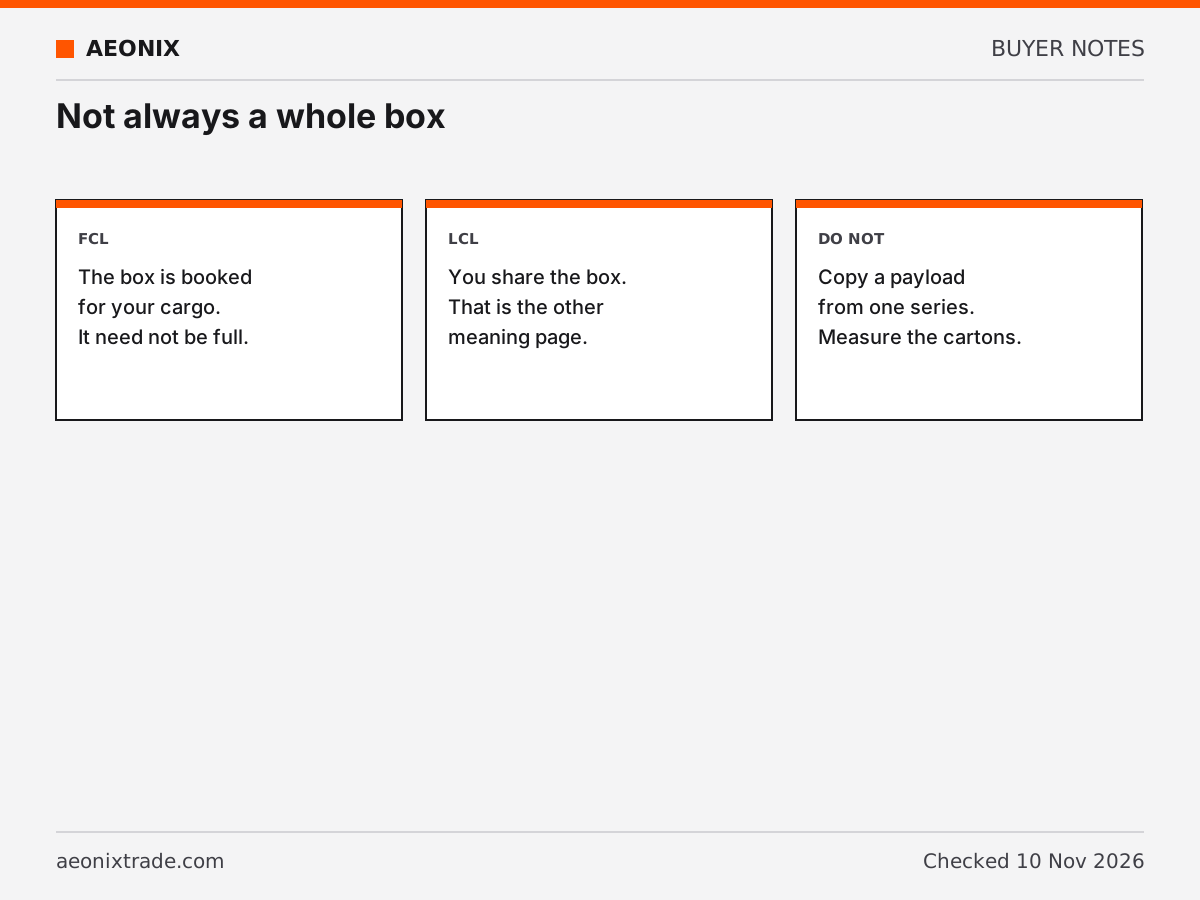
FCL means the container is booked for your cargo even when it is not full. If you do not need that, the choice among these three lengths is the wrong choice. The shared-box booking is the LCL page, and the service built around it is LCL shipping from China. This article does not give a cubic-metre cutoff for switching. The CBM page is how you measure. The quote is how you compare.
- External size from the equipment page for this booking, not from a remembered slogan.
- Carton cube measured on the outside of the packed carton.
- Weight only after someone has weighed what will actually be shut inside the box.
- Inland height and road or rail limits asked locally, because the booklet says to.
- A shared box considered before a half-empty one is booked out of habit.
Is a high cube always the better 40-foot box?
Only if you can use the height, on the ship and on the road. The external height class is 2,896 mm in the table above. Usable internal height is a nominal figure in the booklet, and it varies by series. It is not copied here.
Can two suppliers share one 20-foot box and still call it FCL?
Read the FCL page. "The whole box is yours" and "the box is full" are not the same sentence. Sharing with a stranger's cargo is the LCL page.
Put the carton cube, the weights you actually have, and the height you can accept on the RFQ. Do not send a length and hope the payload matches a picture.
The paperwork next to this choice is which Incoterm to use, a bonded warehouse, cargo insurance, and a customs broker versus a forwarder.
Official sources
- Hapag-Lloyd, container specification, read 10 November 2026. The external sizes quoted above are the table that booklet attributes to ISO 668. Series on display are a sample. Payloads are not copied.
- IMO, International Convention for Safe Containers. International containers are safety-approved, and the approval is shown on a safety approval plate.
- Bureau International des Containers, for size-and-type marks and the combined data plate. Not a booking confirmation.
Submit sourcing request
Can't find what you need?
Start with a product or image link, an approximate quantity and destination. Other details can follow.