VGM Meaning in Shipping: SOLAS Methods, Responsibility and Cutoffs

Mike Liu contributes to AeonixTrade's buyer-education library by researching trade terminology, checking source references, and turning shipping, logistics, and quality-control concepts into practical examples.
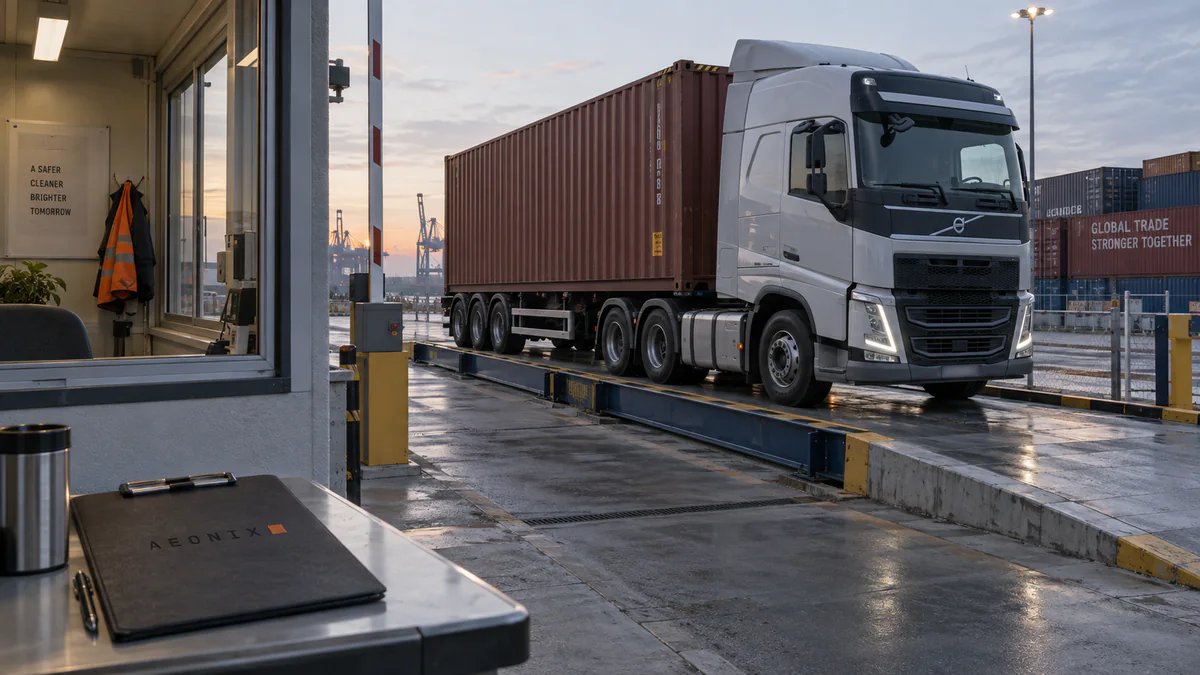
VGM means Verified Gross Mass: the verified total mass of a packed freight container. It includes the cargo, all packaging and securing material, and the container tare mass. Under the SOLAS container-mass rules, the shipper must provide VGM early enough for the vessel stowage plan; a packed container without VGM must not be loaded onto a ship covered by the requirement.
VGM is not the same as cargo net weight, cargo gross weight on a packing list, or an approximate booking weight. It is a safety-critical shipment value obtained through an approved weighing method under the applicable national rules.
What is included in VGM?
| Mass item | Included in VGM? | Where teams often confuse it |
|---|---|---|
| Goods | Yes | Net product weight may exclude all packaging. |
| Retail and inner packaging | Yes | Can be omitted from item-only specifications. |
| Master cartons, pallets, drums, or crates | Yes | Packing-list “net weight” excludes them. |
| Dunnage, bracing, straps, and securing material | Yes | Added during loading after an early estimate. |
| Container tare mass | Yes | Cargo gross weight does not include the container itself. |
The container's marked tare mass is an input under calculation Method 2, but markings should be readable and handled according to the relevant regulation and carrier process. The party preparing VGM should not substitute a generic container weight.
Why VGM is required
Incorrect container mass can affect vessel stability, stack loads, lifting, lashing, stowage, and the safety of seafarers and terminal workers. The International Maritime Organization's container verification guidance explains the SOLAS requirement, which has applied since 1 July 2016.
The requirement places responsibility on the shipper named in the bill of lading or sea waybill, or the party on whose behalf the transport contract was concluded, to obtain and communicate the verified mass. A factory, consolidator, forwarder, terminal, or weighing provider may perform operational tasks, but delegation does not automatically move the regulatory responsibility.
The two VGM methods
Method 1: weigh the packed container
After packing and sealing, the complete container is weighed using calibrated and certified equipment. If a road vehicle and chassis are weighed together with the container, the applicable process must correctly deduct the vehicle and chassis mass.
Method 2: calculate all packed items plus tare
Every package and cargo item is weighed, including pallets, dunnage, and securing materials, then the container tare mass is added. The method must be allowed and approved under the competent authority's rules in the shipper's jurisdiction. Estimated weights that are not derived through the approved process are not Method 2.
| Decision factor | Method 1 | Method 2 |
|---|---|---|
| When measured | After the container is fully packed. | During or before packing, with every component recorded. |
| Primary control | Certified weighing of the packed unit. | Approved calculation process and complete component weights. |
| Useful where | A suitable container scale or weighbridge is available. | Pack-level weights are controlled and the jurisdiction permits the method. |
| Main failure mode | Incorrect deductions or non-compliant equipment. | Missing packaging, dunnage, late changes, or wrong tare mass. |
The IMO VGM guidelines, MSC.1/Circ.1475, describe the methods and communication framework. National authorities and carriers publish the operational details that apply to a shipment.
Who submits VGM and when?
The shipper is responsible for ensuring that VGM appears in a shipping document, is signed by a duly authorized person, and reaches the carrier or terminal representative sufficiently in advance for the stowage plan. Electronic submission and an electronic signature can be used where the process accepts them.
The operational deadline is not simply “before vessel departure.” Carriers and terminals set cutoffs based on terminal flow and stowage planning, often alongside documentation and gate cutoffs. The booking confirmation and local terminal notice are the controlling sources.
- Confirm the shipper identity and permitted VGM method.
- Freeze the packing plan and identify the weighing point.
- Obtain the actual container number and tare mass where Method 2 applies.
- Complete weighing with compliant equipment and retain evidence.
- Submit the VGM value, unit, container number, shipper, and authorized signature through the carrier's accepted channel.
- Record the acceptance response before the stated cutoff.
- Control any later packing or container change and resubmit correctly if required.
VGM vs booking weight packing-list weight and payload
| Value | Purpose | Includes container tare? |
|---|---|---|
| Booking weight | Early planning estimate or declared cargo figure. | Usually not; confirm the booking field. |
| Net weight | Product mass without packaging. | No. |
| Cargo gross weight | Goods plus stated packaging on the packing list. | No. |
| VGM | Verified total mass of the packed container for SOLAS purposes. | Yes. |
| Maximum payload | Container capacity limit for cargo, subject to equipment and transport constraints. | It describes cargo capacity rather than a shipment's verified mass. |
These figures should be reconcilable but need not be identical. A significant unexplained difference should trigger investigation before cutoff, especially if packaging changed or the result approaches equipment, road, rail, crane, or local weight limits.
An illustrative missed-cutoff story
Illustrative example: A supplier loads a container on Friday and emails an estimated cargo weight to the buyer. The booking agent assumes this is VGM. The carrier portal, however, requires the packed-container VGM and an authorized submitter before Saturday's cutoff.
On Monday the team discovers that no accepted VGM was filed. The container is already gated in but is removed from the planned vessel. The next sailing is a week later, and the parties must review storage, rollover, document, and customer-delivery consequences.
A one-line ownership field in the shipment plan—“supplier weighs; named shipper verifies and submits; forwarder confirms carrier acceptance by cutoff”—would have exposed the gap. This story is illustrative, is not a real AeonixTrade transaction, and is not regulatory or legal advice.
Corrections discrepancies and “no VGM no load”
If VGM is absent, the packed container cannot be loaded under the SOLAS requirement. A terminal may offer weighing, but the service, authority, timing, equipment, cost, and data transfer vary. Do not assume the terminal will automatically rescue a missed submission.
If the carrier or terminal identifies a discrepancy, follow the published correction procedure. SOLAS does not prescribe one universal commercial tolerance for every jurisdiction and operator. National rules, equipment accuracy, and carrier or terminal policies matter. Never alter a value solely to fit an expected number.
Late or wrong VGM can contribute to rollover, storage, rehandling, amendment, or other costs. Those commercial consequences depend on the contract and tariff and are separate from the safety obligation. If delay creates terminal time, review the applicable demurrage, detention, and storage clocks rather than assuming one label covers every charge.
Shipper VGM checklist
- Identify the legal shipper and authorized submitter before loading.
- Check the competent authority's approved method and equipment requirements.
- Include every cargo, packaging, pallet, dunnage, securing, and tare component.
- Use the actual container number and unit of mass.
- Compare VGM with packing and booking records and investigate material differences.
- Submit through the carrier-approved channel before the exact local cutoff.
- Retain weighing evidence, calculation records, submission, signature, and acceptance.
- Control container swaps and post-weighing packing changes.
Planning an FCL shipment? Submit an RFQ with the packed weight estimate, container type, loading location, shipper identity, and requested route so VGM ownership and cutoffs can be defined before dispatch.
Frequently asked questions
Does VGM include the container weight?
Yes. VGM is the mass of the complete packed container, including the container tare.
Is VGM the same as gross weight on the packing list?
Usually no. Packing-list gross weight commonly covers goods and packaging but excludes the container tare. Verify how each document defines its value.
Can the factory submit VGM?
A factory or service provider may perform weighing or submission if authorized and accepted operationally, but the SOLAS shipper remains responsible for obtaining and communicating VGM.
Can estimated weight be used?
VGM must be obtained using Method 1 or an approved Method 2 process. An unsupported estimate is not verified gross mass.
What happens without VGM?
The packed container must not be loaded onto the ship under the SOLAS requirement. Local processes and commercial consequences should be checked with the carrier and terminal.
Sources
Submit sourcing request
Can't find what you need?
Start with a product link or photo, an approximate quantity and destination. Other details can follow.