Sea waybill vs bill of lading
Published by Aeonix Trade.
Last fact-checked: November 10, 2026.
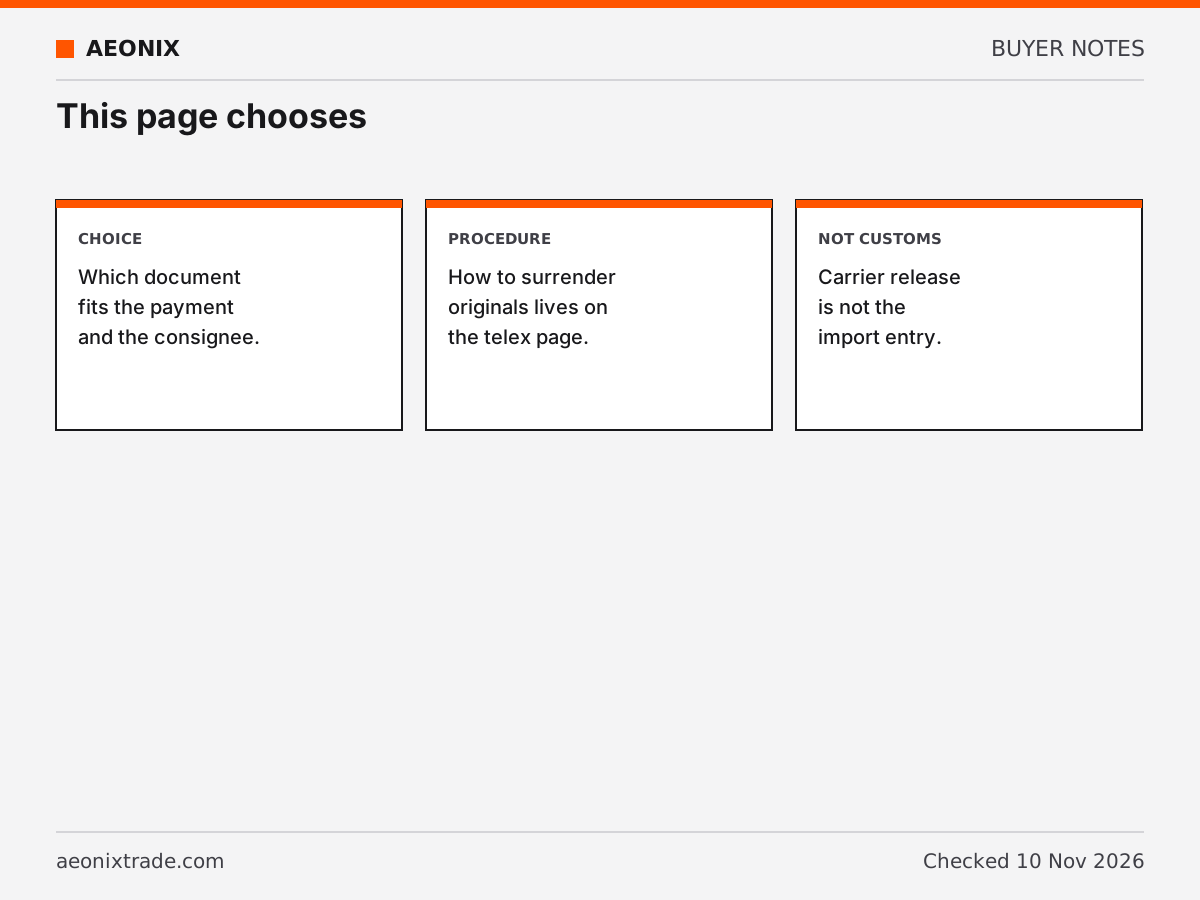
Two companies have shipped kitchen tools from Ningbo to each other before. The goods will not be sold while they are on the water. No bank has asked for a negotiable set. The supplier still wants to know which paper to ask the carrier for, because last time the originals sat in a courier bag and the box sat at the terminal. The choice is the document. The steps for giving originals back, once you have chosen originals, are not on this page.
What the carrier's paper is, in general, is what a bill of lading is. Surrendering a full set so the destination office will release without it is telex release. Paying the balance by bank transfer is T/T. A bank that pays against documents is a letter of credit. Documents against payment, as against acceptance, is D/P and D/A. The papers sit with the terms on Incoterms and shipping documents.
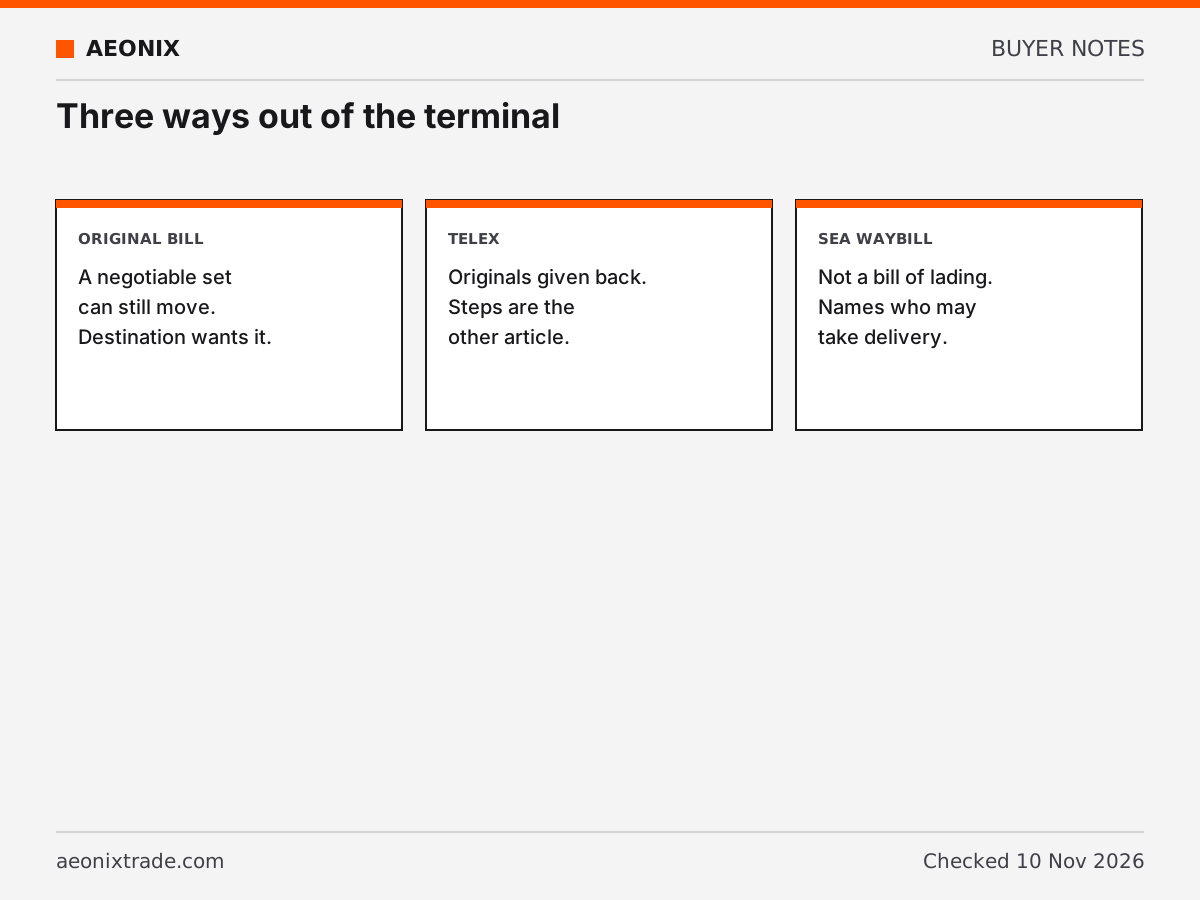
Three ways the box gets released
UK legislation, the Carriage of Goods by Sea Act 1992, section 1, read on 10 November 2026, separates the documents by job. A bill of lading, for that Act, does not include a document which cannot be transferred by indorsement or, as a bearer bill, by delivery. A sea waybill, for that Act, is a document which is not a bill of lading but is a receipt that contains or evidences a contract for the carriage of goods by sea, and that identifies the person to whom the carrier is to deliver. That is an English statute. It is not a promise that every carrier on a China route uses the same form. It is the cleanest official split that was open.
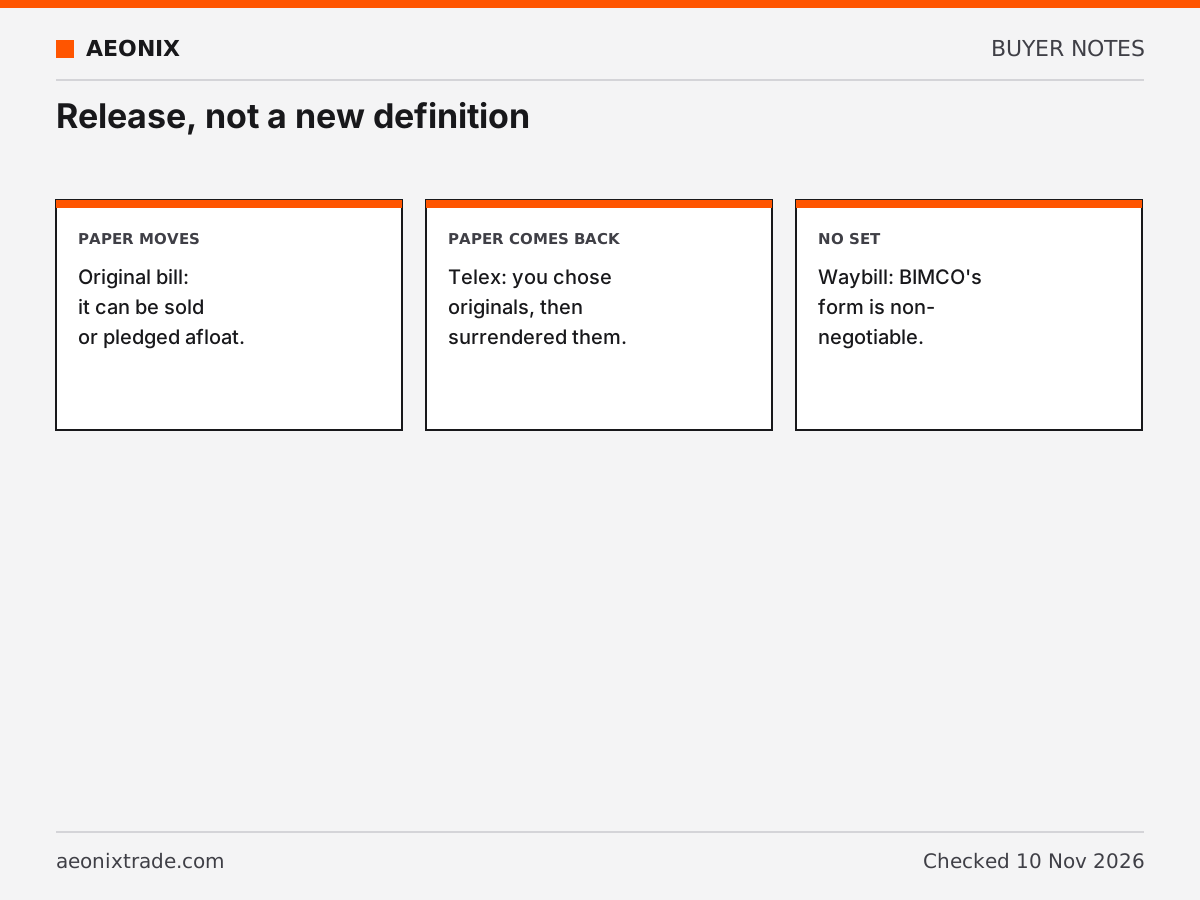
BIMCO describes GENWAYBILL 2016 as a non-negotiable general sea waybill. Non-negotiable is the point. You do not pass that paper down a chain of buyers while the ship is at sea. The CMI Uniform Rules for Sea Waybills, in the text published by the Comité Maritime International, apply when a contract of carriage adopts them, and they are for a contract which is not covered by a bill of lading or similar document of title. They are not automatic. If your carrier's waybill does not adopt them, you are on the carrier's form, not on the CMI rules.
| What moves while the ship is at sea | What destination needs | |
|---|---|---|
| Original negotiable bill | The paper can be the thing a later buyer or a bank needs. That is why it exists. | The originals, properly dealt with, unless they are later surrendered. |
| Telex or surrender | You already chose originals, then gave the set back. The steps are the telex page. They are not repeated here. | The carrier's release on file. A PDF with the words typed on it is not that file. |
| Sea waybill | No negotiable set. BIMCO's GENWAYBILL is non-negotiable. The UK Act's definition identifies the person who is to take delivery. | That named person, plus whatever identity check the carrier's form requires. Not a couriered original. |
"Express release" is a label carriers do not use in one way. If a booking uses it, ask that carrier what they will issue. The telex page is where that warning already sits.
The document has to match the payment
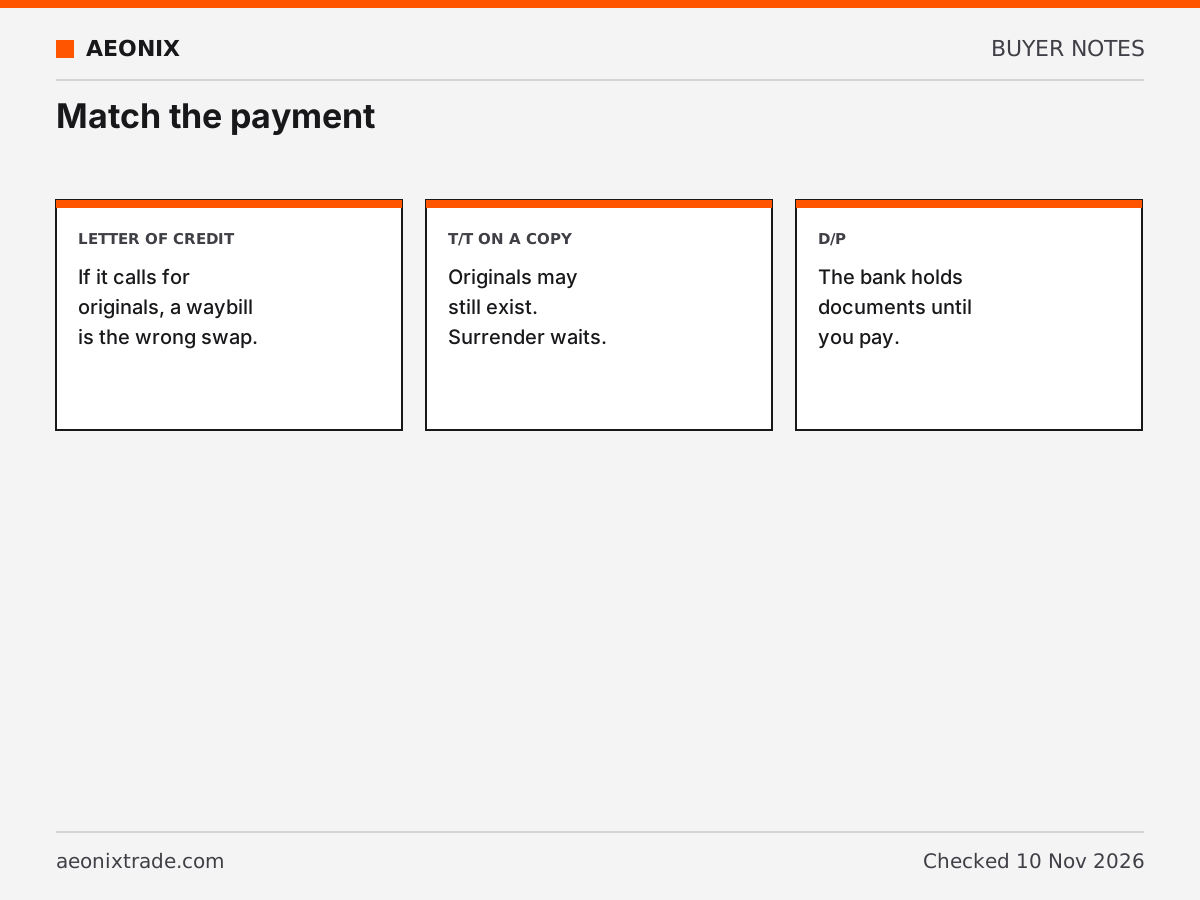
A letter of credit that calls for original bills will not be satisfied by a waybill you preferred because the transit felt short. Changing the document after the credit is open is a discrepancy until the bank agrees. That is the letter-of-credit page, not a new definition of a credit.
A T/T balance against a copy of the bill is a different bargain. You are paying against a copy, and someone still has to decide whether originals exist at all. If they exist, surrender is the telex page, and it waits on cleared funds. If they were never issued because you booked a waybill, there is nothing to surrender, and there is also nothing to hold back if you are not comfortable naming the consignee yet. Under the CMI rules, when they apply, the shipper keeps the right of control, including changing the consignee, until that right is transferred or the consignee claims delivery. That is a rule in a text you adopt. It is not a chat message to the sales contact.
D/P holds the documents at the bank until payment. A waybill that lets the named consignee take the goods without a document presentation can empty that arrangement. Read the D/P page before you tell the carrier to issue a waybill "to save the courier."
Kitchen tools, the same two companies, no bank in the middle
The tools are FOB Ningbo. The buyer is the consignee. Nobody is trading the cargo afloat. A sea waybill matches that file, if the carrier's form really is a waybill and the consignee name is the company that is allowed to take delivery. It does not match the file if a bank still wants originals, or if the buyer might sell the goods to someone else before arrival. Those are the two reasons to keep a negotiable bill and to read the telex page only when the money has cleared.
Ask this before the carrier prints anything
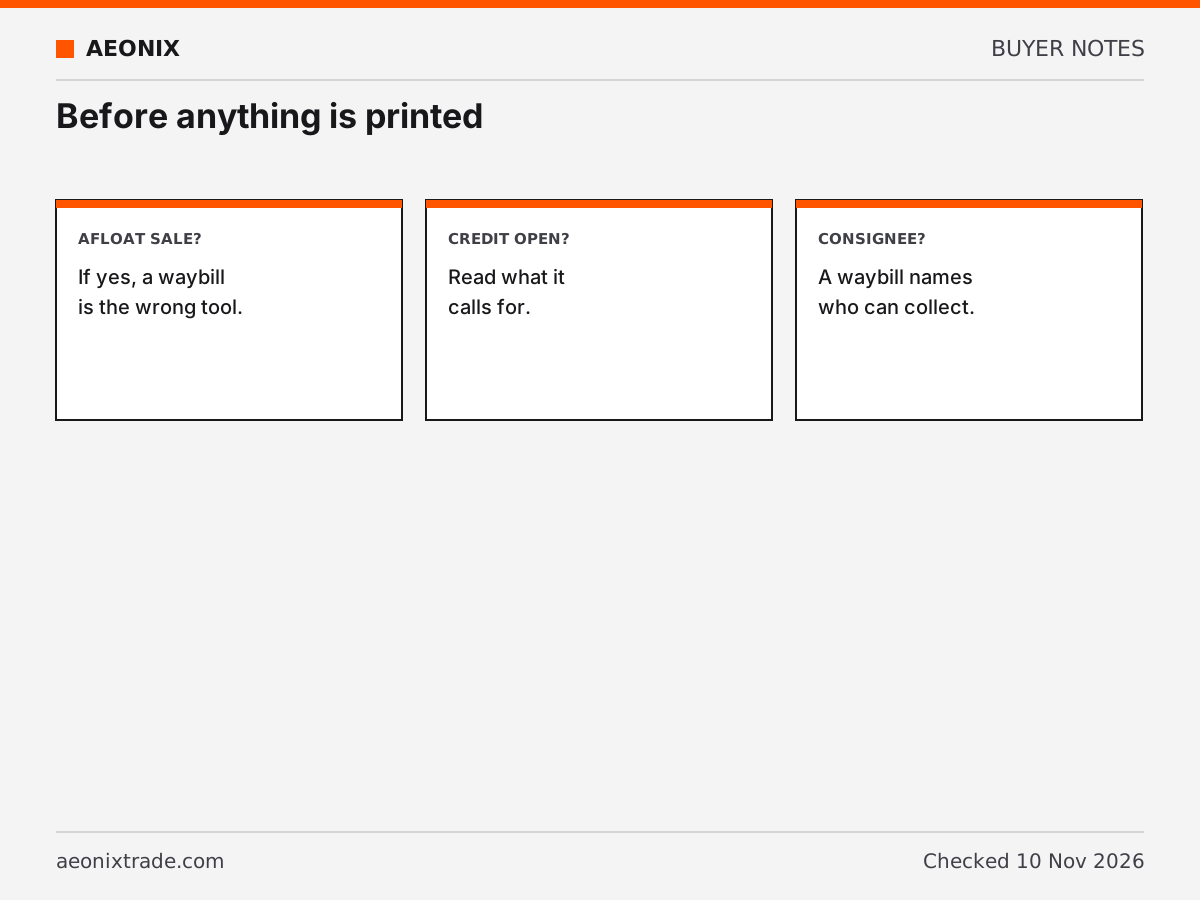
- Will anyone need to sell or pledge the goods while they are at sea? If yes, a non-negotiable waybill is the wrong tool.
- Does a letter of credit, already opened, call for originals? If yes, do not switch the document on your own.
- Is the consignee the party who should be allowed to take delivery on arrival? A waybill identifies that person.
- If you wanted originals and a release without the courier, that procedure is the telex page, after the balance has cleared.
Is a sea waybill just a telex that was booked earlier?
No. A telex is what you do with originals you already have. A waybill is a document that was not a negotiable bill. The UK Act's section 1 defines them as different documents. The carrier's form still has to say which one you were issued.
Does the waybill clear customs?
No. Release by the carrier and the import entry are different jobs. The arrival sequence is what happens when cargo arrives.
Name the document, the consignee, and the payment milestone on the RFQ before the ship is booked. Changing it after sailing is the expensive version of this choice.
The paperwork next to this choice is which Incoterm to use, 20-foot, 40-foot, and high-cube containers, a bonded warehouse, and cargo insurance.
Official sources
- UK Carriage of Goods by Sea Act 1992, section 1, read 10 November 2026. A sea waybill is not a bill of lading. It is a receipt that evidences the sea contract and identifies the person to whom delivery is to be made.
- BIMCO, GENWAYBILL 2016. BIMCO calls it a non-negotiable general sea waybill.
- Comité Maritime International, Uniform Rules for Sea Waybills. They apply when the contract adopts them. They are not a bill of lading.
Submit sourcing request
Can't find what you need?
Start with a product or image link, an approximate quantity and destination. Other details can follow.