Telex Release Meaning: Surrendered Bills, Payment Control and Cargo Release

Mike Liu contributes to AeonixTrade's buyer-education library by researching trade terminology, checking source references, and turning shipping, logistics, and quality-control concepts into practical examples.
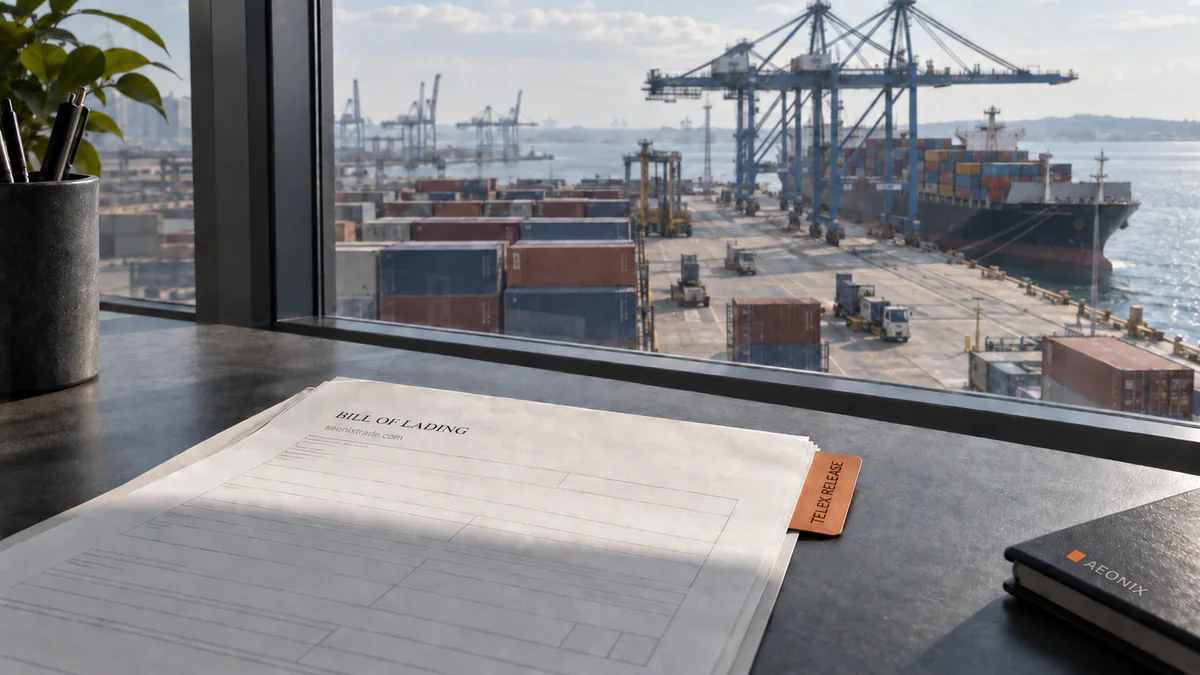
A telex release is a carrier's electronic instruction to its destination office or agent to release cargo without presentation of the original paper bills of lading, after the carrier's required originals have been surrendered and its release conditions are met. The name survives from older telex communications; current instructions usually move through carrier systems or email.
A telex release is not itself a new bill of lading, not an electronic negotiable title document, and not automatically the same as a sea waybill or express release. Exact terminology and procedure vary by carrier and jurisdiction.
How telex release normally works
- The carrier issues an original negotiable bill of lading set at origin.
- The party entitled to surrender returns the carrier's required full set of originals at the permitted office.
- Freight, surrender fees, documentation, identity, endorsements, and other carrier conditions are completed.
- The origin office marks or records the originals as surrendered.
- The carrier sends an authenticated release instruction to the destination office or agent.
- The destination party completes local arrival, customs, payment, identification, and delivery-order requirements.
- The carrier releases the cargo to the entitled consignee without requiring the surrendered originals at destination.
This sequence is a general model. A carrier can refuse or delay release when the surrender is incomplete, instructions conflict, title is disputed, freight is unpaid, sanctions or legal controls apply, a Letter of Credit is involved, or the destination process requires more evidence.
Why traders request telex release
Original bills can arrive after the vessel, particularly on short sea transits or when courier dispatch is late. Waiting for paper may delay the delivery order and contribute to terminal storage or container charges. After payment and title-control needs have been satisfied, surrender at origin can remove the need to courier originals to destination.
Common reasons include:
- the vessel will arrive before original documents;
- buyer and seller have completed the agreed payment event;
- a trusted consignee needs a faster destination release process;
- the carrier issued originals, but the parties later decide paper presentation is unnecessary;
- courier delay, loss, or cost would create avoidable operational risk.
Convenience should not override payment or title control. If the seller still relies on the originals to retain leverage, surrendering them may remove that control.
Telex release vs original B/L sea waybill and express release
| Arrangement | Original paper set | Destination presentation | Key distinction |
|---|---|---|---|
| Original negotiable B/L | Issued. | Required according to carrier and title procedures unless later surrendered. | Can function as a document of title when made negotiable and properly transferred. |
| Telex or surrender release | Issued first, then the required originals are surrendered. | Surrendered originals are not presented again at destination. | A release instruction follows cancellation or surrender of the paper-control route. |
| Sea waybill | No negotiable original set requiring surrender. | Release is generally to the named consignee subject to carrier checks. | Non-negotiable transport document suited to transactions not requiring documentary title control. |
| Express release | Carrier-specific; commonly no negotiable originals are issued. | Carrier releases under its express process. | Often selected at issuance rather than converting an original set after surrender. |
| Electronic B/L | Governed by the electronic system and legal framework. | Control transfers through the approved electronic process. | Can be an electronic trade document; it is not merely a telex release message. |
Carriers use “surrendered B/L,” “telex release,” and “express release” differently. Do not make contract or payment decisions from the label alone. Ask whether originals will be issued, who can surrender, whether the document is negotiable, who the named consignee is, and exactly what the destination agent requires.
Payment control before surrender
The seller should align surrender authority with the payment term. Under advance or balance-by-T/T payment, it may wait for cleared funds before authorizing release. Under a documentary collection, the bank handling and document-release instruction must be respected. Under a Letter of Credit, surrender or non-original release can conflict with the credit's transport-document requirements.
A payment screenshot or buyer promise should not automatically trigger surrender. Confirm cleared funds through the seller's bank and apply the agreed authorization process. Once originals are surrendered and the carrier's release instruction is effective, reversing release can be difficult or impossible.
An illustrative payment-control story
Illustrative example: A buyer purchases machine parts on a 30% deposit and 70% balance against a copy of the on-board bill of lading. The vessel transit is only seven days, while courier delivery of originals can take longer.
The supplier sends the document copy, but the buyer's transfer is held for compliance review and has not reached the seller. A sales employee wants to request telex release to “save time.” The finance control requires bank confirmation of cleared funds and a second approval. Release is withheld for two days, payment arrives, the complete original set is surrendered, and the carrier confirms destination release before arrival.
The delay was controlled because the release trigger was cleared payment rather than a transfer screenshot. This story is illustrative, is not a real AeonixTrade transaction, and is not legal, banking, or carrier advice.
Documents and information commonly required
A carrier's checklist can include:
- the full set of issued originals;
- a signed surrender or release request from the authorized shipper or holder;
- correct endorsements where applicable;
- bill-of-lading, booking, container, vessel, and voyage references;
- shipper and consignee identity documents or company authorization;
- payment of freight, documentation, surrender, and destination charges;
- indemnity wording for a permitted exceptional process;
- confirmation that no bank, court, sanctions, customs, or title restriction prevents release.
Use the carrier's current form and verified contact channel. A generic letter found online may omit required wording or direct the instruction to the wrong legal carrier.
Fraud and operational controls
- Verify the legal carrier, bill type, and office that issued the originals.
- Confirm that the party requesting surrender has authority and control of the full set.
- Separate commercial approval from the person sending the carrier instruction.
- Verify bank funds independently before a payment-conditioned release.
- Use carrier portals or known contacts rather than addresses supplied in an unexpected email.
- Check shipper, consignee, notify party, endorsements, and destination for inconsistencies.
- Obtain written carrier acknowledgement and destination release status.
- Retain the surrendered originals, request, approvals, fee receipt, and release confirmation.
A PDF stamped “TELEX RELEASED” is not sufficient by itself. The destination office must have an authentic instruction in its system, and the consignee must still satisfy destination requirements.
When not to use telex release
- Payment has not reached the seller and original-document control is still required.
- A bank under an LC or documentary collection controls the documents or has not authorized the change.
- The goods are sold in transit and negotiable title transfer is needed.
- There is a dispute over ownership, fraud, sanctions, insolvency, or consignee identity.
- The carrier, origin, or destination does not permit the proposed process.
- One or more originals are missing and the carrier's lost-document process has not been completed.
A sea waybill can be cleaner when the parties know from the start that a named consignee should receive cargo without negotiable-original control. An original B/L can be appropriate when title and banking control are required. Make the decision during payment and transport planning, not after arrival pressure begins.
Timing charges and destination release
Telex release does not clear customs, pay destination charges, produce a delivery order, or guarantee immediate terminal pickup. The consignee still needs arrival information, import clearance, freight release, local payment, identification, and transport capacity.
Track separate milestones:
- originals received and surrendered at origin;
- carrier origin office accepts the surrender request;
- destination agent receives and acknowledges release authority;
- freight and local charges are cleared;
- customs release and delivery order are available;
- container pickup and empty return occur within the applicable free time.
If cargo is already at destination, review terminal storage and demurrage or detention separately. A telex release can remove one document bottleneck but cannot erase time already accrued.
Release checklist for buyer and seller
- Choose original B/L, sea waybill, express release, or electronic B/L deliberately before shipment.
- State who may instruct surrender and what payment evidence is required.
- Confirm the full original set, endorsements, carrier, and issuing office.
- Request the carrier's current written procedure, cutoff, fee, and destination restrictions.
- Verify cleared funds and any bank authorization.
- Send the request through an authenticated carrier channel.
- Obtain confirmation from both origin and destination operations.
- Coordinate customs, delivery order, trucking, and container return independently.
Need payment and transport documents aligned before booking? Submit an RFQ with the payment milestone, requested bill type, consignee structure, route, and target delivery date.
Frequently asked questions
Does telex release mean there is no bill of lading?
No. A telex or surrender release commonly follows issuance and surrender of original bills. A sea waybill or express process may avoid issuing negotiable originals from the start.
Can cargo be released with a copy B/L?
A copy alone is not the release authority for an original-B/L shipment. Release depends on carrier confirmation that the originals were properly surrendered and all destination requirements are met.
How long does telex release take?
Timing varies by carrier, office hours, document status, payment, compliance checks, and destination. Obtain a current cutoff and acknowledgment rather than relying on a universal time estimate.
Can telex release be cancelled?
Do not assume it can. Once the carrier has acted or cargo has been released, reversal may be impossible. Escalate immediately to the carrier and legal advisers if an instruction was wrong or fraudulent.
Is telex release safe?
It can be operationally efficient when payment, authority, identity, and carrier controls are complete. Premature or fraudulent surrender can remove valuable cargo control.
Sources
Submit sourcing request
Can't find what you need?
Start with a product link or photo, an approximate quantity and destination. Other details can follow.