What Happens When Cargo Arrives After You Import from China in 2026
Published by Aeonix Trade.
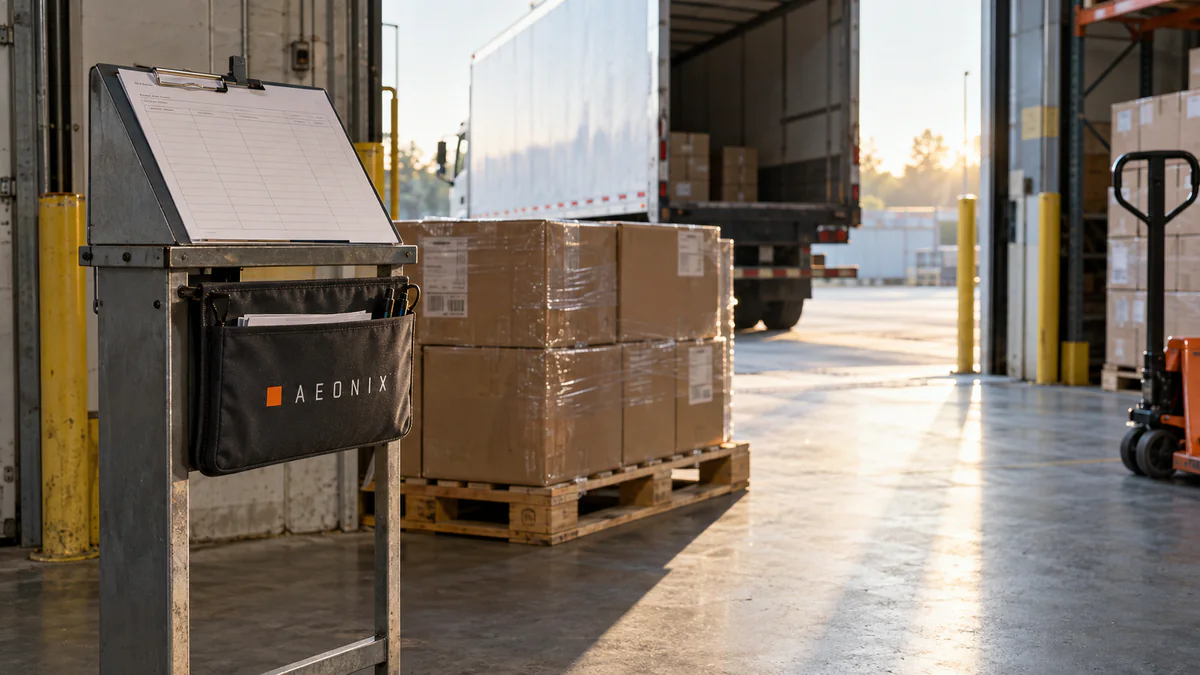
Arrival and customs checklist
What happens when cargo arrives after importing from China in 2026
After arrival, importers must handle arrival notice, customs entry, duty/VAT payment, inspection risk, release, storage and final delivery.
- Watch for the arrival notice and confirm consignee, container, airway bill or bill of lading details.
- File customs entry with invoice, packing list, HS code, origin support and product documents.
- Pay customs duty, VAT/GST, port charges, terminal fees and broker disbursements on time.
- Respond quickly if customs requests inspection, valuation evidence, permits or compliance files.
- Book release, deconsolidation if LCL, storage pickup and inland delivery to the warehouse.
Last fact-checked: April 4, 2026. This guide is based on the official sources listed at the end.
Quick answer: Cargo arrival is where many first imports stop feeling abstract and start feeling expensive. Once the shipment lands, the buyer is in a release, payment, and handoff workflow, and every missing owner becomes expensive quickly.
The most useful beginner correction is this: arrival is not one step. It is a sequence that usually includes notice, declaration, duties or taxes, possible customs review, release, pickup, and then warehouse intake or onward delivery.
If you want help turning this checklist into a live sourcing plan, see our Country sourcing programs.
Why this matters before you pay the deposit
Many new importers spend most of their energy on the supplier and the freight quote, then discover too late that the expensive part starts after the cargo lands. That is because arrival concentrates customs, storage, pickup timing, and destination payment into one short and unforgiving window.
A strong arrival workflow makes the entire import lane calmer. A weak arrival workflow turns even a good purchase into a chain of rushed decisions and surprise costs.
- The arrival stage is where unclear ownership becomes visible.
- In many commercial import programs, cargo is not available for normal delivery until customs and release steps are complete.
- A good arrival plan should exist before departure, not be invented from the arrival notice.
Know the stages between landing and sellable inventory
A common commercial pattern is that the carrier or forwarder issues an arrival notice, customs entry is filed, duties and taxes are addressed, customs may request documents or examination, the cargo is released, and only then can pickup or final delivery move normally.
The exact legal sequence, payment timing, and release triggers are market-specific, but the buyer should already know who owns each stage before the shipment arrives.

Starter checklist
- Identify who receives the arrival notice and who acts first on it.
- Know who files the customs entry and who answers customs questions.
- Prepare funds or approvals for duties, taxes, and local charges before arrival.
- Plan pickup or warehouse intake around the release window, not around the ETA alone.
Use an arrival RACI before the vessel lands
A first shipment becomes much calmer when every arrival step has an owner before the ETA appears in your inbox. That is the practical way to stop notice, payment, release, and pickup from turning into a chain of missed assumptions.
The RACI does not need to be complicated. It only needs to show who leads each step, what evidence starts the next step, and who approves money or documents if customs asks for more.
| Arrival stage | Primary owner | What must already exist | Validate with |
|---|---|---|---|
| Arrival notice | Forwarder-side contact or importer ops lead | Clean contact list and shipment file | Carrier or forwarder notice rules |
| Entry filing | Broker or customs-side team | Invoice, packing list, transport document, permit support | CBP entry summary and post-release / Singapore Customs import procedures / French Customs |
| Duty and tax approval | Finance or management approver | Release budget and payment path | Internal finance workflow |
| Hold response | Importer ops lead + broker | Escalation path for extra documents or valuation questions | Broker response checklist |
| Release and pickup | Warehouse or trucking owner | Confirmed release, pickup slot, and warehouse intake plan | Terminal or local pickup instructions |

Starter checklist
- Arrival-notice owner: the person or team that receives the notice, checks document completeness, and triggers the first response on the same day.
- Entry-filing owner: the broker or customs-side team that has the commercial file before ETA and knows what is still missing.
- Duty-and-tax approval owner: the finance or management contact that can release funds without a last-minute approval bottleneck.
- Hold-response owner: the person who gathers extra documents and answers customs, inspection, or valuation questions.
- Release owner: the person who confirms the cargo is actually released, not merely landed or available in principle.
- Pickup owner: the trucker, warehouse scheduler, or local delivery contact that moves cargo only after release is confirmed.
- Post-release file owner: the person who stores the final entry, payment proof, and lessons learned for the next shipment.
Run the arrival sequence like a checklist, not like a scramble
In many import programs, the arrival workflow is easier when preparation is completed before landing. The broker or customs-side partner should already have the commercial file, the importer should already know the payment path, and the warehouse side should already know when pickup might actually be possible.
At arrival, speed comes from preparation rather than from rushing. If the commercial file is settled, the customs response is cleaner and the storage clock becomes easier to manage. Port systems, appointment rules, and free-time pressure still need local confirmation.

Starter checklist
- Send the final commercial file to the customs-side partner before the arrival notice is issued.
- Confirm who pays which local charges and how those approvals are triggered.
- Track customs review or release milestones in one place instead of across scattered chats.
- Only schedule warehouse intake once the release path is real, not assumed.
Red flags that usually destroy margin or delay release
The first red flag is a buyer who does not know whether the forwarder, broker, importer, or warehouse is supposed to take the first action after arrival. That is how small delays become storage costs.
The second red flag is treating release like a guaranteed event on ETA day. Customs review, missing data, or payment delay can all move the actual availability date.
- No clear owner for the arrival notice and customs response.
- No funds or internal approval path for duties and destination charges.
- Warehouse pickup booked before the cargo is actually released.
- Assuming the shipment is available just because the vessel arrived.
What a calm destination handoff looks like
A calm destination handoff looks boring in the best way: the arrival notice reaches the right person, the customs entry uses a ready commercial file, duties and taxes are paid on time, release is confirmed, and pickup moves against a real appointment rather than a hopeful message thread.
That is why buyers should think about arrival before departure. The arrival stage rewards ownership and sequence more than speed or improvisation.
Starter checklist
- Write down who owns notice, entry, payment, release, pickup, and warehouse intake for every shipment.
- Keep one shared shipment file with customs documents and local contacts.
- Plan for delay risk instead of assuming straight-through release.
- Treat the first arrival as a repeatable process design exercise, not as a one-time panic event.
Frequently asked questions
Does cargo become available as soon as it arrives?
Usually no. Arrival starts the release workflow, but the cargo is not normally available for pickup until customs and destination handling are complete.
Who should own the arrival notice before the shipment lands?
Decide who owns the arrival notice and the customs response, because that sets the pace for the whole release sequence.
Why is arrival where so many first imports fail?
Because buyers often plan production and freight but not the actual destination handoff, payment, and release ownership.
Official sources used in this guide
- CBP entry summary and post-release: Official US customs reference for release and post-release handling in one destination market.
- Singapore Customs import procedures: Official destination-side procedure example for the arrival, declaration, and release sequence.
- French Customs: Official customs portal useful for checking market-specific release and documentation rules in an EU destination.
Submit sourcing request
Can't find what you need?
Start with a product link or photo, an approximate quantity and destination. Other details can follow.