Container Loading Supervision: What to Record
Published by Aeonix Trade.
Last fact-checked: November 10, 2026.
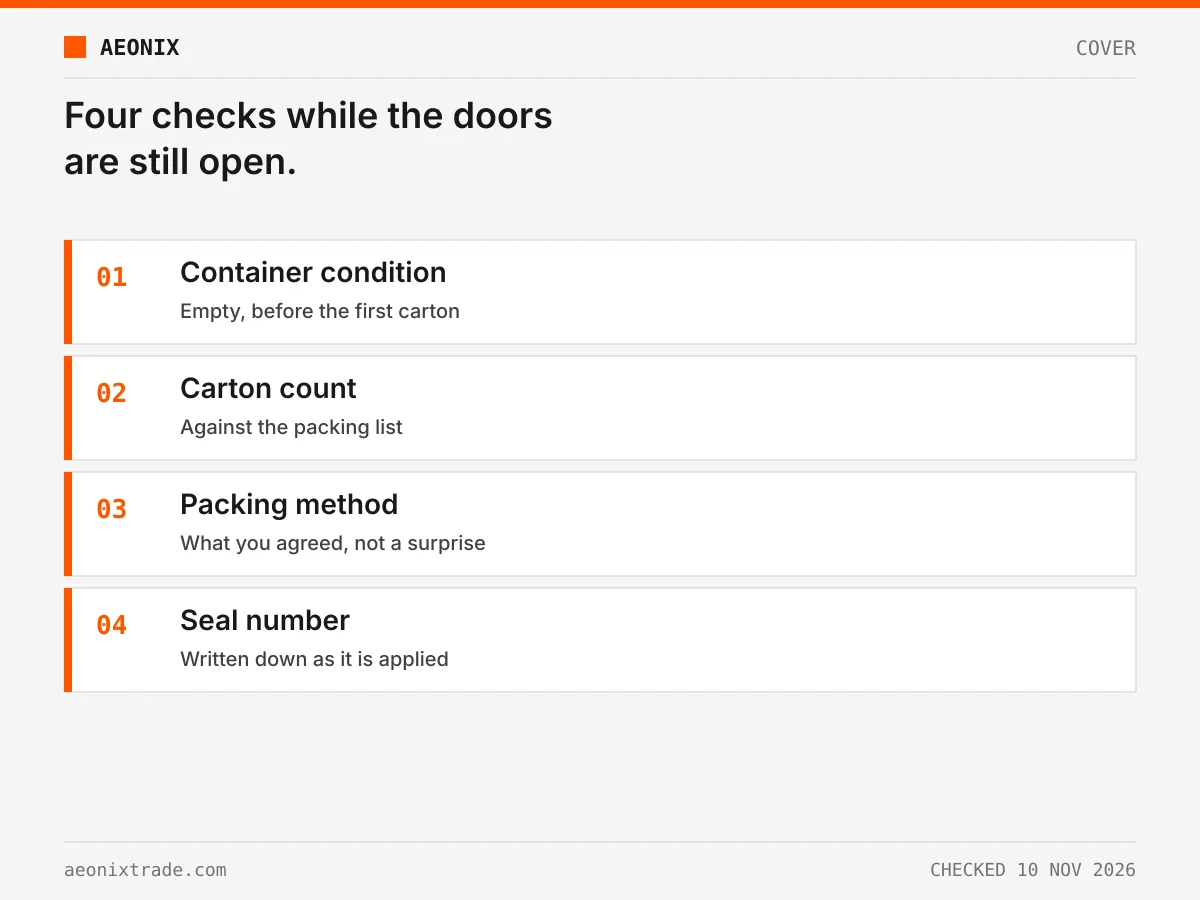
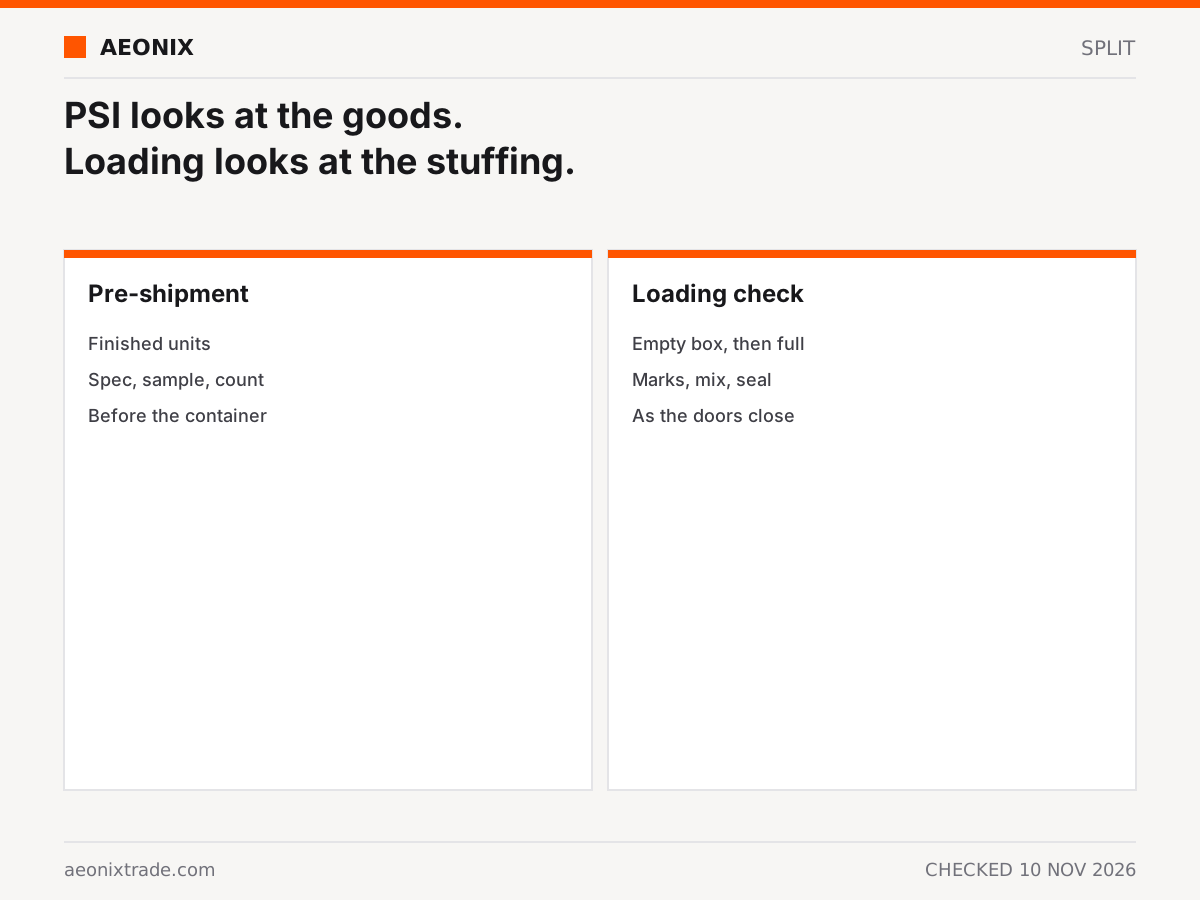
Container loading supervision is the check while cargo goes in: empty-box condition, carton count, the packing method you agreed, and the seal number as the doors close. It is not a second pre-shipment inspection. The during-production and pre-shipment page is about the goods. This page is about the stuffing. It does not promise that a watched loading prevents every later damage, and it states no supervision fee.
The International Trade Administration describes an export packing list as itemizing quantity, description, package type, number of packages, total net and gross weight in kilograms, package marks, and dimensions where appropriate. It says the packing list is not a substitute for a commercial invoice, and that customs officials may use it to check the cargo. The count at the door is checked against that list. The list itself is the packing list page.
A short count found only at the door
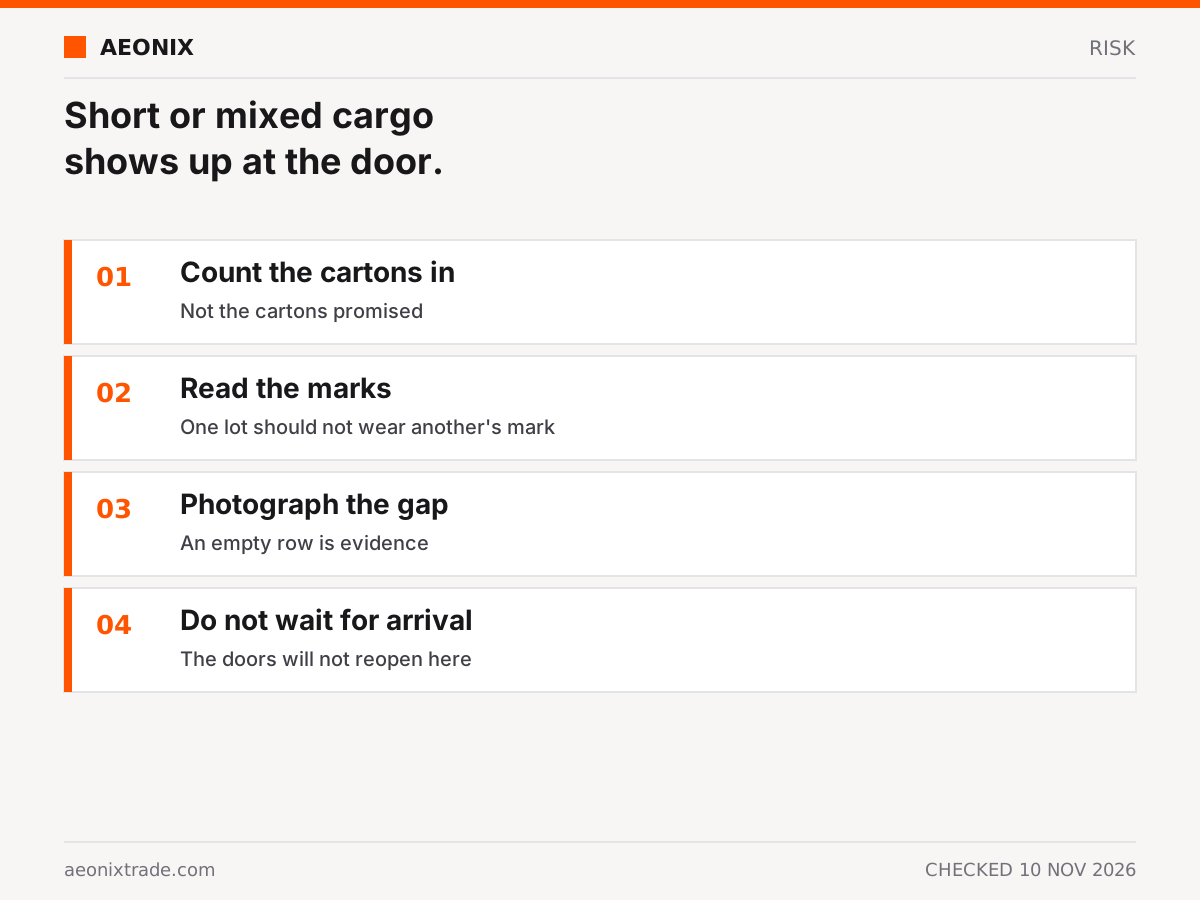
A buyer consolidates kitchen goods into one container. The pre-shipment sample looked right. At the door, the tally of cartons is short of the packing list, and one row wears another lot's marks. If nobody is counting, the doors close on that gap. Later, at the warehouse, the argument is a memory. There is no freight rate in this example. The missing cartons are a count, not a price.
What to record before the seal
| Step | What you record | What a PSI report does not show |
|---|---|---|
| Empty container | Floor, walls, and doors before the first carton, so later damage is not blamed on a box that was already torn | The units on a table at the factory |
| Count | Cartons actually loaded, against the packing list | The quantity on the purchase order, remembered |
| Packing | Whether the method matches what you agreed, including mixed lots | A product photo from a sample |
| Seal | The number as it is applied, in digits and in a photo | Nothing. The seal does not exist yet at PSI |
Do the count in both directions if the load takes more than one truck. A tally that only adds cartons going in will miss a carton that was rolled back out. Write the mark, the count, and the time on the same sheet as the photos, so a later reader does not have to guess which frame belongs to which lot. The seal number then has to match the draft bill of lading. If it does not, stop and ask before you treat the draft as the shipment. Weight is a different job. VGM is the verified gross mass. This page does not repeat that rule.
Photos that are worth keeping
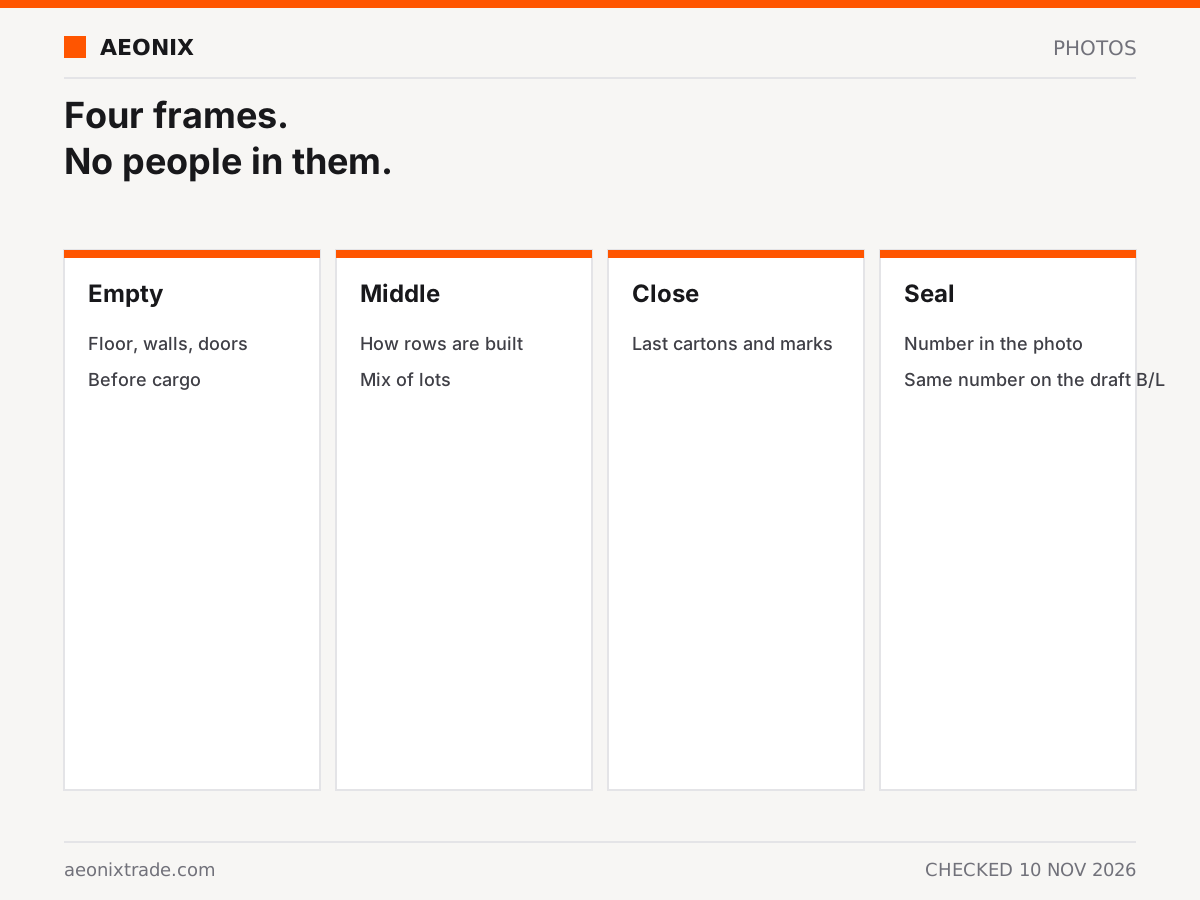
- The empty container, before cargo, with no people in the frame.
- A mid-load frame that shows how the rows are built.
- Marks on the last cartons, close enough to read.
- The seal, with the number readable, and the same digits typed into the file.
- Any gap: an empty row, a carton left on the dock, a mark that belongs to another lot.
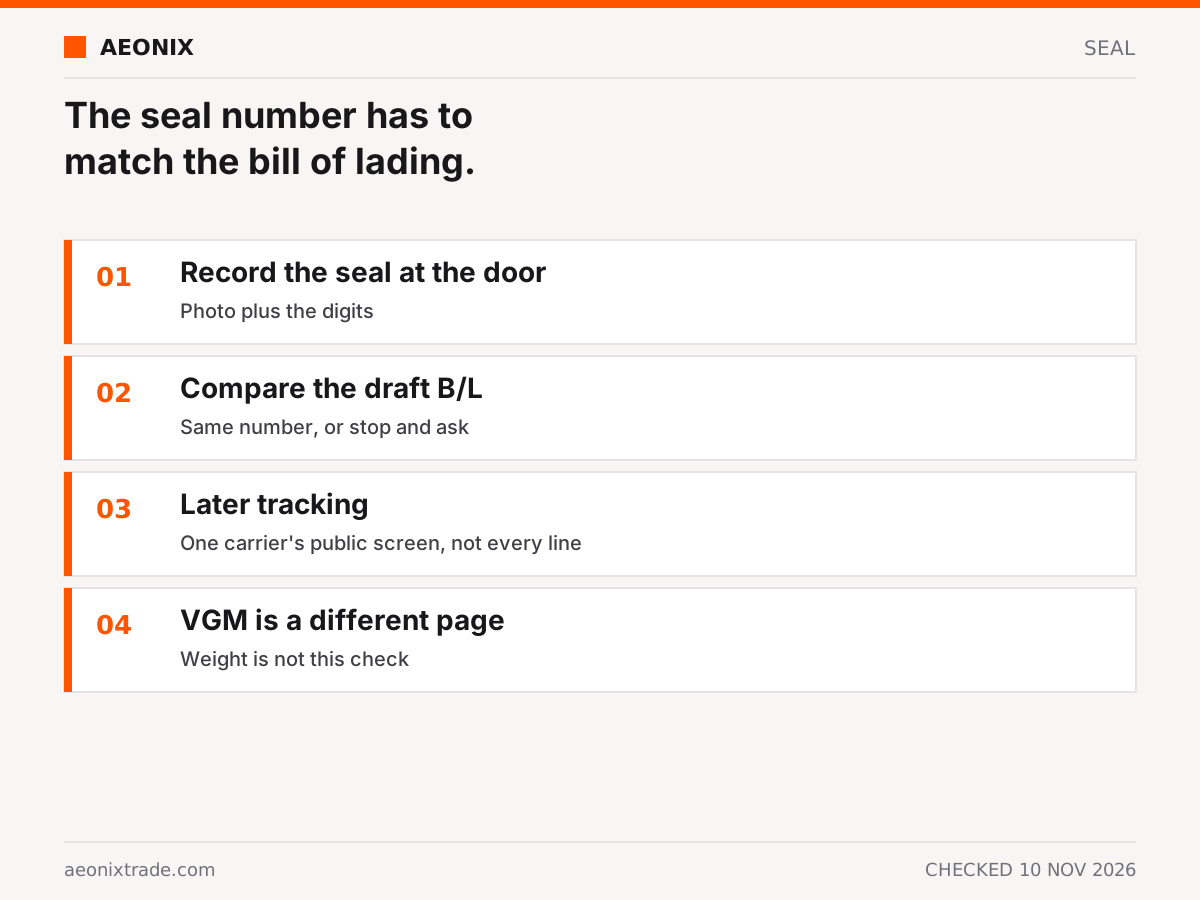
After the carrier has the box, tracking is that carrier's screen. COSCO Shipping Lines' public cargo tracking loaded on November 10, 2026, as one example of a method. It is not a rule for every line, and it does not show whether your cartons were short at the door. What happens after arrival is what happens when cargo arrives. If the count is wrong when it arrives, the evidence chain is this page plus the claims page.
Keep the tally with the person who will still have it after the truck leaves. A photo on a loader's phone is not your file until you have a copy. Name the file with the container number and the date, and store it next to the draft bill of lading, not in a separate chat.
A full container and a shared one
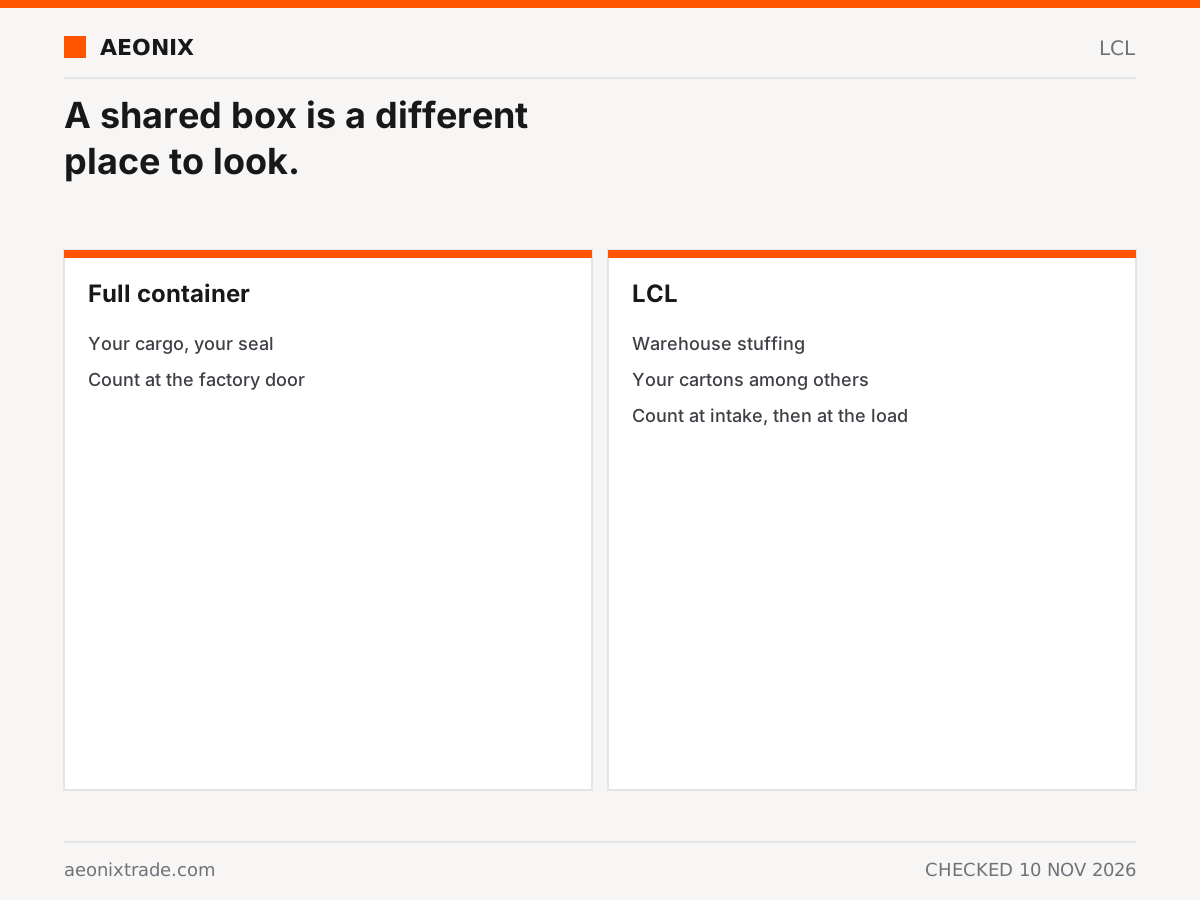
On a full container, the count that matters is at the door you are sealing. On LCL, your cartons share the box. The count that matters starts at warehouse intake and again when the consolidator loads. A factory-door photo of your cartons does not show who else's cargo was placed against them. The LCL shipping from China page is the shared-box operation. This page only says where to look.
Pitfalls
- Treating a passed pre-shipment report as proof the container was full.
- Writing the seal from a phone call instead of from the photo at the door.
- Discovering a short count only after arrival, with no loading tally to compare.
- Using one carrier's tracking page as if it were an official loading record.
- Expecting the supervision to prevent crush, water, or a seal that is cut later. It records the condition you saw. It is not a guarantee.
Ask for the loading record, the seal, and the packing list on the RFQ when the shipment is part of the job. The visit itself can sit with quality-control inspection. Shared-box handling is consolidation and shipping.
Frequently asked questions
Is loading supervision the same as PSI?
No. PSI samples finished goods against a spec. Loading supervision watches condition, count, packing, and the seal as the container is stuffed. You can fail one and pass the other.
Will a watched loading stop damage at sea?
No. It gives you a record of what went in and which seal was applied. It does not control the voyage. If you need a claim later, that record is the starting file, not a promise of payment.
Where do I check the box after it sails?
On the carrier named on the bill of lading. The COSCO page above is one public screen that loaded on November 10, 2026. Another line has its own. No universal "China loading tracker" was found.
The paperwork next to this choice is which Incoterm to use, 20-foot, 40-foot, and high-cube containers, a bonded warehouse, and cargo insurance.
Official sources
- ITA, common export documents, packing-list description. Checked November 10, 2026.
- COSCO Shipping Lines cargo tracking. One carrier's public screen. Checked November 10, 2026.
A single official rule that sets a loading-photo list for every shipment was not found on November 10, 2026, so the checklist above is a record to keep, not a statute. VGM stays on its own page.
Submit sourcing request
Can't find what you need?
Start with a product or image link, an approximate quantity and destination. Other details can follow.