First Shopify Import from China: Checklist
Published by Aeonix Trade.
Last fact-checked: 10 November 2026.
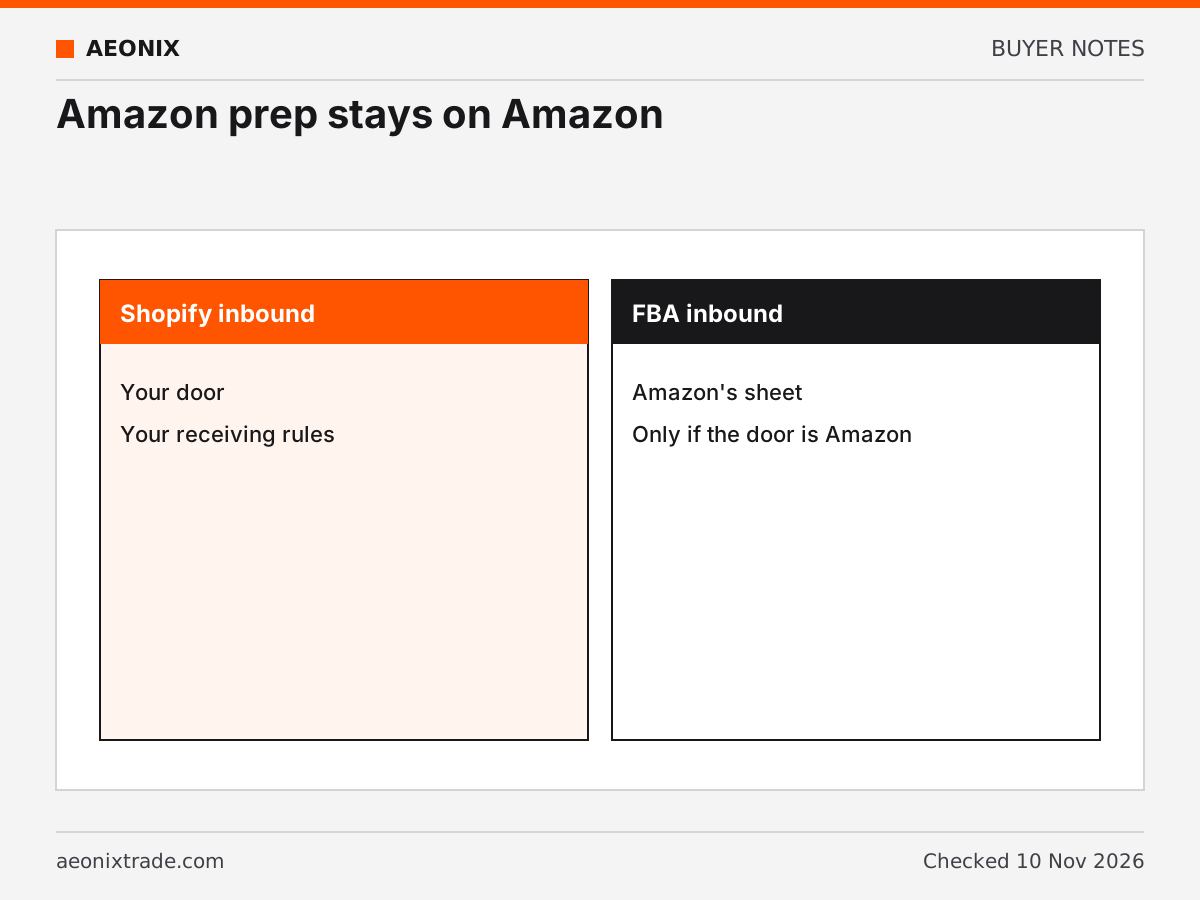
A first Shopify order from China is an import in your name, then a handoff to your own shelf or to a warehouse. Amazon's FBA prep rules are a different inbound. Leave them on the Amazon page.
Shopify's tax help, opened 10 November 2026, says a seller may have to charge tax on sales and remit it, and it describes a setting that charges duty and import taxes at checkout instead of on delivery. That setting is a storefront choice. It is not the customs declaration, and it does not name the importer of record. Shopify's fulfillment help, opened the same day, describes order fulfillment as processing, managing, and shipping customer orders from the store. It starts after you have goods to ship.
A first lot of mugs, and two possible doors
A seller in Portland is opening a Shopify store for a stoneware mug made in Chaozhou. The first buy is a small lot, handed over FCA at the named terminal, so the seller can photograph real goods and learn the defect pattern. A container is a later argument. How to keep that first quantity honest is samples and trial orders, and how the sample itself moves is shipping a sample.
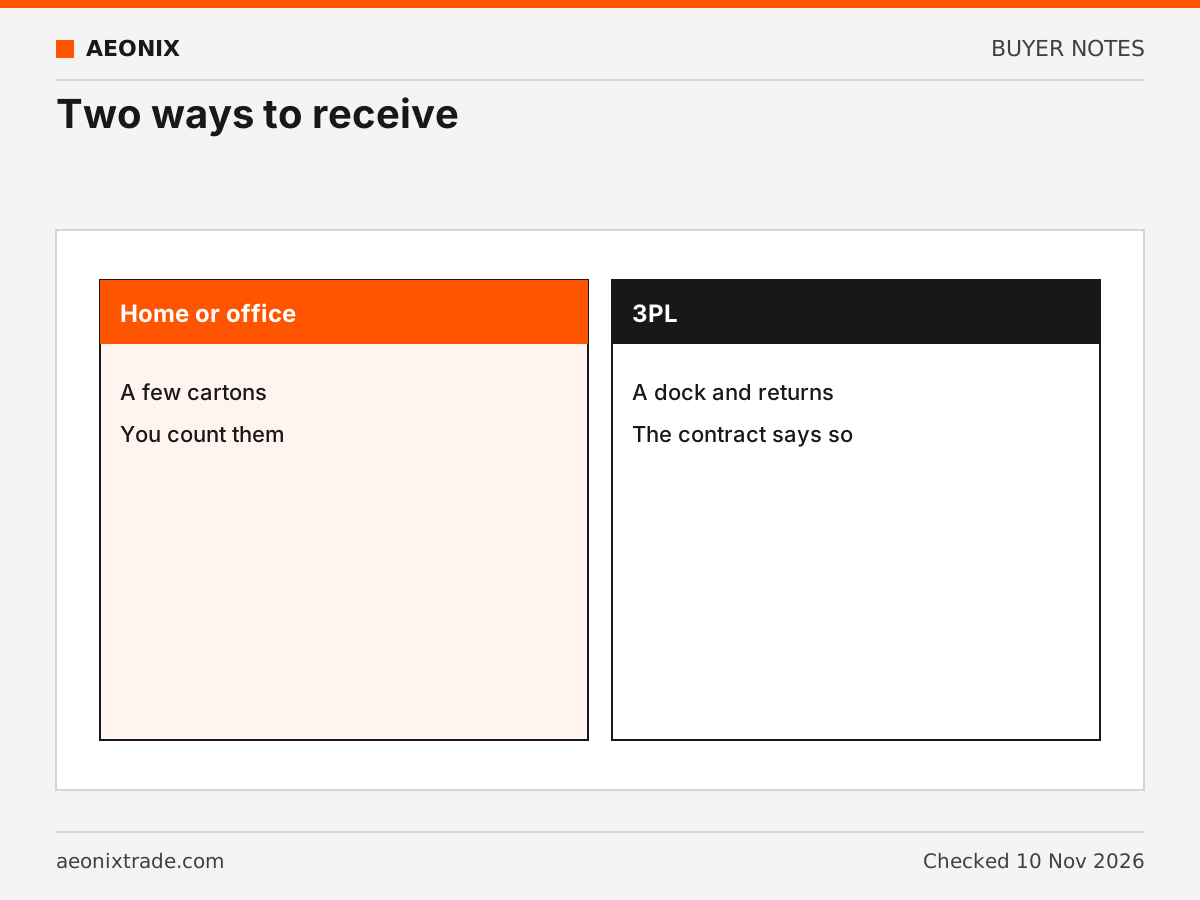
The mugs can arrive at the seller's own address or at a warehouse. A house can take a few cartons if the carrier and the building allow it. A commercial lot that needs a dock, a count, and a returns bench belongs with a warehouse whose contract says so. That comparison of doors, including Amazon's, is FBA, merchant fulfillment, or a 3PL. If you are not using Amazon, do not apply Amazon's bag and barcode sheet to this inbound.
The import is still yours
Someone has to be the importer for the country where the mugs clear. For a US arrival, start with importing from China to the United States. For Great Britain, start with importing from China to the United Kingdom. The document set that should already exist is the first-time import checklist. A checkout setting that collects a duty estimate from the shopper does not replace that file. This page does not say any country will clear a direct-to-consumer parcel free of duty. If a low-value rule exists, it is on the customs site for that country, and a reorder of mugs can leave that rule behind.
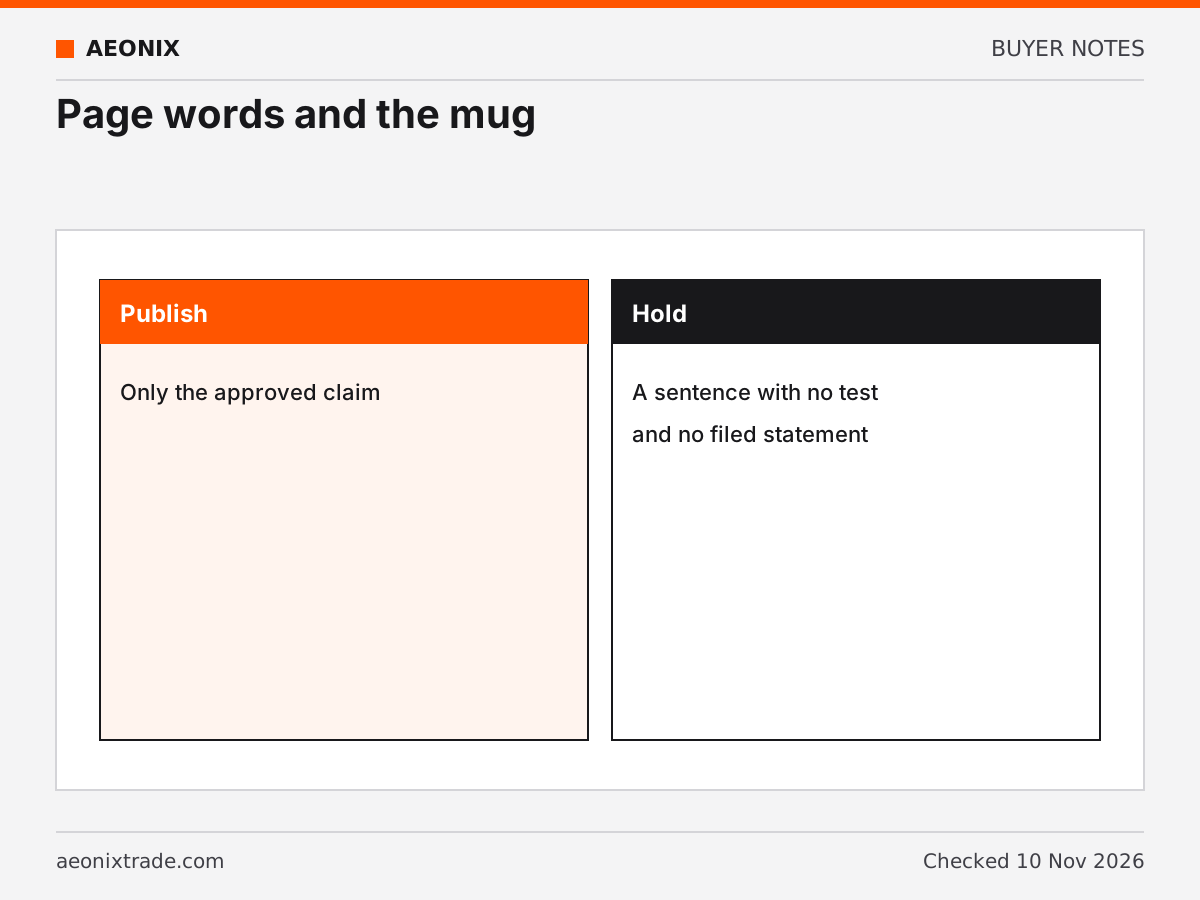
The words on the product page have to match the mug you approved. "Dishwasher safe" is a claim. If you have no test and no supplier statement you are willing to file, take the sentence down. Laboratory questions sit next to pre-shipment inspection: inspection checks the lot against the sample, and a claim about performance needs the evidence you will show a customer or a regulator.
Before the deposit
| Item | Write it down | Do not treat as done |
|---|---|---|
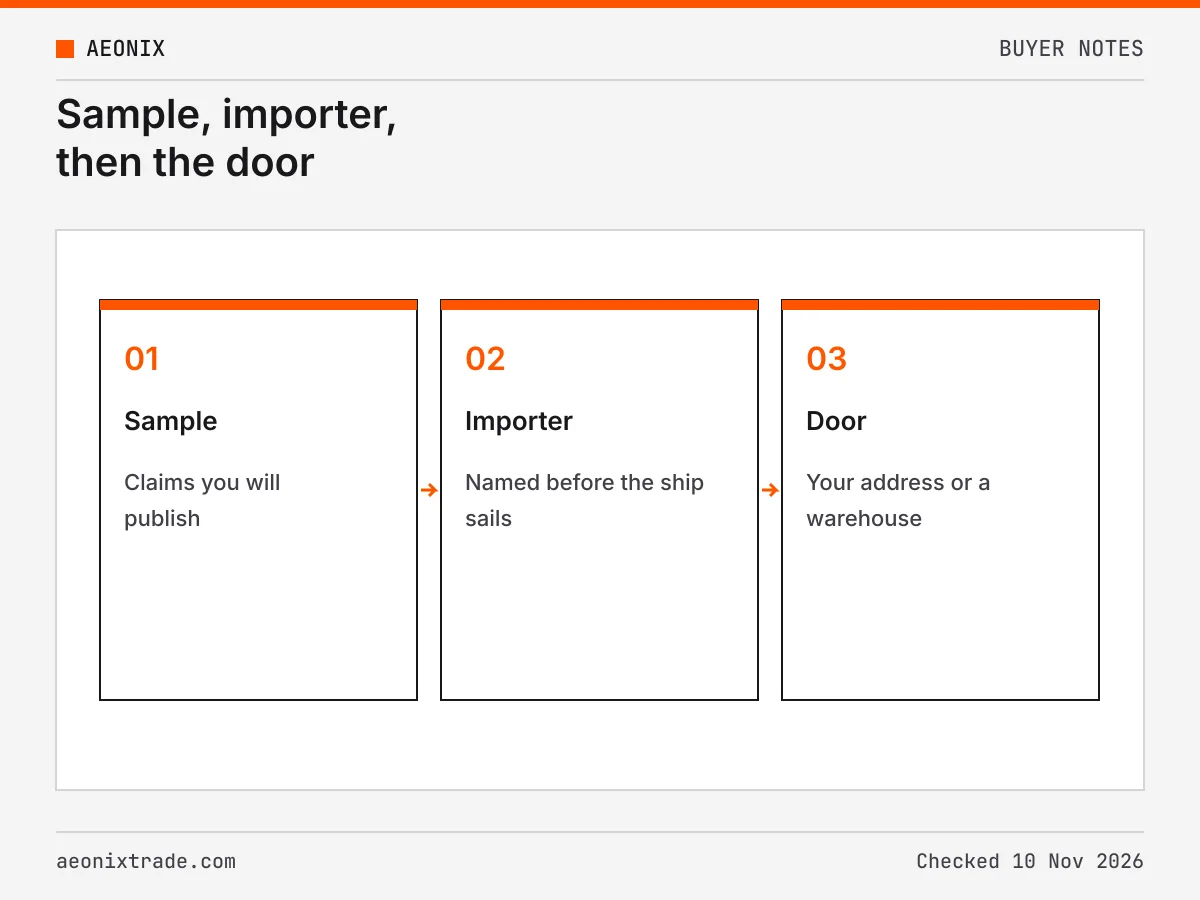
| Sample | Signed mug, glaze, and the claims you will publish | A catalog photo from the factory |
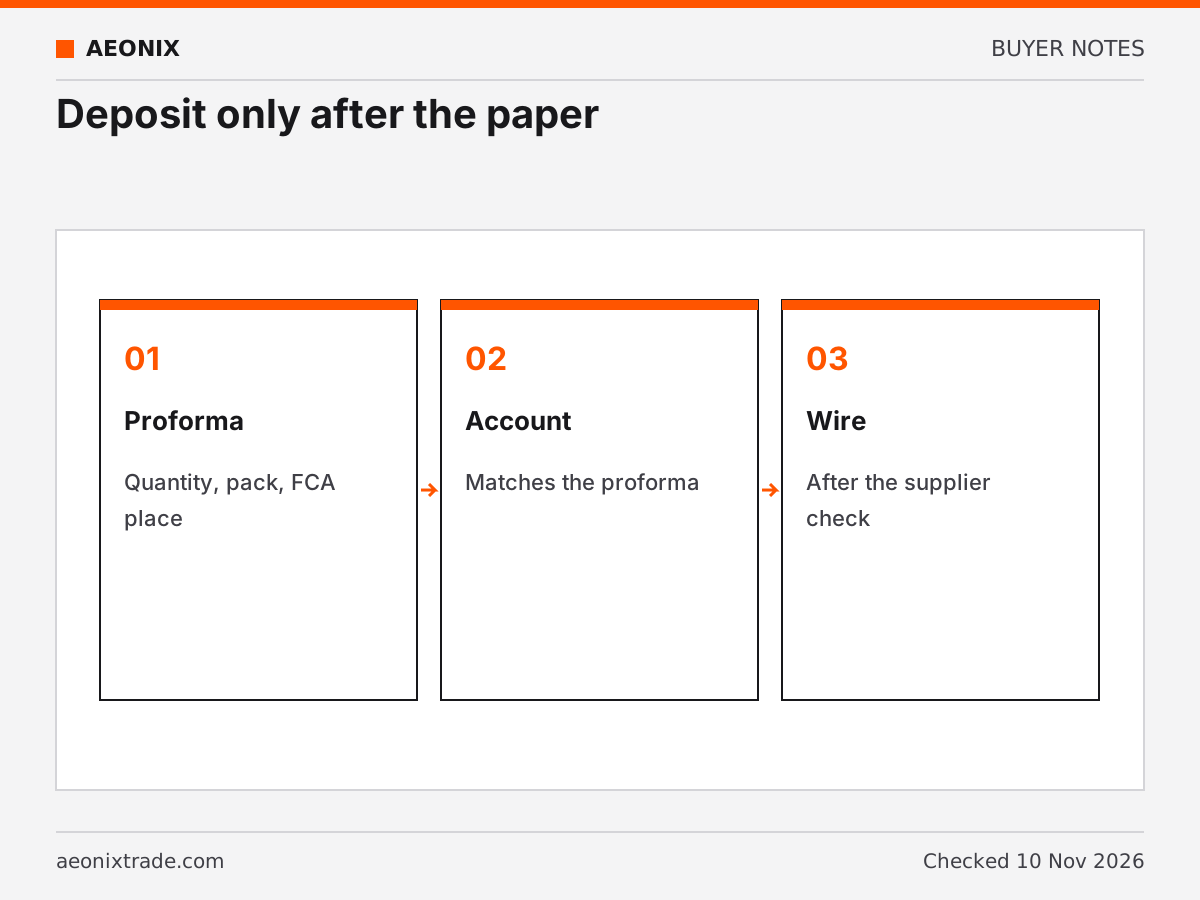
| Contract | Proforma with quantity, packing, FCA place, and a date | A chat total |
| Payment | T/T to the account on the proforma, after the supplier check | A new account sent only in chat |
| Door | Home or office, or a 3PL, named on the bill of lading | "The freight company will decide" |
If the mug is your brand, the brand and the box are private label. Brand Registry is an Amazon enrollment. It is not a Shopify requirement. Skip it unless you are also listing on Amazon, in which case use Brand Registry before the print.
What usually goes wrong
- Installing a duty app and calling the import finished. The app, if you use one, is a checkout tool. The entry is still a customs filing. This page recommends no app.
- Shipping a commercial lot to a home address that cannot receive it, then learning the carrier's rule at the door.
- Publishing factory claims the sample does not support.
- Using Amazon FBA label instructions on a Shopify carton and wondering why the warehouse you hired rejects them, or why they were never required.
Checklist for the first arrival
- Sample approved, and the product-page claims copied from that approval.
- Importer of record named for the destination.
- Proforma and payment account checked before the deposit.
- Door named: your address, or a 3PL contract that states receiving and returns.
- Packing list counts agreed. Consolidation only if more than one supplier is in the same lot.
- On arrival: photos, carton count, and a note of glaze or breakage, kept with the order. The clock after the notice of arrival is what happens when cargo arrives.
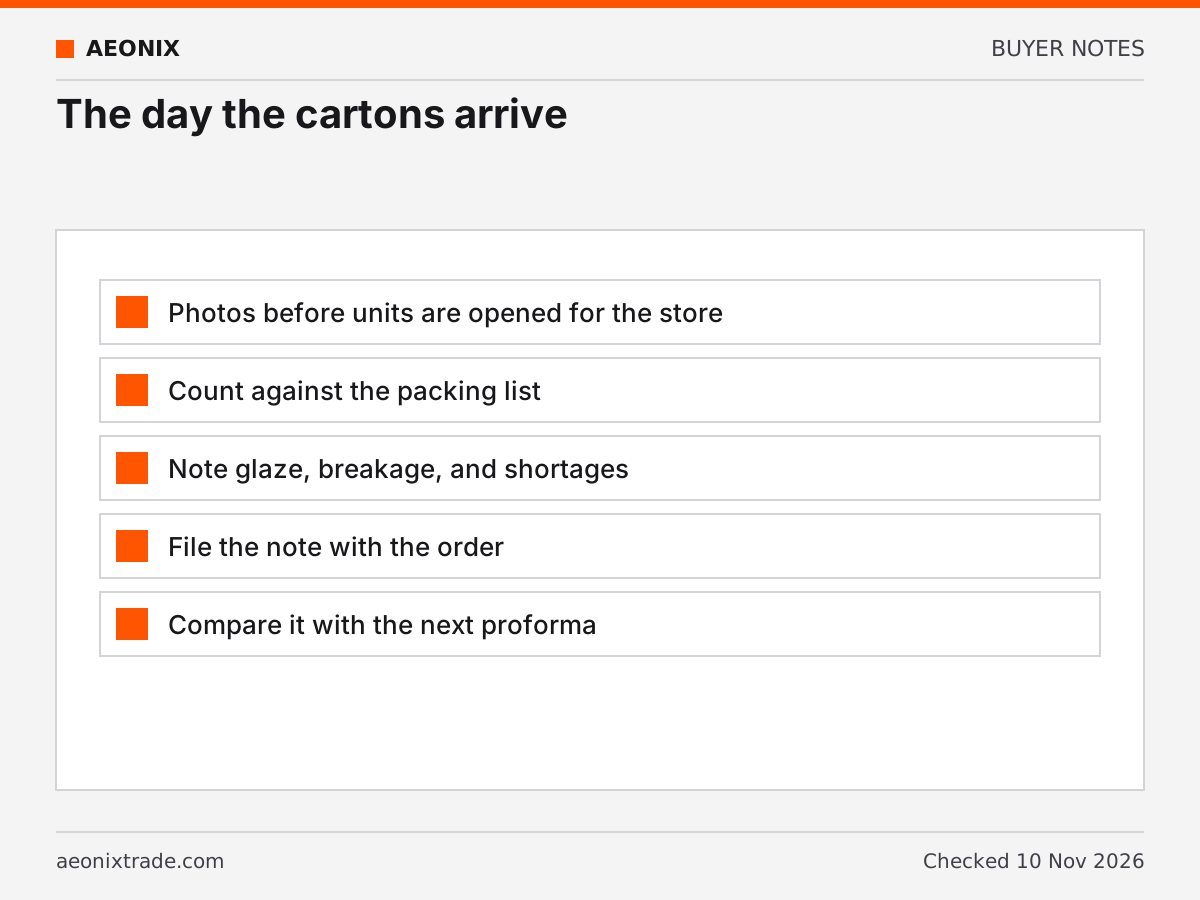
On the day the cartons arrive, count them against the packing list before anyone breaks the sellable units down for photos. A house doorway makes that count easy to skip. Write the number, the broken pieces, and the glaze notes in the order folder the same day. That note is what you compare with the next proforma.
Send the mug, the quantity, and the door on the RFQ. This article does not quote a Shopify subscription and does not promise a duty-free parcel.
Questions buyers actually ask
Does Shopify clear the container?
Shopify's help pages describe tax settings and order fulfillment. Your importer, your broker, and the destination customs authority clear the goods. A checkout charge, if you turn that setting on, is money you collect from the shopper. It is not the entry.
Should the first order go to my house?
A few cartons can, if the carrier will deliver there and you can count them. A lot that needs a dock or a returns process needs a warehouse whose contract says so. Decide that before the bill of lading is issued.
Do I follow Amazon's prep sheet?
Follow it when the door is an Amazon fulfillment center. A Shopify inbound follows your warehouse's receiving rules and the product's own labeling rules. Mixing the two sheets creates labels nobody asked for.
The production file next to this one is starting a private label from China, an NNN agreement versus an NDA, the purchase contract, and tooling and mold ownership.
Sources
- Shopify Help: Taxes. Opened 10 November 2026. Sales tax, and a setting to charge duty and import taxes at checkout.
- Shopify Help: Order management and fulfillment. Opened 10 November 2026. Fulfillment is how the store processes and ships orders.
- ICC: Incoterms 2020. FCA names the handover. It does not file the entry.
Submit sourcing request
Can't find what you need?
Start with a product or image link, an approximate quantity and destination. Other details can follow.