FBA vs FBM vs 3PL When Importing from China
Published by Aeonix Trade.
Last fact-checked: 10 November 2026.
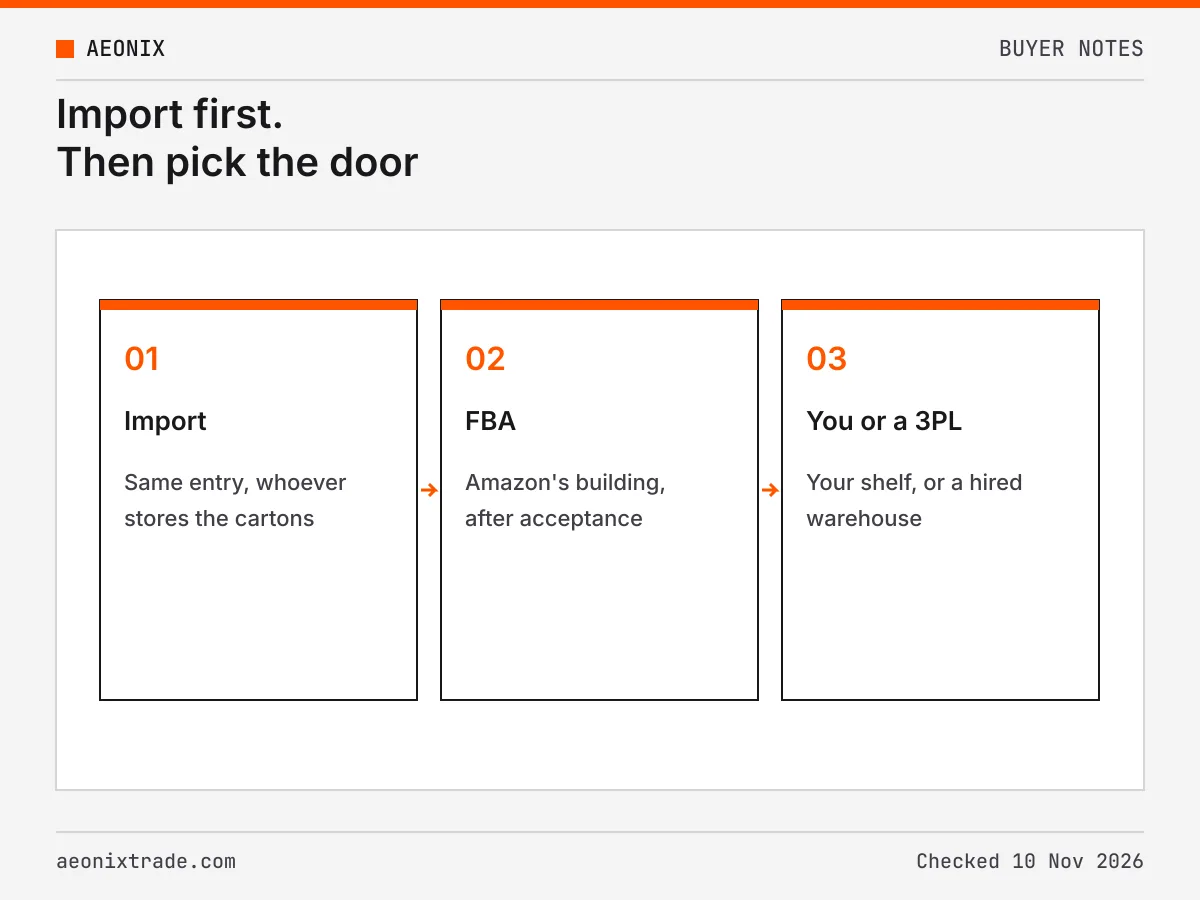
FBA, merchant fulfillment, and a third-party warehouse are three places the cartons can sit after the goods have cleared. They share the same import. Choosing one does not file the entry.
Amazon's page on Fulfillment by Amazon, opened 10 November 2026, says you send products into Amazon's fulfillment centers and Amazon picks, packs, ships, and handles customer service and returns. The Fulfilled by Merchant page, opened the same day, says you fulfill orders from your warehouse, and that you can use it for the whole catalog or together with FBA. A 3PL is neither of those pages. It is a warehouse you hire. Its rate card is a quote, and this article does not print one.
A kitchen-tool lot with three possible doors
A seller in Chicago has one LCL lot of kitchen tools, handed over FCA at the Ningbo container terminal. The commercial invoice, the packing list, and the HS code are the same whether the cartons later go to an Amazon fulfillment center, to the seller's own shelf, or to a warehouse in Joliet. The US entry still has to be filed. How that entry works is importing from China to the United States. The product still has to be legal to sell. That file is Amazon product compliance.
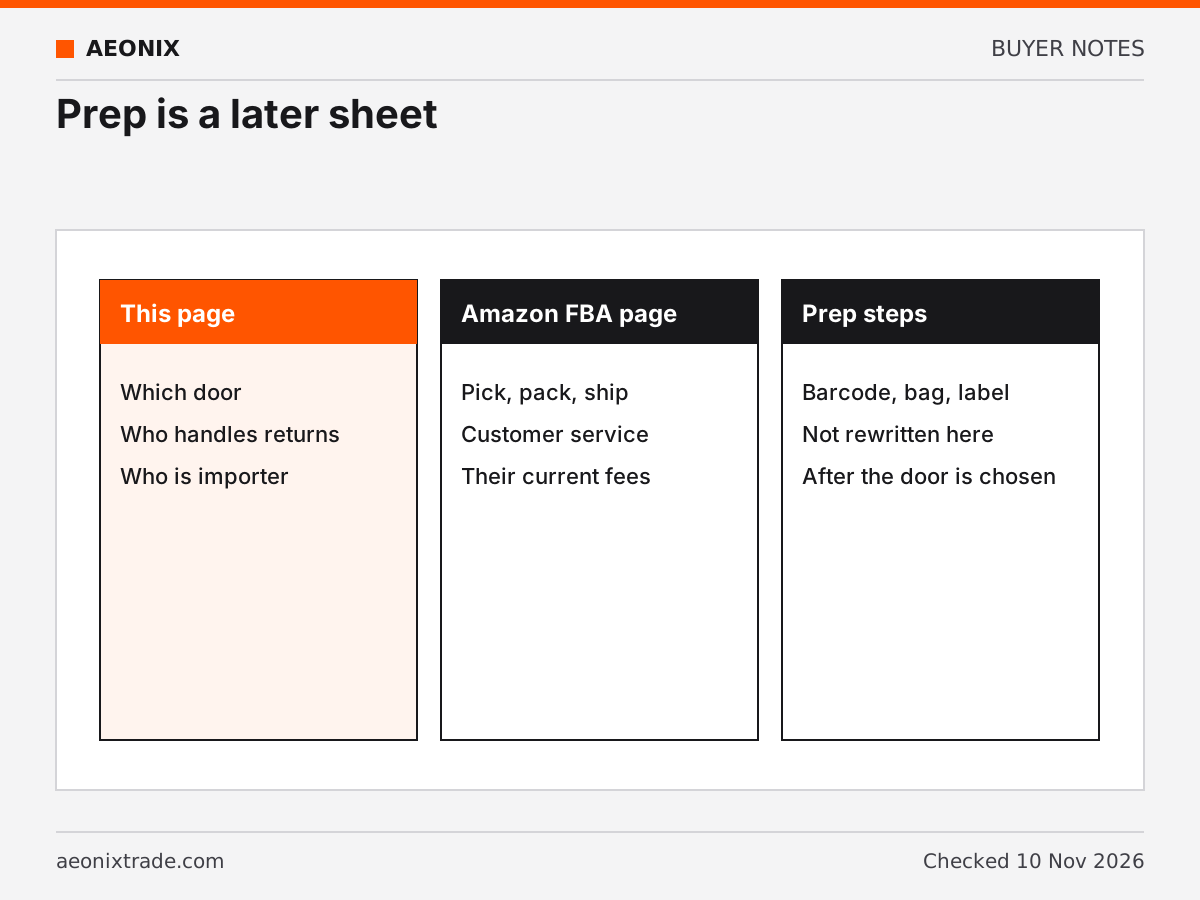
Barcode, poly-bag, and care-label prep is the job you do so a chosen fulfillment center will receive the cartons. It is not the choice among the three models, and it is not the safety file. This page leaves those prep steps alone.
Where the inventory sits
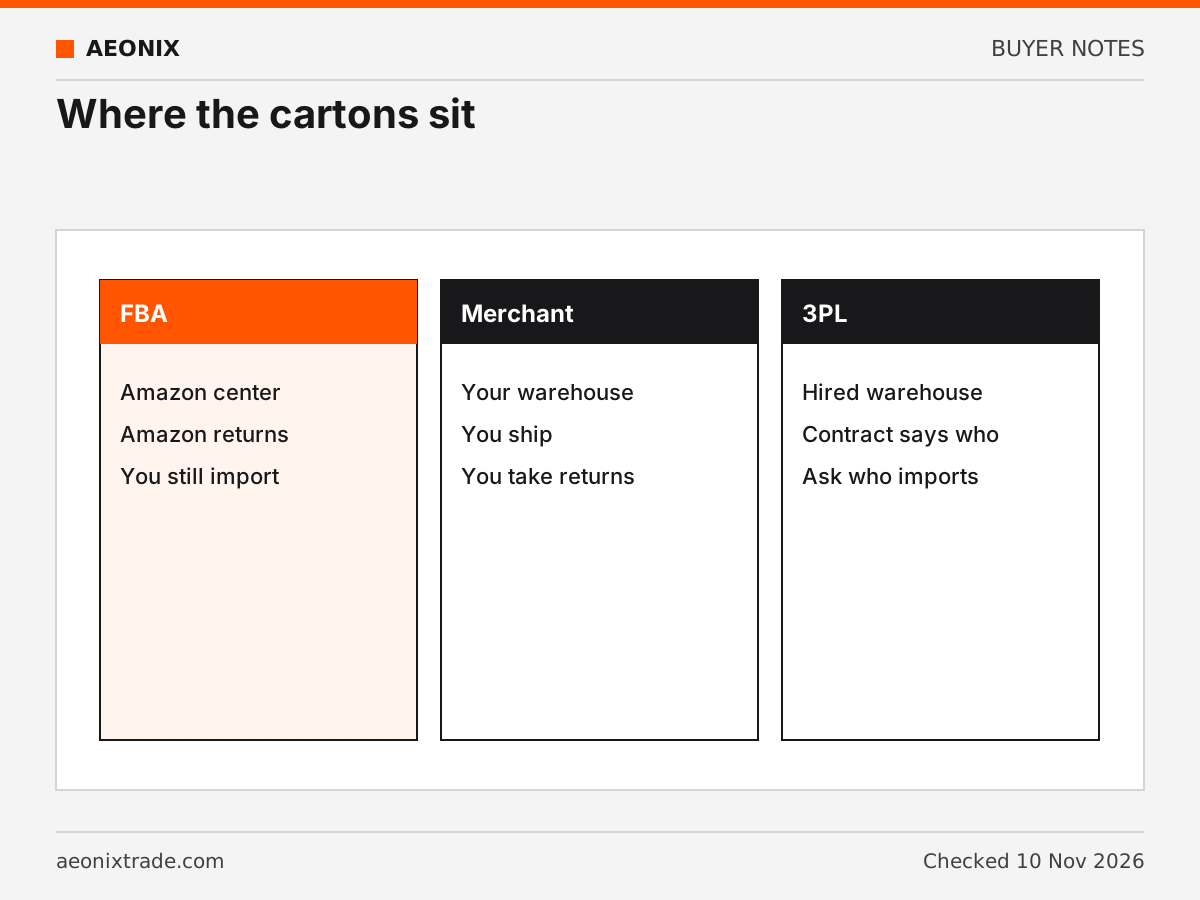
| FBA | Fulfilled by Merchant | 3PL | |
|---|---|---|---|
| Where the cartons are | Amazon fulfillment centers, after Amazon accepts the inbound | A place you control and ship from | A warehouse you contract, which is not Amazon |
| Who prepares the inbound | You, to Amazon's receiving rules for that shipment | You, to your own packing standard | Whoever the contract names: you, or the warehouse |
| Who handles a return | Amazon, on the FBA page's description | You | The warehouse, only if the contract says so |
| Who is importer of record | Still a customs question. An FBA appointment does not answer it | Still a customs question | Ask. A warehouse can be the consignee and still not be the importer |
Amazon's pages describe the two Amazon options. They do not appoint your importer. Fees for storage, referral, or a 3PL's handling change, and they belong on the current official page or on a written quote. Copying a number from a blog would be stale the week the page changes. Put the live quote next to the landed-cost sheet, and leave the duty cell for the broker's reading of the tariff.
What to ask a 3PL
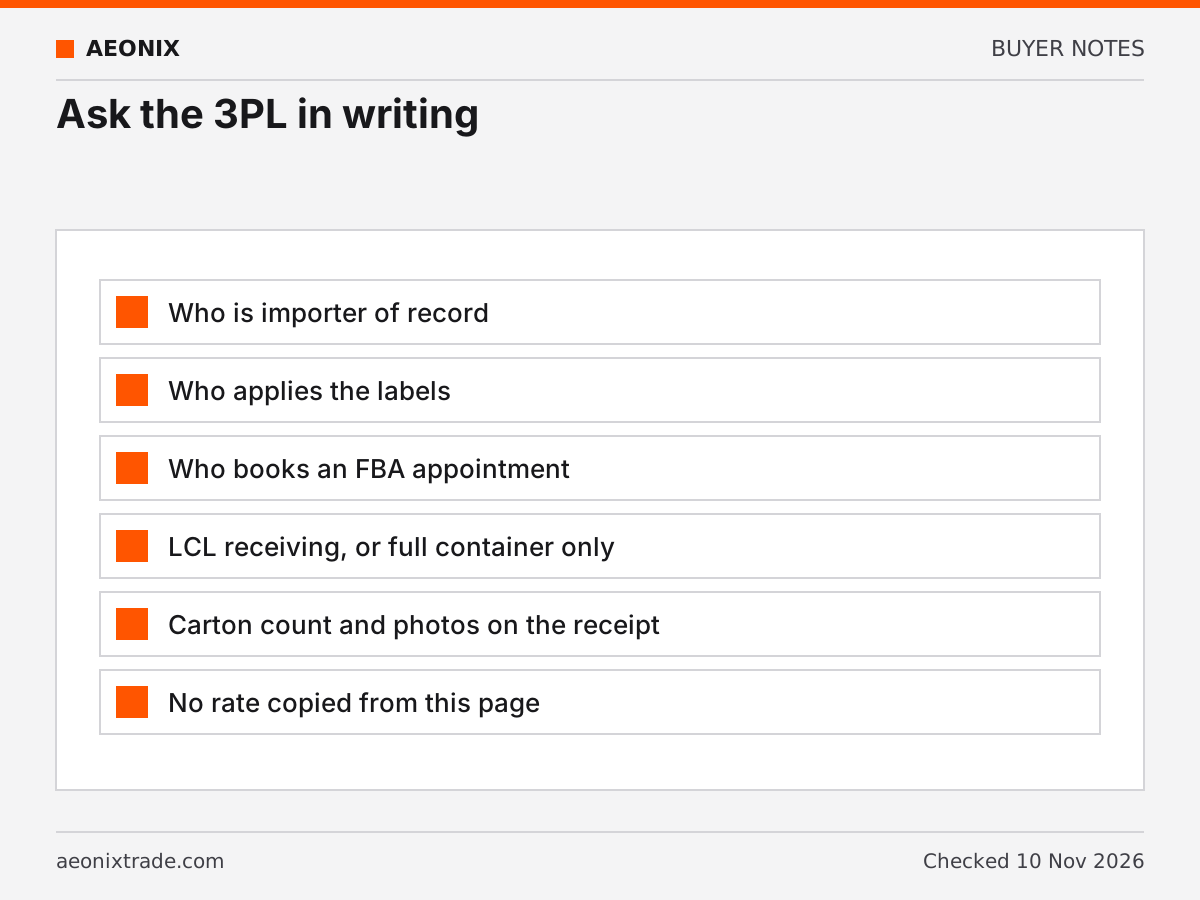
Ask who will be named as importer of record, who applies the labels, and who books the delivery appointment if some cartons later move into FBA. Ask whether the warehouse will receive an LCL deconsolidation or only a full container. Ask for the receiving report you will get: carton count, condition, and photos. A consolidation in China still ends at a named door. Name the door before the forwarder closes the bill of lading.
If the same goods will also be offered on a Shopify store, the fulfillment choice on Amazon does not set the Shopify inbound. That first direct shipment is a first Shopify import. If the cartons are going to an Amazon building in the EU or the UK, the importer and EORI questions are FBA into Europe and the UK.
What usually goes wrong
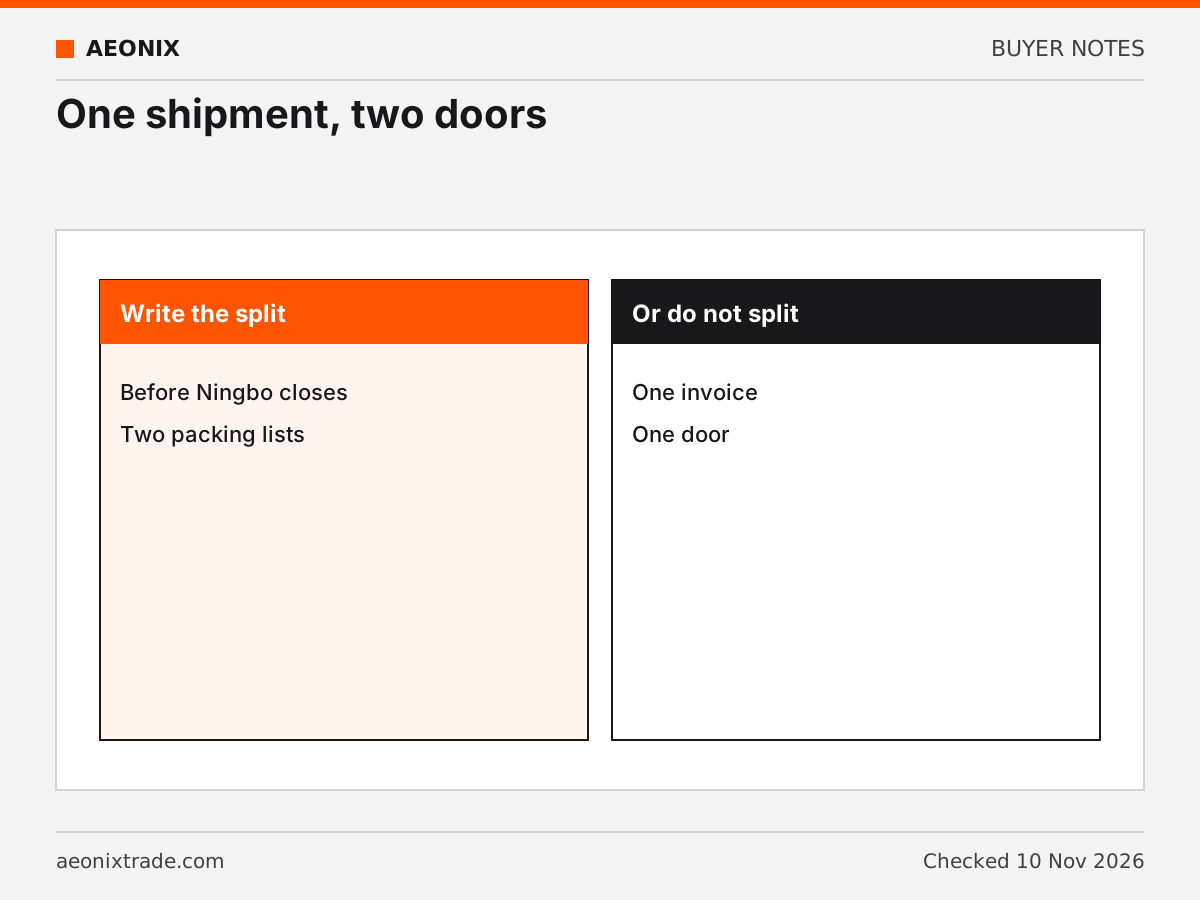
- Splitting one China shipment across FBA and a 3PL without a document plan. One commercial invoice, two doors, and no split packing list is how a count goes missing. Write the split before the container closes.
- Treating an FBA delivery window as proof the goods have cleared. The appointment is a dock time. The entry is a customs filing.
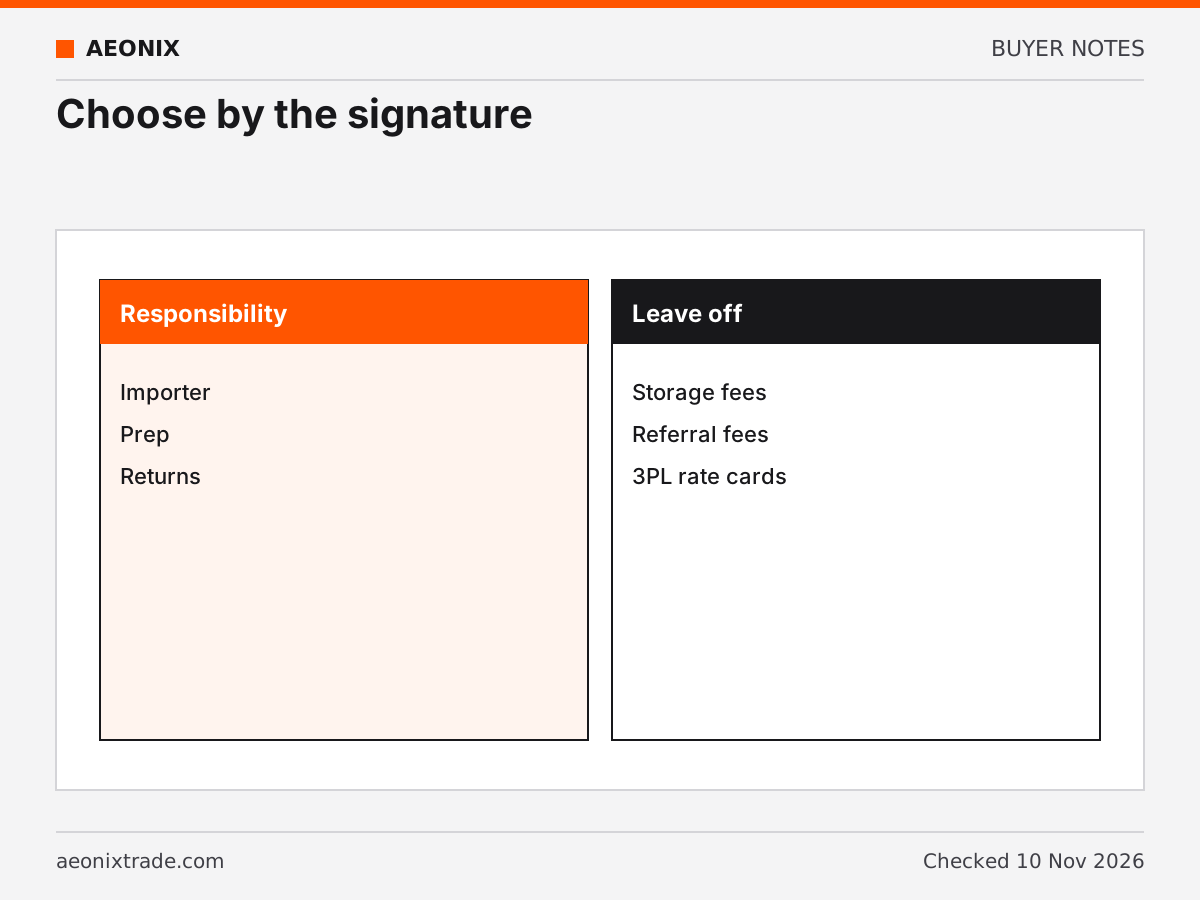
- Asking a 3PL for "Amazon prep" and assuming the warehouse is also the importer. Those are different signatures.
- Picking the model from a fee screenshot. Amazon tells you to review current costs on its own pages. A screenshot in a chat is not that review.
Checklist before you name the door
- Importer of record named, for the country that will clear the goods.
- One commercial invoice and a packing list that match the door, or an agreed split if there are two doors.
- Product-compliance file started, separate from inbound labels.
- FBA, merchant fulfillment, or a 3PL chosen in writing, including who handles returns.
- If a 3PL: labels, appointment, and the receiving report spelled out. No rate copied into the contract from this page.
- Landed-cost sheet updated with the live quote, and duty left to the tariff.
This page does not recommend a warehouse. Send the product, the door, and the Incoterm on the RFQ. How the cartons share a box on the way out of China is LCL from China.
Questions buyers actually ask
Does FBA include customs clearance?
Amazon's fulfillment page describes storage, picking, packing, shipping, and returns. It does not describe your customs entry. The importer and the broker still have that job, whichever door you pick.
Can I use FBA and a 3PL for the same product?
Amazon's merchant-fulfillment page says you can combine merchant fulfillment with FBA. A 3PL can sit in that merchant path if your contract says so. Split the packing list before the cargo leaves Ningbo, so each door has a count.
Where do I read the fees?
On Amazon's current cost pages for the Amazon options, and on a written quote for a 3PL. This article keeps those numbers off the page so a changed tariff or a changed rate card does not leave a wrong figure behind.
The production file next to this one is Private Label Meaning, starting a private label from China, an NNN agreement versus an NDA, and the purchase contract.
Sources
- Amazon: Fulfillment by Amazon. Opened 10 November 2026. Inventory goes to Amazon fulfillment centers; Amazon picks, packs, ships, and handles returns.
- Amazon: Fulfilled by Merchant. Opened 10 November 2026. You fulfill from your warehouse, alone or together with FBA.
- ICC: Incoterms 2020. FCA names the handover place. It does not choose a fulfillment model.
Submit sourcing request
Can't find what you need?
Start with a product or image link, an approximate quantity and destination. Other details can follow.