AQL Meaning in Quality Inspection: Sample Size Ac/Re and Buyer Decisions

Mike Liu contributes to AeonixTrade's buyer-education library by researching trade terminology, checking source references, and turning shipping, logistics, and quality-control concepts into practical examples.
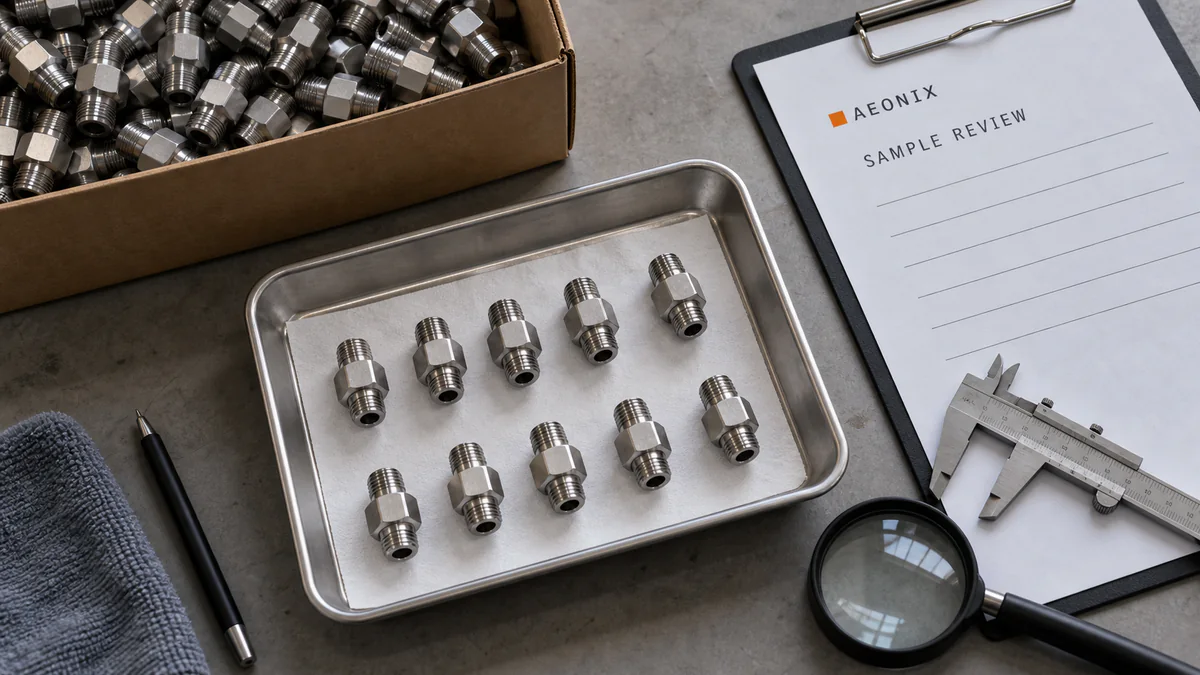
AQL means Acceptance Quality Limit, an index used to select an acceptance-sampling plan for a lot. The chosen plan sets a sample size and acceptance/rejection thresholds. AQL 2.5 does not simply mean that 2.5% defects are allowed in the inspected sample, and a passing result does not prove every unit is defect-free.
AQL is useful because inspecting every unit can be slow, destructive, or uneconomic. It also creates risk: the sample can lead to acceptance of a poor lot or rejection of a good one. Buyers therefore need a complete sampling instruction, a clear defect specification, and a remedy plan—not a single AQL number copied into a purchase order.
What AQL means
ISO 2859-1:2026 is the current third edition of the international standard for AQL-indexed lot-by-lot inspection by attributes. ISO describes AQL as the maximum average percentage of defective items considered acceptable for the purpose of the sampling system. The standard uses AQL together with other plan inputs to determine sample sizes and acceptance or rejection thresholds.
That definition refers to the behaviour of a sampling scheme and a continuing process average. It is not permission to manufacture a fixed percentage of bad units, and it is not a direct instruction to count 2.5% of the sample. The actual decision comes from the selected plan's acceptance number (Ac) and rejection number (Re).
AQL also does not define whether a scratch, colour variation, electrical failure, wrong label, or safety hazard is critical, major, or minor. The buyer's approved specification and defect list must define what is being counted before the inspector samples the lot.
Lot sample inspection level and plan logic
An attribute-sampling decision classifies inspected results—for example, conforming or nonconforming—rather than measuring a continuous value such as diameter or weight. The American Society for Quality's Z1.4 and Z1.9 overview distinguishes attribute plans from variable plans and explains that acceptance plans supply both sample sizes and decision criteria.
A practical lot-to-decision flow is:
- Define the lot. Record the units covered by one inspection decision and confirm that the lot is complete and identifiable.
- Choose the sampling standard and edition. Do not mix a current title with a table copied from an unknown or withdrawn edition.
- Choose inspection severity and level. The contract must state the agreed plan inputs rather than leaving the inspector to guess.
- Use the authorized standard lookup. Lot size and inspection level lead to a code letter and sample size under the selected plan.
- Assign AQLs to defined defect classes. Critical, major, and minor labels must point to a buyer-approved defect list.
- Select the units using the required sampling method. The sample must represent the lot; convenient cartons at the door are not automatically representative.
- Inspect and count consistently. Record nonconformities or nonconforming units using the plan and defect-class rules.
- Compare counts with Ac/Re. Accept or reject the lot under the selected plan and apply the agreed commercial remedy.
AQL is one input in this chain. If the lot identity, inspection level, sample selection, defect definition, or decision rule is missing, “inspect at AQL 2.5” is not a reproducible instruction.
What Ac and Re mean
Ac is the acceptance number for a stated sampling plan and defect class. Re is the rejection number. After inspecting the selected sample, the inspector compares the observed count with those thresholds. In a single-sampling plan, a count at or below Ac produces the plan's accept decision; a count at or above Re produces its reject decision.
Those numbers are not universal. They depend on the authorized plan lookup, including the standard edition, lot size, inspection level, sampling severity, AQL, and whether the plan is single, double, or multiple. A table found in an old blog post can silently supply the wrong code letter, sample size, or threshold.
Acceptance is a statistical lot decision, not a statement that all uninspected units conform. Rejection is also not automatic proof that every unit is unusable. The purchase contract should say what happens after the plan decision: rework, sorting, replacement, reinspection, concession, shipment hold, or cancellation.
Critical major and minor defects
| Buyer-defined class | Typical decision concern | Example to define precisely |
|---|---|---|
| Critical | Safety, legal compliance, or a hazard that can cause serious harm. | Accessible live electrical part, prohibited material, or a sharp edge in a user contact area. |
| Major | Failure of intended use, saleability, durability, or an important specification. | Product does not power on, wrong capacity, broken closure, or incorrect mandatory label. |
| Minor | Limited departure that does not materially prevent intended use but affects finish or presentation. | Small cosmetic mark outside the agreed viewing zone or a slight print-position deviation within a defined boundary. |
These examples are illustrative, not universal. A cosmetic mark on a disposable shipping carton can be minor while the same mark on a premium retail surface can be major. A missing symbol can be critical in one regulated market and irrelevant in another. The buyer should supply photographs, measurable limits, locations, tolerances, and classification examples before inspection.
Using different AQLs for different defect classes is common in buyer specifications, but the actual values are a risk decision. AeonixTrade does not prescribe universal critical, major, or minor AQL values in this article.
An illustrative buyer decision after an authorized lookup
Illustrative example: A buyer has one identified lot of reusable drink bottles. The purchase contract states the current sampling standard and edition, inspection level, sampling severity, and separate AQLs for the buyer's major and minor defect lists. An authorized ISO 2859-1:2026 lookup returns the required sample size and the Ac/Re thresholds for each class.
The inspector selects the required units across the lot, tests the agreed functions, and records each finding once under the defined classification rules. Let the authorized plan's major acceptance number be AcM and rejection number be ReM. Let the observed major count be DM. The decision is made by comparing DM with the authorized thresholds—not by dividing DM by the sample size and comparing the result directly with the AQL label.
The same process is applied to the minor class using its own authorized values. If the lot reaches a reject decision for either class, the buyer follows the agreed remedy and does not change a major defect to minor merely to force a pass.
No numeric sample size or Ac/Re value appears in this example because this public drafting process does not have an authorized copy of the current standard's proprietary tables. Values must be cross-checked against an authorized current source before they can be inserted. The variables show the decision logic without pretending that an old or inferred table is current.
Sampling risk and what a pass does not prove
A sample contains less information than a full inspection. A lot with nonconforming units can pass, and a relatively good lot can fail. The probability depends on the actual lot quality and the sampling plan's operating characteristics. AQL-indexed inspection balances producer and consumer risks; it does not eliminate them.
Sampling also detects outcomes but does not repair the production process. ASQ notes that sampling can identify problems while process controls are needed to find and correct when and where defects occur. A strong buyer program combines specifications, approved samples, supplier capability, incoming-material control, in-process checks, and final inspection.
A passing result therefore means only that the inspected lot met the selected sampling plan's acceptance criterion for the defined checks. It does not mean:
- every unit was inspected;
- the sample contains zero defects;
- the product complies with every law or standard;
- hidden or untested characteristics conform;
- future lots will have the same result;
- the supplier's process is capable or controlled.
How to write an inspection requirement
A purchase order or inspection booking should state enough information for another qualified inspector to reproduce the decision:
- Product, model, approved sample, specification revision, and lot definition.
- Sampling standard and exact edition, such as ISO 2859-1:2026 where appropriate.
- Inspection type, severity, and level.
- Buyer-approved critical, major, and minor defect definitions.
- AQL selected for each applicable class.
- Functional, safety, packaging, quantity, workmanship, and labelling checks.
- Random-selection method and carton-distribution requirement.
- Ac/Re lookup responsibility and evidence source.
- Photo, video, measurement, and report requirements.
- Commercial action after acceptance, rejection, rework, or reinspection.
Start with the broader quality control process, then turn the checks into a specific pre-shipment inspection checklist. Supplier identity and production capability still need separate review; see how to verify a supplier.
Buyers can organize initial risks with the supplier risk and QC planner or discuss quality control inspection support. The final sampling plan and product acceptance criteria remain the buyer's contractual and professional decision.
Common AQL mistakes
- Treating AQL as a literal sample percentage. The plan's Ac/Re thresholds make the decision.
- Copying a table without its edition. ISO 2859-1:2026 replaced the prior edition.
- Letting the inspector define defects at the factory. Classifications should be agreed before inspection.
- Sampling only accessible cartons. Convenience can bias the sample.
- Changing classifications after seeing the count. That undermines the agreed decision rule.
- Using a pass as a quality guarantee. Acceptance sampling always leaves uncertainty.
- Ignoring remedies. A reject result is incomplete unless the contract says what happens next.
Frequently asked questions
Does AQL 2.5 mean 2.5% defects are allowed?
No. AQL indexes a sampling plan. The actual sample size and acceptance/rejection thresholds come from the selected authorized plan, and the observed count is compared with Ac/Re.
How is an AQL sample size chosen?
The selected standard and edition use inputs such as lot size, inspection level, severity, and plan type to determine a code letter and sample size. Use an authorized current lookup.
What do Ac and Re mean?
Ac is the acceptance number and Re is the rejection number for a defined plan and defect class. They are decision thresholds, not universal constants.
Can one inspection use different AQLs?
A buyer can specify different plan inputs for defined defect classes, but the values should reflect product and business risk and be agreed before inspection.
Does passing AQL mean the lot has no defects?
No. It means the sample result met the selected plan's acceptance criterion. Uninspected units remain uncertain.
Which ISO edition should a new article reference?
ISO lists ISO 2859-1:2026 as the current third edition, published in January 2026. Confirm the applicable contractual or regulatory requirement before use.
Sources
Submit sourcing request
Can't find what you need?
Start with a product link or photo, an approximate quantity and destination. Other details can follow.