A Yiwu Warehouse Before the Goods Are Exported
Published by Aeonix Trade.
Last fact-checked: November 10, 2026.
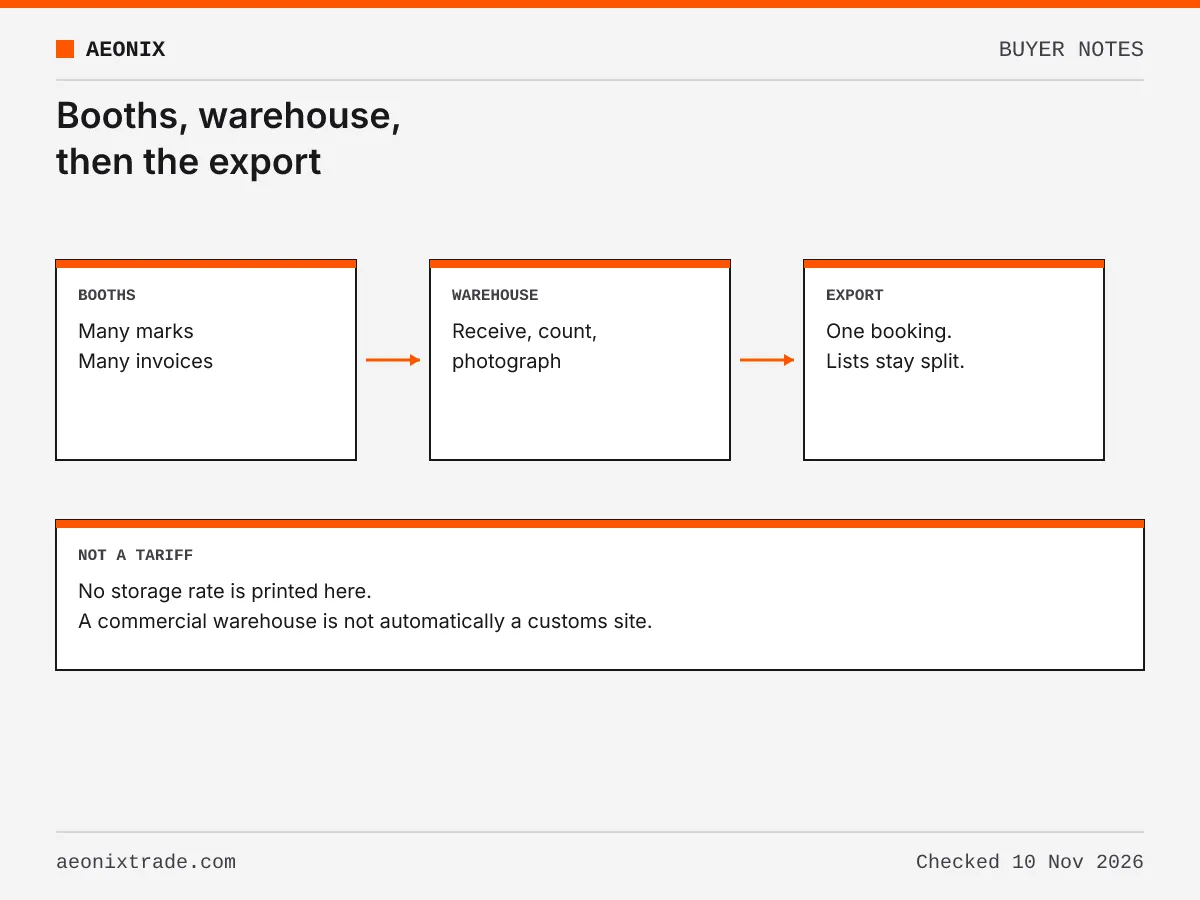
A Yiwu warehouse, for a buyer who has just left several booths, is the room where those cartons sit before anyone books a ship. The work is intake: marks, counts, a photo, and a refusal if the carton is not the one you ordered. The work of turning those lots into one LCL consol or one container is the other article. This page stops at the door of the warehouse. It does not print a storage rate, because none was taken from an official tariff. This is Zhejiang. Goods sitting here are not sitting in the Dubai venue that shares the name, which is a different place.
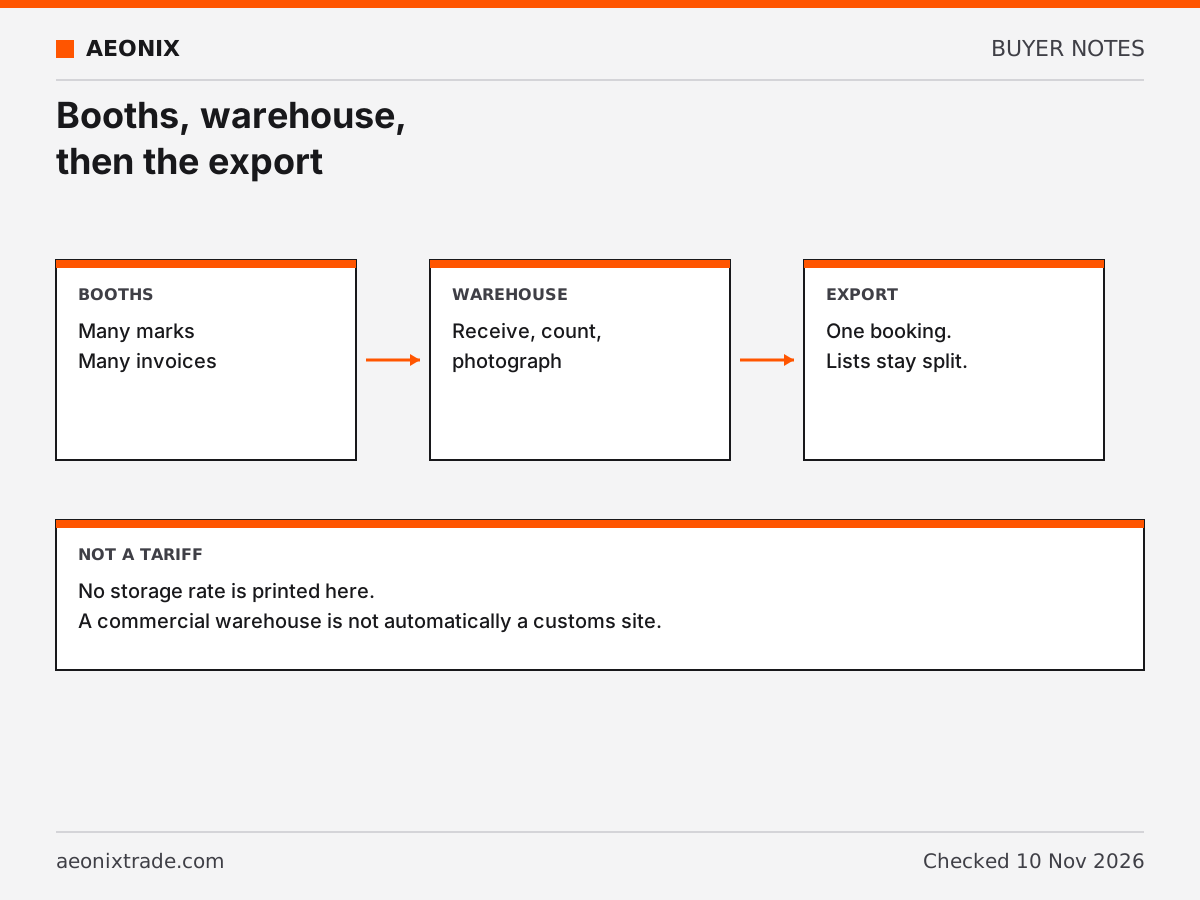
How the booking works once the lots are clean is consolidating goods from many booths. The sea leg for a small cube is how LCL from China works, and the shorter definition is what LCL means. The buying that created the cartons is how to buy from Yiwu.
Yiwu market storage is not the booking
Each booth delivers cartons with its own mark. The warehouse receives them against that booth's list. A lot that does not match stays out of the loading pile. Tell the warehouse what "received" means before the first van arrives: booth, carton count, marks, and a photo of one open carton per SKU. A note that only says a total number of cartons cannot be reconciled to three suppliers.
Chinagoods, on the District 2 introduction opened 10 November 2026, says the auxiliary buildings include logistics among other service desks. That is a mention of a service function. It is not a rate card, and it is not a statement that your forwarder's warehouse is a customs-supervised site. Read it on the Chinagoods market page. The English home of the customs administration, GACC, was open the same day and did not, on that home page, publish a Yiwu market storage tariff. A commercial warehouse is a contract with the warehouse. It does not become a bonded or supervised site because the cartons used to be in a booth.
The export declaration, when the goods do leave, is filed through China's International Trade Single Window. Your broker files. You still own the description. The commercial invoice and the packing list stay split by supplier even when the freight is one booking. Those documents are the commercial invoice and the packing list.
Storage on this page, the ship on the other
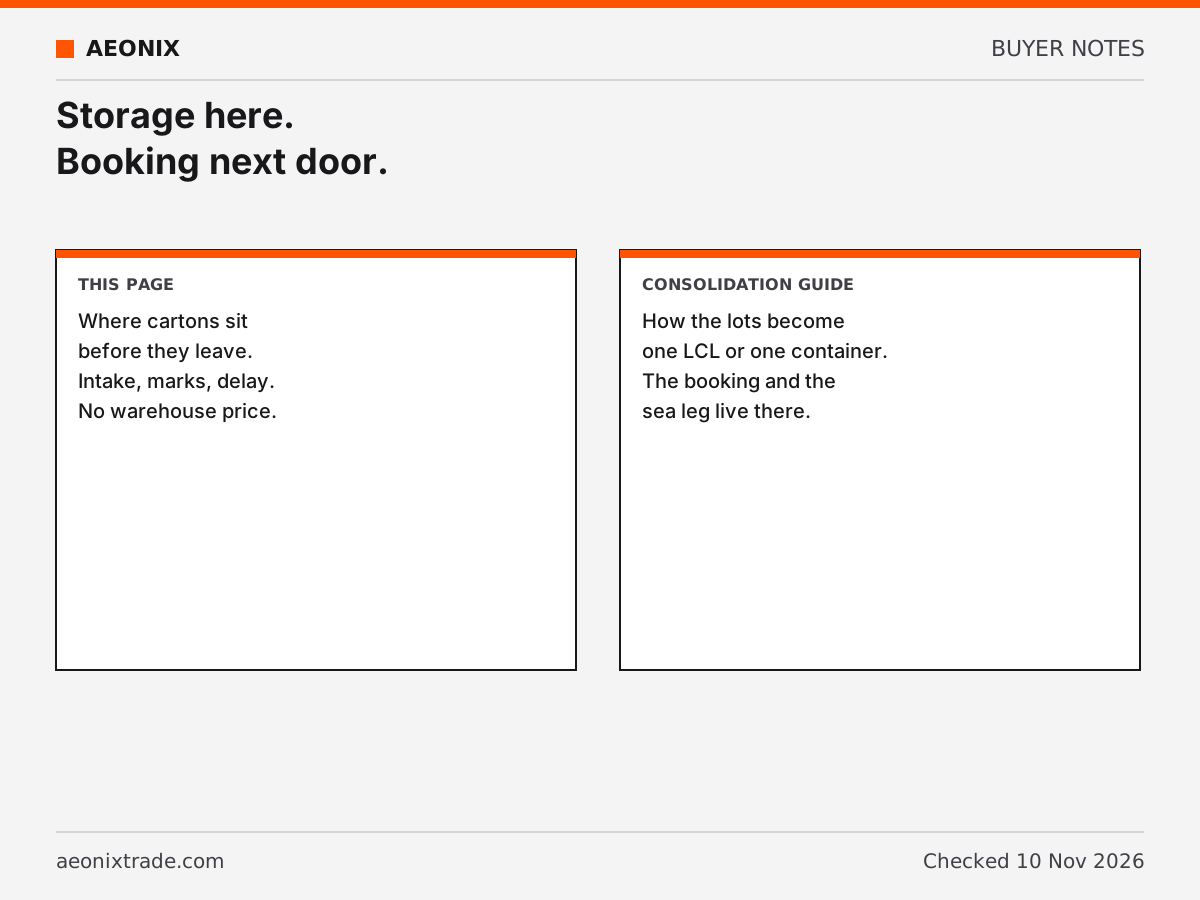
| This page | The consolidation guide | |
|---|---|---|
| Question | Are these the cartons, and may they wait | How the clean lots become one departure |
| Record | Intake: marks, count, photo, refusal | Booking, cube, and the export filing |
| Money | No storage rate is printed | No freight rate is printed there either |
| What goes wrong | A substitute colour accepted at the door | Several descriptions merged into one vague line |
The service that receives this kind of mix, if you want it run as a job rather than explained as a page, is consolidation shipping. The LCL product page is LCL shipping from China.
Marks, cartons, weight
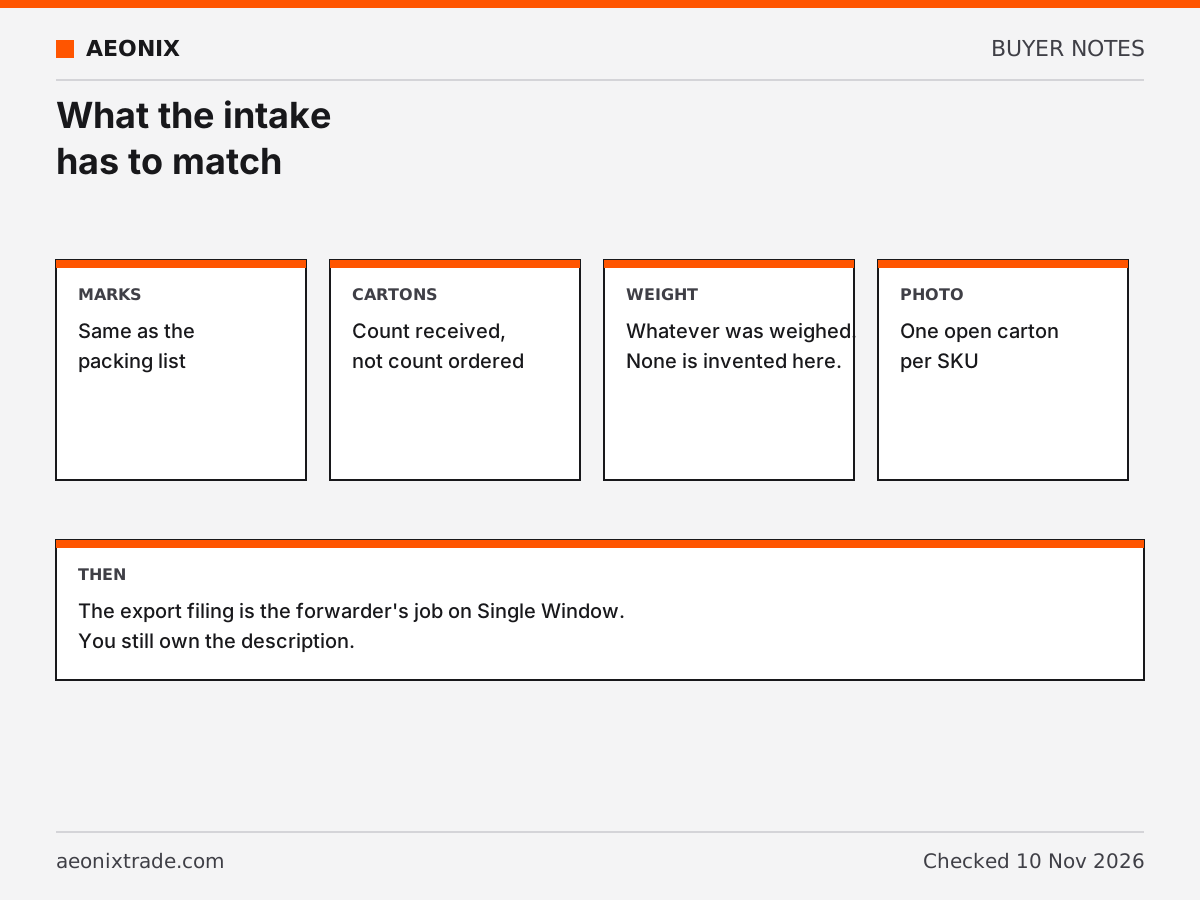
The mark on the carton matches the mark on that supplier's packing list. The count you write is the count received, not the count that was ordered, until those two numbers are the same. Weight goes in the file only if someone weighed the cartons. This article does not invent a kilogram. A photo of one open carton per SKU is what lets you see a substitute colour before the pile is wrapped.
If you told the warehouse to refuse a substitute, that instruction has to exist before the van arrives. The clerk will not invent your standard. The floor version of the same idea, done before the cartons ever leave the booth, is the floor quality check.
Three booths and a week of waiting
A buyer leaves District 1 with toys and hair clips and District 2 with gift bags. None of the lots fills a container. The cartons go to one warehouse and wait until the third booth delivers. Each invoice stays its own file. The warehouse count is allowed to hold a short lot out of the booking. Nobody merges the three descriptions to make the form shorter. The later booking is the consolidation article. The case is typical. It has no weights and no storage charge, because none were measured.
A second buyer asks the warehouse to keep the cartons "for a while" without a date. The risk is not a number this page can print. The risk is that cartons, lists, and memory drift apart. The market those cartons came from is the Yiwu market guide.
At the warehouse door
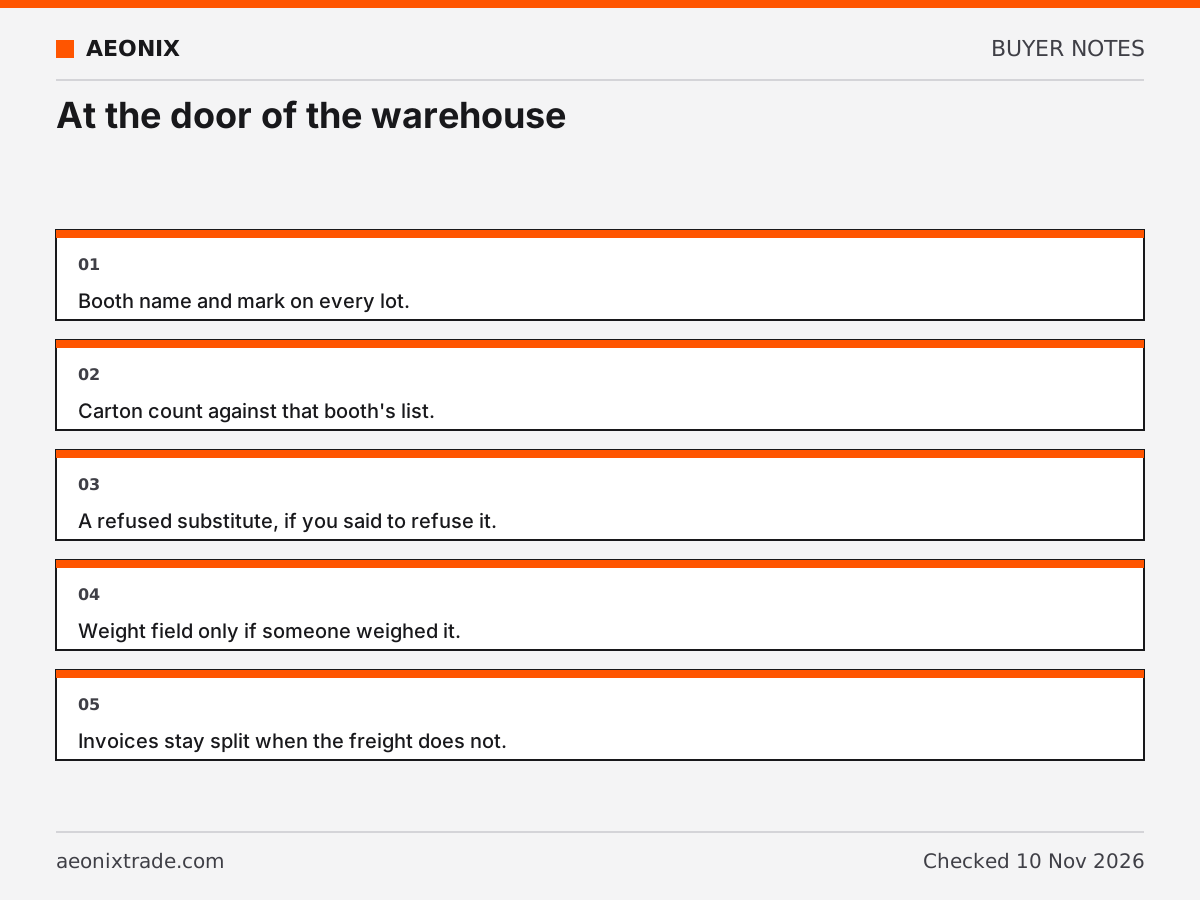
- Booth name and mark on every lot.
- Carton count against that booth's list, not against a blended total.
- A substitute the warehouse was told to refuse, actually refused.
- A weight field only if someone weighed the cartons.
- Invoices stay split when the freight does not.
What a long sit can do, without a rate card
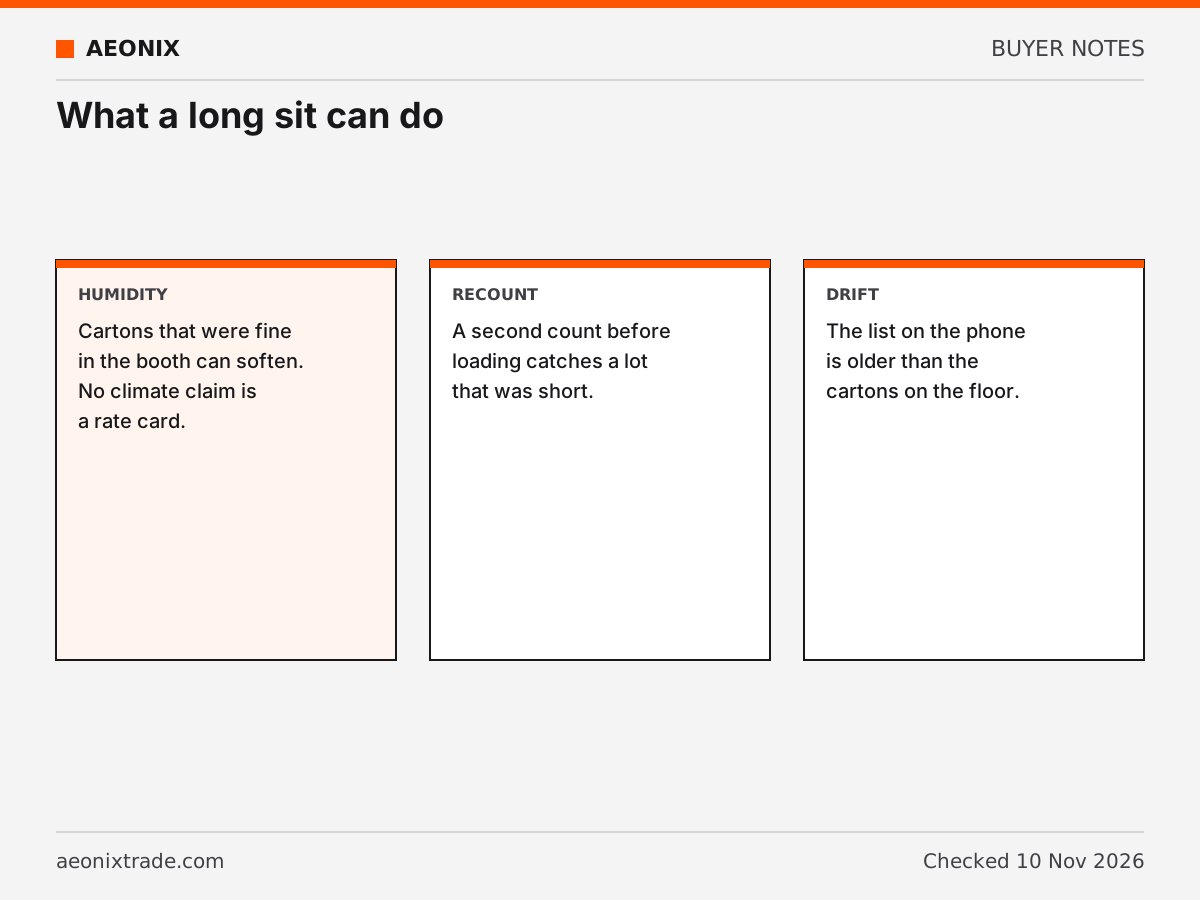
- Cartons that were sound in the booth can soften if the room is damp. That is a reason to look again. It is not a storage price.
- A second count before loading catches a lot that was short on the day it arrived.
- The list on the phone gets older than the pile on the floor. The packing list has to be the current one.
Is this warehouse a bonded warehouse?
Not because this article says so. A commercial store is a commercial store until the customs status is on the warehouse's own approval. The English customs home did not publish a Yiwu market tariff on the day it was opened. Destination bonded storage, if you need it after arrival, is a different country's rule and is not described here.
Can the hotel hold the cartons instead?
A hotel may hold a sample if you asked the desk. That is not this warehouse, and it is not an export intake. The hotel question is where to stay near the trade city.
Send the booth list and the marks you expect on the RFQ form if you want the intake defined before the first van moves.
The rest of the same visit is getting to Yiwu, Futian versus the trade city, an invitation letter for the visit, and how many days to stay.
Official sources
- General Administration of Customs of China, English home, opened 10 November 2026. No Yiwu storage tariff was published on that home page.
- China International Trade Single Window, for the export filing after the cartons are ready.
- Chinagoods, opened 10 November 2026, mentioning logistics among District 2's auxiliary services. Not a rate.
Submit sourcing request
Can't find what you need?
Start with a product or image link, an approximate quantity and destination. Other details can follow.