FCA Meaning in Shipping: When Risk Passes and How It Differs From FOB

Gary Liu leads day-to-day operations at AeonixTrade and reviews practical guidance on cross-border sourcing, supplier coordination, payment terms, and buyer controls.
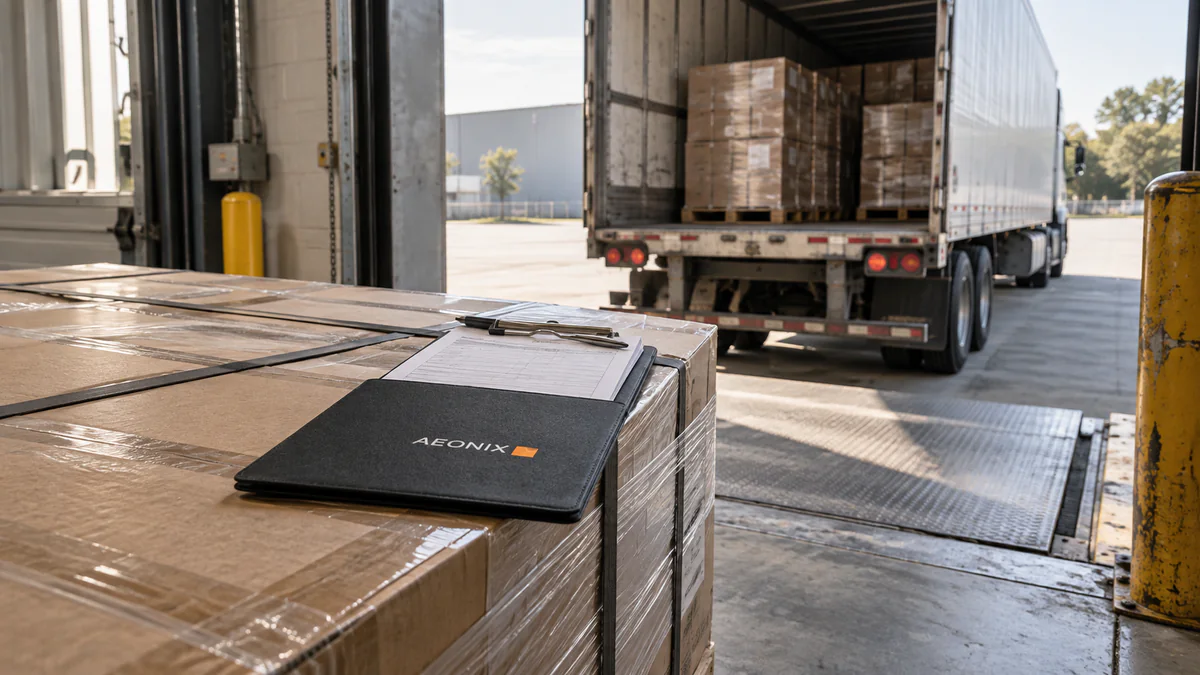
FCA (Free Carrier) means the seller delivers export-cleared goods to the buyer's nominated carrier or person at an exact named place. Risk passes at that delivery point, while the buyer normally arranges the main carriage. The loading duty changes depending on whether delivery occurs at the seller's premises or somewhere else.
That short definition is useful only if the purchase contract names a precise place. “FCA China” is not precise enough. A factory gate, loading bay, freight forwarder's warehouse, rail terminal, or airport cargo terminal can place the delivery event—and therefore the risk handoff—at a materially different point in the journey.
What FCA means in shipping
FCA is one of the eleven Incoterms® 2020 rules published by the International Chamber of Commerce (ICC). It can be used for any mode of transport, including road, rail, air, sea, and multimodal container movements. It divides delivery obligations, costs, and risk between seller and buyer. It does not decide product quality, payment timing, legal title, insurance cover, or what happens after a breach of contract.
The seller completes delivery in one of two ways. At the seller's premises, delivery occurs when the goods are loaded onto the means of transport arranged by the buyer. At another named place, the seller brings the loaded vehicle to that place and makes the goods available to the buyer's nominated carrier or person, ready for unloading. The ICC's FCA explanatory notes make this distinction central to the rule.
The precise named place controls the handoff
A well-written FCA term identifies the rule, the exact place or point, and the edition: FCA [precise named place or point], Incoterms® 2020. The point might be “Loading Bay 2, Supplier Factory, Ningbo, China” or a named forwarder's warehouse with a complete address. The more operationally precise the point, the less room there is for both parties to assume that the other controls loading, pickup, terminal handling, or delay risk.
The named place is not decorative address information. It marks where the seller's delivery obligation is completed, where risk transfers, and where costs begin to move to the buyer's account. If the parties name a broad location but omit the point within it, the seller may be able to select its preferred point. A buyer should therefore align the purchase contract, supplier quote, booking instruction, and forwarder pickup order before production finishes.
FCA seller and buyer responsibilities
| Activity | Seller under FCA | Buyer under FCA |
|---|---|---|
| Goods and commercial invoice | Supplies conforming goods and the agreed sales document. | Pays the price under the separate payment terms. |
| Export packing and marking | Packages and marks the goods as required for the agreed transport. | Gives any buyer-specific transport information in time. |
| Export clearance | Handles export formalities where applicable. | Provides assistance or information the seller reasonably needs. |
| Loading at seller premises | Loads the buyer-arranged collecting vehicle. | Nominates the carrier and makes the vehicle available on time. |
| Delivery at another place | Brings the loaded vehicle to the named point ready for unloading. | Controls unloading through the nominated carrier or person. |
| Main carriage | Normally has no duty to contract the main carriage. | Books and pays for the main carriage unless the contract adds another arrangement. |
| Import clearance and duties | Provides agreed documents or assistance. | Handles import formalities, duties, and taxes. |
This table is a practical summary, not a replacement for the ICC rules or a negotiated sales contract. The buyer should also decide who purchases cargo insurance, which party pays charges not clearly included in a carrier quote, and which documents trigger payment.
FCA at the factory versus FCA at another place
Delivery at the seller's premises
Suppose a supplier sells under FCA at its factory loading bay. The buyer appoints a forwarder and the forwarder sends a truck. The supplier must load the packed goods onto that collecting vehicle. Risk does not pass merely because cartons are labelled, moved near the gate, or made available in the warehouse. The loading event matters.
Delivery at a forwarder's warehouse or terminal
Now suppose the contract names the buyer's consolidator warehouse. The seller arranges the local truck, arrives at the named warehouse with the goods still on that vehicle, and makes them available to the nominated party ready for unloading. The seller does not automatically take on the warehouse's unloading operation. The precise contract wording and operational booking must match this handoff.
This is why buyers should not treat “FCA price” as a complete landed quote. An FCA supplier price may include export packing, local transport to the named point, and export clearance, but it normally excludes the buyer's main carriage, destination charges, import formalities, duties, and inland delivery after import. Compare the complete cost boundary, not only the unit price.
FCA vs FOB vs EXW
| Question | FCA | FOB | EXW |
|---|---|---|---|
| Transport modes | Any mode, including containers and multimodal transport. | Sea or inland waterway transport for goods delivered on board. | Any mode, though primarily suited to domestic trade in the ICC guidance. |
| Delivery point | Buyer-nominated carrier or person at the exact named place. | On board the vessel at the named port of shipment. | Goods placed at the buyer's disposal at the named place. |
| Export clearance | Seller. | Seller. | Buyer in the rule, which can be impractical for a foreign buyer. |
| Loading at seller premises | Seller loads the collecting vehicle. | Not the defining delivery event. | Seller has no loading duty under the rule. |
| Container fit | Often the clearer choice when a container is handed to a carrier before vessel loading. | Can create a mismatch when the seller loses physical control at a terminal before on-board delivery. | Can leave export and loading tasks with a buyer that cannot perform them locally. |
The ICC's Incoterms® 2020 checklist points buyers toward FCA for container or multimodal movements and toward FOB when suitable general or bulk cargo is delivered directly on board a vessel. For a deeper explanation of the maritime term, read FCA vs FOB. For the factory-availability boundary, compare FCA vs EXW.
An illustrative named-place shipment story
Illustrative example: A buyer orders 600 boxed countertop appliances. Quote A says “FCA supplier factory,” while Quote B says “FCA forwarder warehouse, Shenzhen.” Quote B is slightly higher because the supplier includes the local truck to the warehouse. That does not automatically make Quote B worse; it moves a real transport task and its cost to the seller before delivery.
The buyer selects Quote B but improves the contract wording by adding the forwarder's full warehouse address, receiving window, booking reference, and Incoterms® 2020 edition. The supplier clears the goods for export and sends the loaded truck to the named warehouse. When the goods arrive ready for unloading and are placed at the nominated forwarder's disposal, delivery occurs and risk passes. The buyer's forwarder then controls unloading, consolidation, and main carriage.
If the buyer had written only “FCA Shenzhen,” a disagreement could emerge over whether delivery meant the factory, a truck yard, or the forwarder's facility. The story is not evidence about a real AeonixTrade shipment and is not legal advice. It shows why the named point belongs in both the commercial agreement and the logistics instruction.
FCA quote and contract checklist
- Write the complete named place and the precise handoff point.
- Add “Incoterms® 2020” so the edition is not assumed.
- Confirm whether the named point is the supplier premises or another place.
- Make the buyer's carrier nomination and pickup window operationally possible.
- Confirm what the supplier price includes before delivery: packing, loading, local transport, terminal handling, and export formalities.
- Price the buyer side separately: main carriage, insurance, destination charges, customs, duties, and final delivery.
- Align document instructions with the payment method, including any need for an on-board bill of lading.
- Record delay, failed pickup, inspection, and damage-notification procedures in the sales contract.
When requesting supplier prices, prepare an RFQ with the named place instead of asking only for an “FCA price.” The extra line of detail makes competing quotes easier to compare and gives the supplier and forwarder the same handoff instruction.
Common FCA mistakes
- Naming a country or city only. That leaves the delivery point unclear.
- Using FOB automatically for containers. The seller may hand the container to a carrier before it is loaded on board.
- Treating risk and cost as the same thing. The sales contract may allocate some costs separately, but the Incoterm still defines delivery and risk.
- Assuming FCA includes insurance. FCA does not give either party a cargo-insurance obligation under the rule.
- Ignoring loading differences. Loading belongs to the seller at its premises; unloading does not automatically belong to the seller at another named place.
- Letting the quote and booking use different places. A precise contract cannot protect the buyer if the pickup order sends the carrier somewhere else.
Frequently asked questions
Who pays freight under FCA?
The buyer normally arranges and pays the main carriage after delivery. The seller may pay local transport to the named place when that place is away from its premises. The quote should separate those stages.
When does risk pass under FCA?
Risk passes when the seller completes delivery at the agreed point. At the seller's premises, that is after loading the buyer-arranged collecting vehicle. At another named place, it is when the loaded seller vehicle arrives and the goods are made available ready for unloading.
Who clears exports under FCA?
The seller handles export clearance where applicable. This is one reason FCA is often more workable for an international buyer than EXW.
Is FCA always better than FOB for containers?
No term is universally preferable. FCA often matches container operations better when the seller delivers to a carrier or terminal before vessel loading. The contract should follow the real delivery process and the parties' capabilities.
Does FCA include insurance?
No. The parties can choose to insure their respective risks, but FCA itself does not require the seller or buyer to buy cargo insurance.
Sources
Submit sourcing request
Can't find what you need?
Start with a product link or photo, an approximate quantity and destination. Other details can follow.