FOB Meaning in Shipping: What Buyers Actually Take Over
Published by Aeonix Trade.
Last fact-checked: June 10, 2026. This guide is based on the official sources listed at the end.
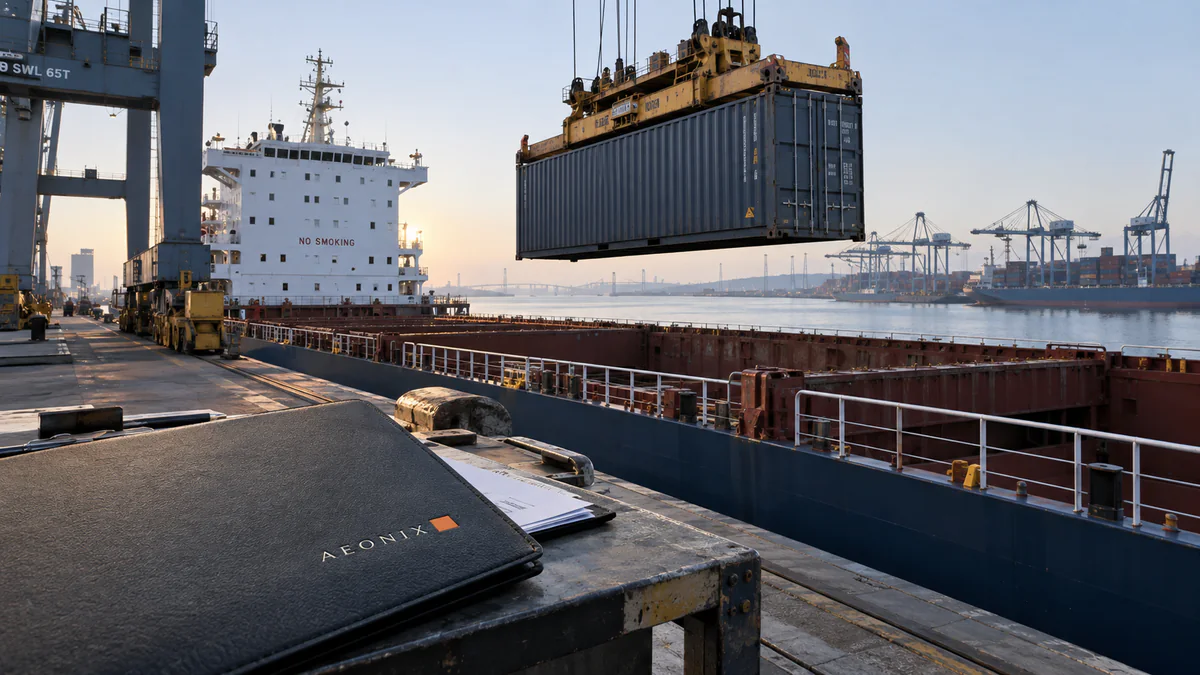
Quick answer: FOB means Free On Board. In classic sea freight use, the seller handles export-side work until the goods are loaded on board the named vessel. After that point, the buyer takes the main transport risk and cost.
The word looks small on a quotation, but it decides who books the ocean freight, who pays local export charges, and when damage risk moves from seller to buyer.
If you want help turning this checklist into a live sourcing plan, see our consolidation shipping support.
The plain-English meaning
For a beginner, the safest way to read FOB is as a responsibility marker in shipping work. It tells you what must be checked before money, cargo, documents, or production moves to the next stage.
The practical question is not only what FOB stands for, but what changes in the quote, purchase file, shipment plan, customs entry, or inspection decision when this term appears.
- Useful when the buyer has a trusted forwarder and wants control over ocean freight.
- Risky when the quote hides origin charges or the buyer has no destination cost estimate.
- Often unsuitable for courier, air freight, or small parcel shipments where the on-board vessel concept does not fit.
Where the term comes from
The phrase comes from a port world where cargo was physically brought alongside a ship and then placed on board. The name stuck because the decisive moment was not the factory gate or the destination port, but the loading of goods on the vessel.
A common beginner story is a supplier quoting FOB Ningbo, then the buyer assuming the supplier will manage everything until the goods reach Los Angeles. In reality, the buyer or the buyer's forwarder must control the ocean booking, insurance decision, destination port fees, customs entry, and final delivery.
How professionals use it today
Professionals use FOB mostly for sea and inland waterway shipments. For containerized cargo that is handed to a terminal before loading, many operators prefer FCA because the seller may lose physical control before the on-board moment.
In real sourcing work, the term should be tied to a named place, document, quantity, specification, or decision rule. That context is what turns a vocabulary word into an operating instruction.
Common beginner mistakes
Most mistakes around FOB happen when the buyer remembers the label but not the responsibility behind it.
- Treating FOB as door-to-door delivery.
- Ignoring destination port, customs, trucking, and warehouse fees.
- Using FOB for container cargo without checking whether FCA would describe the handoff more accurately.
What to check before you approve it
Treat FOB as a line item in the sourcing file, not just a word in a message thread.
Starter checklist
- Confirm the named port, such as FOB Shanghai or FOB Ningbo.
- Ask which origin charges are included before the goods are loaded.
- Have your forwarder quote ocean freight, insurance, destination fees, customs, and inland delivery.
- Put the Incoterm version and named place on the purchase order.
Related terms that usually appear nearby
The next terms to learn are FCA, CIF, EXW, bill of lading, freight forwarder because they usually appear in the same quote, purchase order, shipment file, or inspection decision.
Related glossary explanation
- FCA meaning in shipping and carrier handoff: Compare the carrier handoff with FOB's on-board vessel handoff.
Frequently asked questions
Does FOB include ocean freight?
Usually no. Under FOB, the buyer normally arranges and pays the main ocean freight after the goods are loaded on the vessel.
Is FOB good for first-time importers?
It can work if the buyer has a reliable forwarder. Without one, FOB can make destination costs feel invisible until late in the shipment.
Official sources used in this guide
- ICC Incoterms rules: Primary rule set for Incoterms names, risk points, and seller or buyer responsibilities.
- International Trade Administration Incoterms guide: Plain-language official guidance for buyers comparing common Incoterms.
Submit sourcing request
Can't find what you need?
Start with a product link or photo, an approximate quantity and destination. Other details can follow.