How to Import from China to the Philippines in 2026: A Beginner Guide
Published by Aeonix Trade.
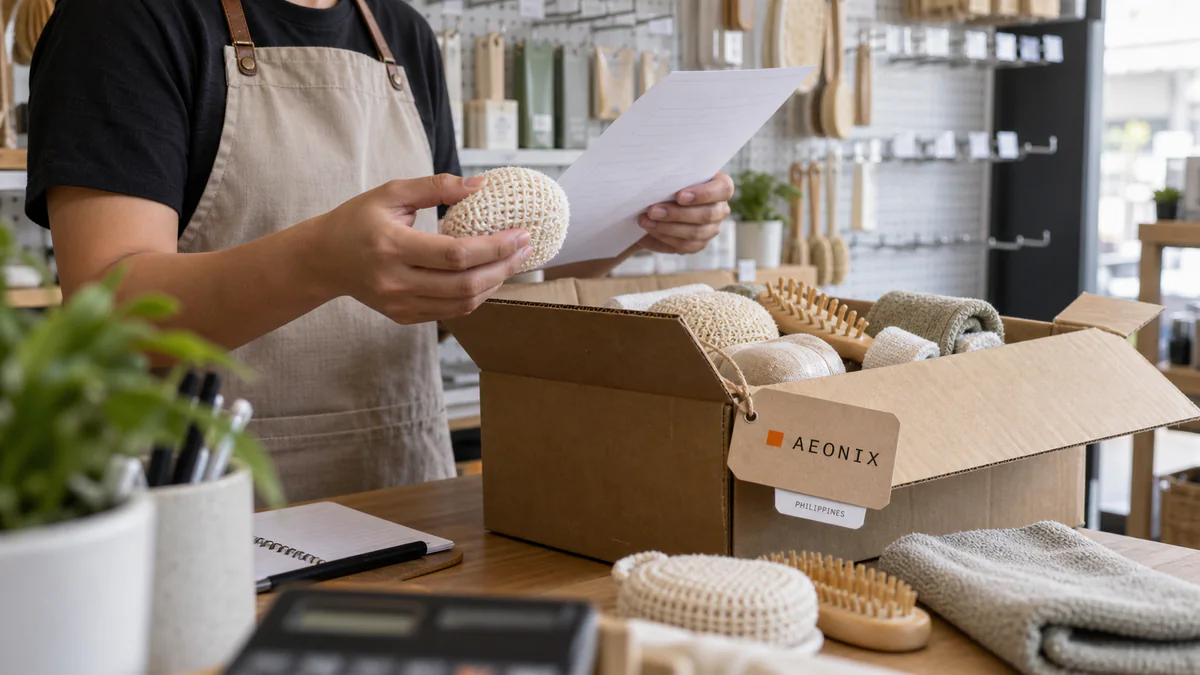
2026 import checklist
Import from China to the Philippines in 2026: BOC checks
Philippines buyers should confirm BOC registration, tax exposure, permits and document quality before shipment.
- Confirm BOC importer accreditation, tax details and broker responsibility before supplier paperwork.
- Classify the product by HS code and estimate customs duty, VAT and excise exposure.
- Check FDA, BPS, NTC or other permits for regulated categories before production release.
- Prepare invoice, packing list, transport document, origin support and product specifications.
- Compare courier, air, LCL and FCL timing against Manila or Cebu release and inland delivery.
Last fact-checked: April 2, 2026. This guide is based on the official sources listed at the end.
Quick answer: Yes, importing from China to the Philippines can still be worth it in 2026, especially for small retailers who need broader assortment, lower MOQ options, or more control over replenishment. China remains one of the easiest supply markets to test, but the Philippine import workflow still needs to be handled properly from day one.
For beginners, the biggest win is not just cheaper buying. It is getting the product, paperwork, and arrival plan aligned before the shipment lands. When the document chain is clean, first orders become repeatable instead of stressful one-off experiments.
If you want help turning this checklist into a live sourcing plan, see our Philippines sourcing support.
Why Philippine buyers still source from China in 2026
China remains attractive to Philippine buyers because supplier variety is still deep, mixed-order conversations are possible, and many categories can be sourced without forcing full-container volume from the first purchase. For small stores, that flexibility matters as much as price.
The 2026 opportunity is strongest when the buyer already knows the local sales channel and treats importing as a supply-chain decision, not as a random bargain hunt. A focused first order usually performs better than a wide, unplanned product assortment.
- Beginners can often start with mixed cartons or an LCL shipment.
- Supplier choice is wider than many local wholesale catalogs.
- Repeat ordering becomes easier once the first customs workflow is documented properly.
What to prepare before you place the first order
Your first practical checkpoint is importer readiness. Before paying the supplier, make sure the Philippine side is prepared to receive the cargo, file the necessary customs documents, and work through release with a broker or customs professional if needed.
The safest beginner workflow is simple: confirm importer accreditation status, confirm product and documentation requirements, model the landed cost, and only then finalize production or freight booking.
| Decision line | What to settle before deposit | Why it changes the first order | Validate with |
|---|---|---|---|
| Importer pathway | The buyer knows whether the shipment will move under a Regular Importer or Non-Regular Importer structure and who will appear on the customs side. | The first order becomes unstable when importer standing is still being discovered after production or freight booking starts. | BOC "Regular Importer versus Non-Regular Importer" pathway guide. |
| Product description and tariff detail | Invoice language and product description are specific enough for customs-side review and broker handling. | Weak descriptions create corrections and delay even when the order size is small. | BOC process-of-importation guidance plus the broker or classification review. |
| Customs-side ownership | One broker or local customs team is already assigned before cargo departs China. | Release becomes expensive when no one owns filing, payment timing, and pickup coordination after arrival. | BOC process-of-importation guidance plus your broker scope note. |
| Landed-cost model | Duties, taxes, terminal charges, and local delivery are included before the PO is approved. | Many first orders fail after arrival-side costs appear, not during supplier negotiation. | Broker quote and destination-charge estimate. |
| Document handoff | Commercial invoice, packing list, and shipment data can reach the Philippine customs side before the arrival notice. | A clean first shipment depends on the receiving side seeing the same file the supplier and forwarder are using. | BOC process-of-importation guidance and your broker document checklist. |

Starter checklist
- Confirm BOC importer accreditation status or the structure you will use
- Check the product description and tariff classification before the deposit
- Prepare the commercial invoice, packing list, and shipment data flow
- Choose the broker or customs-side support before cargo departure
- Model duties, taxes, local release costs, and final delivery
The 2026 policy context beginners should understand
For beginners, the most useful official update is that the Bureau of Customs moved accredited importer validity toward a three-year window. That is helpful because it reduces repeated administrative friction for legitimate import activity, but it does not remove the need for a clean import workflow.
The more important practical point is that Philippine customs procedures remain formal. You still need proper importer standing, correct documents, and a realistic cargo-release plan. The market is accessible, but it is not casual.

- Treat accreditation as a readiness requirement, not as a substitute for customs planning.
- Make sure your commercial documents are specific enough to survive document review.
- Do not confuse a small shipment with a low-documentation shipment.
How a beginner shipment usually moves from China to the Philippines
Most first-time buyers start with supplier confirmation, sample approval, and a small production run that can move by sea LCL, sea FCL, or air depending on urgency and product density. The choice should come from the margin and replenishment strategy, not from habit.
Once the booking is confirmed, the forwarder, supplier, and Philippine receiving side should all be working from the same invoice and packing data. Small discrepancies in quantity, value, or packaging can create outsized delay later.
- Use real packaging dimensions in the freight quote, not rough estimates.
- Make sure the receiving party in the Philippines knows the cargo details before ETD.
- Keep inspection or packing evidence from the supplier for the first shipment.
What happens when the cargo arrives in the Philippines
When the shipment arrives, beginners should expect a sequence rather than a single event: arrival notice, customs entry processing, document review, duty and tax settlement, release, and local pickup or delivery. If the consignee only starts organizing at arrival, storage pressure can build quickly.
This is also where a reliable customs broker or local import team becomes valuable. They help keep the declaration, payment, release, and terminal coordination moving while the buyer focuses on inventory and sales planning.

Starter checklist
- Receive the arrival notice and confirm the final document set
- Coordinate customs filing and any requested corrections immediately
- Pay duties, taxes, and terminal-related charges on time
- Book pickup or delivery as soon as release is confirmed
- Watch storage and warehouse timing to avoid unnecessary charges
How to choose a sourcing partner for the Philippines
A useful sourcing partner should help you reduce execution risk in China before the shipment becomes a customs problem in the Philippines. That means supplier screening, clearer packing control, inspection support, and documents that are ready for the local import side to use.
The partner should also understand that a beginner needs visibility, not just promises. If they avoid sharing supplier identity, inspection evidence, packaging corrections, or shipping files, they are not really helping you build a repeatable import workflow.
Starter checklist
- Ask how factories are screened before a quote is accepted
- Ask what inspection or packing evidence you will receive
- Ask how shipment documents are handed to your local broker or team
- Ask how they support mixed-SKU first orders and reorders
Common mistakes first-time Philippine importers make
The first mistake is underestimating the local arrival stage. Many buyers do decent work in China and then lose money because nobody owns release timing, payment timing, or pickup timing after the cargo lands.
The second mistake is using weak product descriptions or vague invoices. Customs friction often begins with the paperwork quality, not with the product itself. A clean first shipment is usually built on specific, consistent documentation.
- Do not wait until the vessel arrives to choose your customs-side support.
- Do not let invoice and packing details drift between supplier and forwarder.
- Do not assume the first shipment is successful until the cargo is released and delivered.
Frequently asked questions
Can I start importing with a small order into the Philippines?
Yes. Many beginners start with a small LCL or mixed-carton shipment. The important part is that the customs and release workflow is already clear before the goods depart China.
Do I need BOC accreditation before ordering?
You should confirm the import structure before ordering, including accreditation status and who will handle the customs-side process. Waiting until the cargo is already moving creates avoidable risk.
What is the most common cause of delay?
For beginners, delays usually come from inconsistent documents, unclear importer readiness, or a release process that nobody fully owns after arrival.
Why use a sourcing partner for a Philippines shipment?
A sourcing partner helps you screen suppliers, verify packing and quality, and keep the shipment files clean enough for the Philippine import side to work efficiently.
Official sources used in this guide
- Bureau of Customs accreditation page: Official BOC importer accreditation entry point for importers and brokers.
- Bureau of Customs process of importation: Official BOC outline of the import process from customs perspective.
- Bureau of Customs importer path guide: Official June 30, 2025 BOC explanation of Regular Importer versus Non-Regular Importer pathways.
- BOC accreditation validity update: Official update on extending importer accreditation validity to three years.
Submit sourcing request
Can't find what you need?
Start with a product link or photo, an approximate quantity and destination. Other details can follow.