Importing from China to Peru in 2026: A Buyer-Ready Guide
Published by Aeonix Trade.
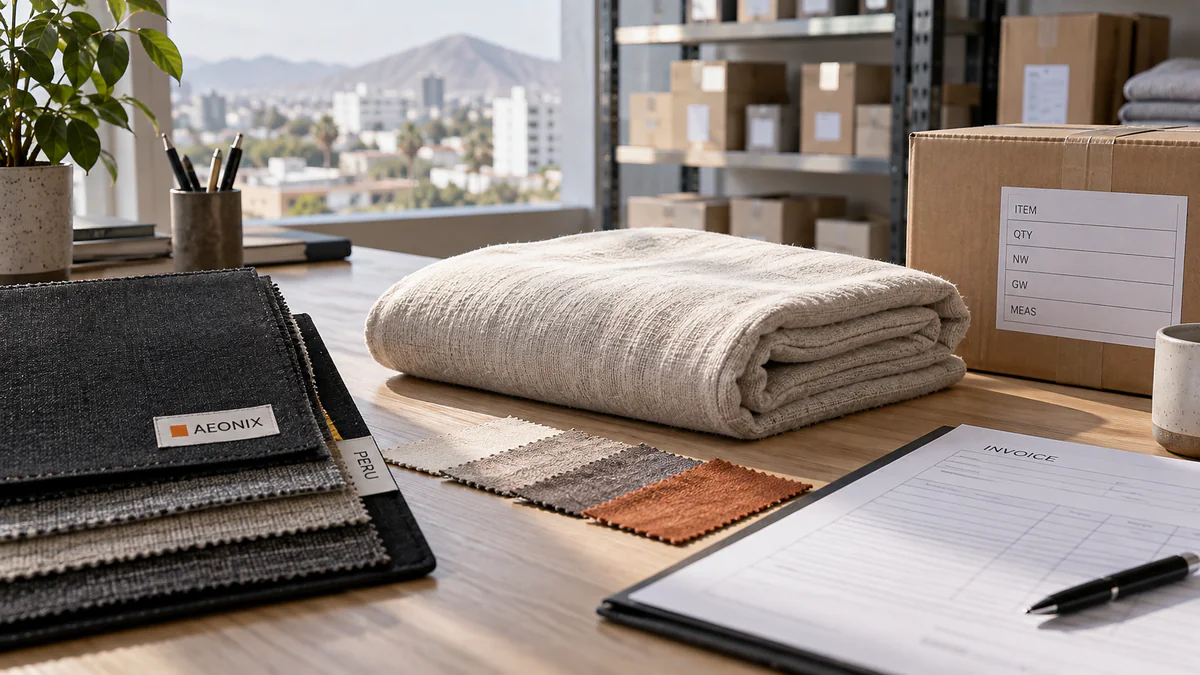
2026 import checklist
What does importing from China to Peru cost in 2026?
Model landed cost with customs value, duty, IGV, freight to Callao and permits before paying the supplier deposit.
- Confirm RUC, importer status and customs broker before the supplier issues final paperwork.
- Map the HS code to customs value, duty, IGV, perception tax and product controls.
- Check Digemid, Senasa, MTC or other permits when the product category is regulated.
- Prepare invoice, packing list, transport document, origin support and product data sheets.
- Compare courier, air, LCL and FCL freight against Callao release, storage risk and inland delivery.
Last fact-checked: April 4, 2026. This guide is based on the official sources listed at the end.
Quick answer: Peru is still worth direct importing in 2026 when RUC, SUNAT readiness, and VUCE screening are solved before the deposit, not after the arrival notice. Once that gate is clear, China can still help retailers, wholesalers, and specialized distributors improve assortment and replenishment economics versus local wholesale supply.
The route is not built for casual importing. For commercial importers, a Peru-bound order should start with RUC, customs readiness under SUNAT, and a quick VUCE screen for regulated goods before the deposit leaves the buyer's account. Occasional individual imports can follow separate simplified thresholds, but that is not the operating model this guide is written for.
If you want help turning this checklist into a live sourcing plan, see our Peru sourcing support.
Quick Verdict: Is importing from China to Peru still worth it in 2026?
Peru remains a workable route when the buyer can import in a registered business structure, model landed cost with IGV and other destination charges included, and confirm whether product permits are needed before shipment.
It is a weak route for buyers hoping to discover tax, permit, or customs obligations after the cargo is already on the water. The lane still rewards disciplined importers, but it does not reward improvisation.
- Good fit: repeat-SKU retailers, import distributors, and buyers replacing expensive or inconsistent local stock.
- Weak fit: one-off buying, unclear product classification, and regulated goods ordered before permit screening.
- Core rule: if the deal fails once duty, IGV, and local release costs are added, the product is not Peru-ready.
Why Peru can still reward direct buying in 2026
Peru still rewards direct buying because many categories remain price-sensitive, local wholesale layers can be expensive, and China still offers low MOQ and flexible mixed-SKU production. That combination gives disciplined buyers room to improve assortment and margin at the same time.
The margin only stays real when the importer controls the file. That means using SUNAT and VUCE requirements as part of sourcing strategy rather than treating them as back-office cleanup after the supplier has already finished production.
- China still offers cost and variety advantages that local wholesale supply often cannot match.
- Peru still favors buyers who can formalize their import workflow early.
- Operational readiness matters more than headline ex-factory price.
Who this route fits, and who should wait
The best-fit buyer is already selling the category and wants to improve terms, packaging, or replenishment. That includes store owners, wholesale traders, and niche-category importers who know what can move locally and can hold stock after release.
The wrong buyer profile is the beginner who has not set up the tax identity, has not screened permits, and has no broker conversation before the goods move. Peru is not a test lane for vague product ideas.
- Best fit: category-focused businesses with known demand and basic customs discipline.
- Watch out: regulated or sector-controlled goods that need an early permit screen.
- Poor fit: buyers with no RUC path, no warehouse plan, and no duty or IGV model.
What buyers should prepare before the first order
Before ordering, a Peru buyer should know who the importer is, whether the product can move under the standard customs process, and whether VUCE or another regulator becomes part of the lane. This is also the moment to agree Incoterms and decide who controls the shipment file.
A first order should never move on supplier optimism alone. Peru buyers need one sheet that combines product description, HS direction, freight mode, tax assumptions, and broker responsibilities before production is locked.
Starter checklist
- Confirm the commercial importer has RUC and a usable SUNAT customs path.
- Screen the SKU in VUCE or the relevant regulator if the goods are controlled or sector-sensitive.
- Build a landed-cost sheet with goods value, freight, duty, IGV, and local release costs.
- Prepare invoice, packing list, and product description wording before cargo departs.
- Assign document ownership between supplier, forwarder, and customs-side support.
Peru first-order control sheet before the deposit
Peru works best when the buyer can decide quickly whether the shipment belongs in the formal commercial-import lane. That means the importer identity, the VUCE question, and the landed-margin test should all be visible before production starts rather than after the factory is already moving.
A simple control sheet keeps the route honest. If one of these lines is still unresolved, the quote is not ready for a commercial yes.

Starter checklist
- Importer identity: the commercial importer has active RUC status and the broker knows who will appear on the declaration.
- Occasional-import exception: if the buyer is not importing commercially, check SUNAT's occasional-import thresholds before assuming the business-import route applies.
- Permit screen: each SKU is marked as standard, VUCE-screened, or tied to a sector authority before production is approved.
- Margin test: the unit still works after duty, IGV, broker, port or CFS, and inland-delivery lines are added.
- Broker handoff: draft invoice wording, packing logic, and HS direction have been shown to the customs-side partner before the deposit is paid.
Policy watch: SUNAT customs discipline and VUCE permit checks set the real bar
The key Peru rule for beginners is not a dramatic 2026 headline change. It is the continuing requirement to import through a formal SUNAT customs process with the correct tax identity and the correct declaration file. That means no buyer should pitch Peru as an easy lane if the importer setup is still uncertain.
The second watch-out is controlled goods. VUCE remains the important screening point for products that need sector approvals before clearance. The practical lesson is simple: check the product before you order it, not when the carrier sends the arrival notice.

- Treat RUC and customs setup as a gate, not as an afterthought.
- Use VUCE early for regulated goods instead of hoping the broker will solve it at arrival.
- Peru tax and release cost should be modeled before deposit, not after production.
What happens after cargo arrives in Peru
Once cargo arrives in Peru, the importer is in a customs-and-payment workflow, not a sourcing workflow. The declaration must line up with the shipment file, duties and taxes need to be settled or guaranteed as required, and release timing depends on clean documents as much as on the product itself.
This is where first shipments become expensive if nobody owns the handoff. Storage, inspection delay, or missing permit support can turn a cheap purchase into an expensive release.

Starter checklist
- Receive the arrival notice and confirm the broker already has the bill of lading or air waybill, invoice, packing list, and any permit support needed for declaration.
- File the import declaration with the same product description, valuation story, and permit status that were checked before sailing.
- Settle duties, IGV, and local customs charges on time.
- Track inspections or document queries quickly so storage does not become the surprise cost center.
- Arrange warehouse intake and inland delivery before the release window gets tight.
How to choose suppliers, brokers, and sourcing support for Peru
A good Peru route depends on role clarity. The supplier makes the goods, a sourcing partner reduces factory and document risk, and the broker or customs agent manages the declaration and release process. Those roles should not blur together without the buyer knowing who owns what.
If you cannot explain who verifies supplier legitimacy, who checks the commercial file before departure, and who will react to customs questions after arrival, then the shipment is not operationally ready.
Starter checklist
- Ask the sourcing side how supplier legitimacy, packing accuracy, and commercial-description quality are verified before export.
- Ask the customs-side partner what SUNAT valuation and product-description details they need before departure, not after arrival.
- Ask who is responsible for proving whether the SKU is standard or needs VUCE or another regulator path.
- Ask the forwarder which Peru destination charges sit outside the freight quote and who owns the first response after the arrival notice.
Frequently asked questions
Do I need VUCE clearance before I book a Peru shipment?
If the product touches a controlled or sector-sensitive category, buyers should screen that VUCE question before booking. The practical mistake is waiting until the arrival notice to discover that the product was not in a standard path.
Can I start with a small Peru order or LCL shipment?
Yes, but small shipment size does not remove the SUNAT, tax, or permit requirements. The lane only works if the shipment is still customs-ready after LCL and destination charges are added.
Why does Peru importing feel expensive at arrival even when the factory quote looked good?
Because buyers often quote only product and freight. The real cost picture includes duty, IGV, broker handling, and the cost of delays if the customs file is incomplete.
Official sources used in this guide
- SUNAT: Peru's official tax and customs authority.
- SUNAT on the Gob.pe platform: Official government portal entry for SUNAT procedures and services.
- VUCE Peru: Official single window for permits and trade-related approvals in Peru.
- SUNAT import requirements: Official SUNAT page confirming when commercial imports require RUC and when narrow occasional-import exceptions apply.
Submit sourcing request
Can't find what you need?
Start with a product link or photo, an approximate quantity and destination. Other details can follow.