Importing from China to India in 2026: A Beginner Guide That Starts With IEC
Published by Aeonix Trade.
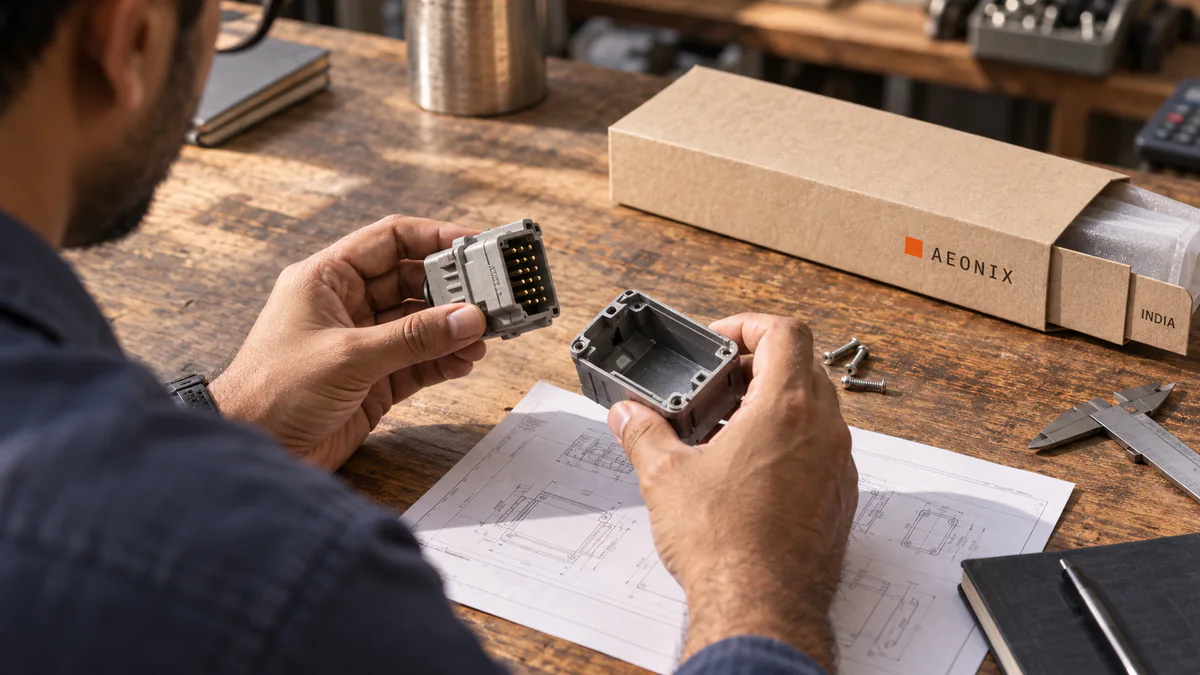
2026 import checklist
How to import goods from China to India step by step in 2026
For how to import goods from China to India step by step in 2026, confirm IEC/ICEGATE, HS code, BCD, IGST, Bill of Entry data and shipping route before deposit.
- Set up IEC, ICEGATE access and GST details before the supplier issues the proforma invoice.
- Confirm the supplier, product specification, samples and commercial invoice data before deposit.
- Classify the goods by HS code and check BCD, IGST, compensation cess and policy restrictions.
- Prepare packing list, Bill of Lading or Air Waybill, insurance and Bill of Entry data.
- Choose courier, air, LCL or FCL shipping against duty cash flow and warehouse receiving dates.
Last fact-checked: April 2, 2026. This guide is based on the official sources listed at the end.
Quick answer: Yes, importing from China to India can still make sense in 2026, especially for standardized goods, components, and production inputs. Official Indian policy sources still describe China-linked imports as significant in sectors such as electronics, pharma, telecom, and power.
For beginners, the opportunity is real but the gatekeeping is formal. The first shipment usually succeeds or fails on IEC, policy status, ICEGATE readiness, and regulator screening long before the goods arrive at customs.
If you want help turning this checklist into a live sourcing plan, see our India sourcing support.
Why India still imports from China in 2026
India remains commercially connected to China for a wide range of goods because factory depth, component availability, and standardized manufacturing scale still matter. That is especially true for buyers who need production inputs, intermediate goods, or repeatable finished products with consistent sourcing options.
What changed for beginners is not that importing became impossible. It is that the buyer now has to behave like an importer from the start. The product's policy status and customs-readiness matter as much as the unit price.
- China still matters for components, inputs, and repeatable factory-made goods.
- India's import route can still be efficient once the policy and filing basics are in place.
- The best beginner products are the ones with clear policy status and manageable regulator exposure.
The first India import question is policy status
The smartest first question in India is not whether the factory is cheap. It is whether the item is free, restricted, prohibited, or tied to a product-specific rule under the import policy framework. That answer shapes the entire transaction.
This matters because some categories trigger BIS, food, drug, plant, animal, or other agency controls. If the product-policy check happens too late, the shipment can become a customs problem even when the supplier side looked fine.

- Treat the ITC (HS) check as part of product selection.
- Do not assume a common consumer product is automatically a free import.
- The cleaner the policy status, the safer the first shipment.
What to prepare before you place the order
A beginner import into India usually starts with IEC and ICEGATE readiness. The buyer should already have the IEC in place unless a clear exemption applies, and the customs-filing side should be ready to use ICEGATE for electronic processing and tracking.
The buyer should also prepare a complete shipment file before the goods leave China. That includes invoice, packing list, transport document, and any category-specific certificate or approval that the product needs. In India, the customs file is often where the first shipment becomes either calm or chaotic.
| Decision line | What to settle before ordering | Why it changes the first order | Validate with |
|---|---|---|---|
| IEC readiness | The importer already has an IEC in place, or a clearly documented exemption has been confirmed before the PO is approved. | India gets expensive when the buyer treats IEC like a task to finish after production is underway. | DGFT FTP 2023 and DGFT Handbook of Procedures Chapter 2. |
| ICEGATE filing setup | The customs side is already ready to register, file, and track through ICEGATE. | Electronic filing delays usually reflect front-end setup problems, not supplier problems. | ICEGATE 2.0 registration FAQ. |
| Policy-status check | The buyer has checked whether the product is free, restricted, prohibited, or regulator-linked under ITC (HS). | The safest first order is the one whose policy status is already known before freight mode is chosen. | DGFT ITC (HS) general notes. |
| Regulator exposure | Any BIS, food, drug, plant, animal, or similar regulator touchpoint has been screened before deposit. | A commercially attractive SKU can still be a poor first import if regulator exposure is discovered too late. | DGFT ITC (HS) notes plus the relevant regulator pathway. |
| Bill-of-Entry document pack | Invoice, packing list, transport file, and support certificates are already organized for Bill of Entry and e-Sanchit use. | India first orders usually get chaotic when the document pack is assembled only after the goods are already near arrival. | ICEGATE FAQ covering prior Bill of Entry and e-Sanchit. |

Starter checklist
- Get the IEC and keep the business details current
- Register on ICEGATE for customs e-filing
- Check the product's policy status under ITC (HS)
- Screen BIS, FSSAI, CDSCO, or quarantine exposure where relevant
- Prepare invoice, packing list, transport document, and support certificates
How a first shipment usually moves into Indian customs
When the shipment is on the way, the customs side typically prepares the Bill of Entry and the supporting digital file. ICEGATE makes it possible to file a prior Bill of Entry before arrival, which can help organized buyers move faster when the timing and documents line up properly.
That does not remove customs review. It simply means the buyer has a chance to get ahead of the arrival rather than beginning the paperwork after the goods already land.

- A prior Bill of Entry can help if the arrival timing is managed correctly.
- Supporting documents should already be digitized and matched to the filing path.
- The first shipment is smoother when the document pack is built before the freight departure.
What happens when cargo arrives in India
At arrival, the Bill of Entry file is assessed through the customs workflow and the supporting documents are uploaded through e-Sanchit. Customs may process the file directly, raise a query, or route the goods into examination or appraisal depending on the case.
The practical release point is Out of Charge. That happens only after duty and IGST are handled and the examination path is complete. For beginners, this is the stage where earlier policy and document discipline pays off.
Starter checklist
- Confirm the Bill of Entry and support documents are aligned
- Upload the necessary papers through e-Sanchit
- Respond quickly to customs queries or examination requests
- Complete duty and IGST payment to reach Out of Charge
How to choose a sourcing partner for India-bound orders
A good sourcing partner for India should be comfortable talking about policy status, regulator exposure, and document readiness, not just supplier pricing. The most useful partner helps the buyer avoid choosing a product that looks easy commercially but is messy legally or operationally.
The partner should also know when to stop and check the category. That is especially important in regulated consumer goods, food-related categories, and electronics where agency rules can be the real make-or-break factor.
Starter checklist
- Ask how they screen product-policy status before confirming a supplier
- Ask how they flag BIS, food, drug, or quarantine risk
- Ask how the shipment file is prepared for ICEGATE and customs-side use
- Ask how they handle mixed orders when one SKU is regulated and another is not
Common beginner mistakes in India
The first mistake is treating IEC and ICEGATE as tasks to finish later. In practice, they are part of the buying decision because they determine whether the shipment can be handled cleanly at all.
The second mistake is buying a product without checking its policy status. In India, a supplier quote is never enough by itself. The product also needs a workable customs and regulator path.
- Do not buy first and check policy status later.
- Do not assume customs will fix missing regulator approvals at arrival.
- Do not leave the Bill-of-Entry file until after the goods already land.
Frequently asked questions
Can I still start with a small import into India?
Yes, but even a small import should go through the same IEC, policy-status, and customs-file discipline as a larger order. Small order size does not remove the formal import requirements.
What is the first thing I should do before importing into India?
For most beginners, the first practical step is getting the IEC and then checking the product's import-policy status before speaking about freight or final pricing.
Why is the policy check so important in India?
Because the product may be free, restricted, prohibited, or controlled by another regulator, and that status determines whether the order is workable in the first place.
What is the safest first-step workflow for India?
Start with IEC, policy status, and ICEGATE readiness, then build the shipment file before the goods leave China.
Official sources used in this guide
- Ministry of Commerce answer on China imports: Official February 6, 2026 answer describing why China-linked imports remain significant in major Indian sectors.
- DGFT FTP 2023: Official foreign trade policy setting the current import framework and IEC baseline.
- DGFT Handbook of Procedures Chapter 2: Official procedures document covering IEC upkeep and timing for updates after business changes.
- DGFT ITC (HS) general notes: Official import-policy notes addressing restricted goods and common regulator touchpoints.
- ICEGATE 2.0 registration FAQ: Official ICEGATE registration FAQ covering paperless registration requirements and validation steps.
- ICEGATE FAQ: Official customs-filing FAQ covering prior Bill of Entry, e-Sanchit, queries, and Out of Charge.
Submit sourcing request
Can't find what you need?
Start with a product link or photo, an approximate quantity and destination. Other details can follow.