Importing from China to Guatemala in 2026: A Buyer-Ready Guide
Published by Aeonix Trade.
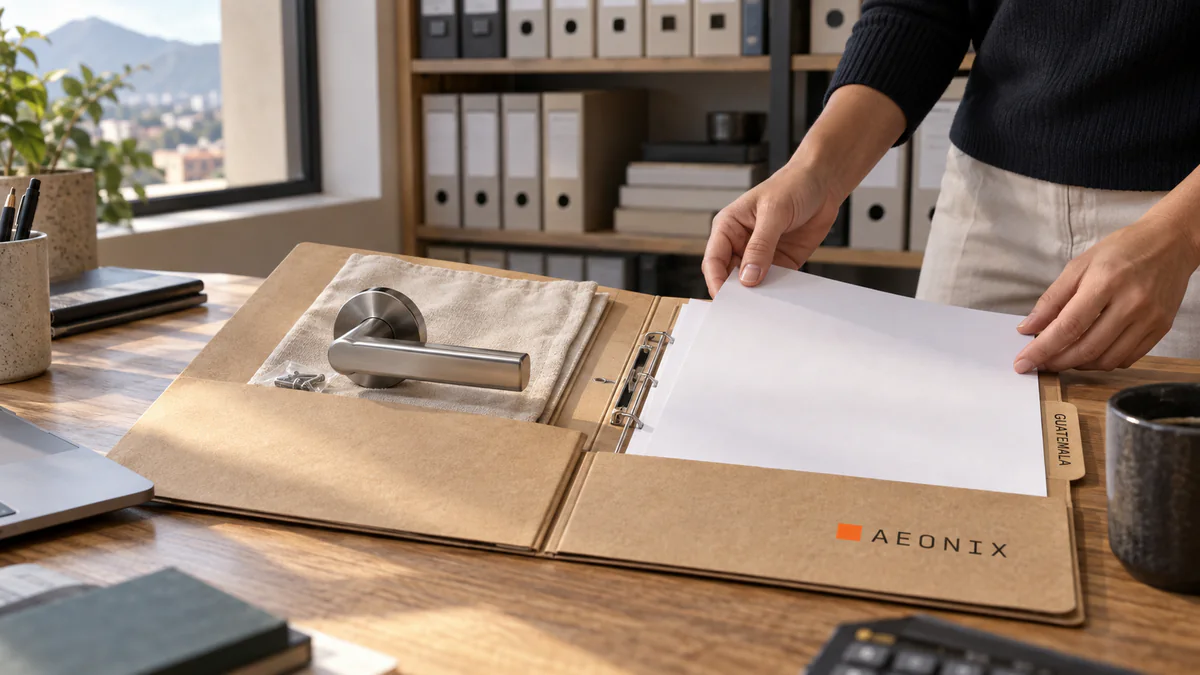
2026 import checklist
Import from China to Guatemala in 2026: SAT, DUA and duty checklist
Confirm NIT/SAT setup, HS classification, DUA data, customs duty, IVA, permits, documents and port release timing before deposit.
- Confirm NIT, SAT importer status and customs broker responsibility before the supplier issues final paperwork.
- Classify the product by HS code and estimate DAI, IVA, customs value and any category restriction.
- Check health, telecom, agriculture or standards permits when the product category is regulated.
- Prepare invoice, packing list, transport document, origin support and Spanish product details.
- Plan courier, air, LCL or FCL around Puerto Quetzal or Santo Tomas release and inland delivery.
Last fact-checked: April 4, 2026. This guide is based on the official sources listed at the end.
Quick answer: Guatemala can still reward direct buyers in 2026, but only when SAT importer readiness is already solved before the order is locked. China still attracts buyers here because it can deliver better assortment and purchasing flexibility than many local distributors, but the lane stops working fast when the importer path is vague.
The important limit is that Guatemala is not a lane for casual buying. The buyer should treat SAT registration, customs setup, and regulated-product screening as part of product selection rather than as post-shipment admin.
If you want help turning this checklist into a live sourcing plan, see our Guatemala sourcing support.
Quick Verdict: Is importing from China to Guatemala still worth it in 2026?
Guatemala works well for formal importers who can run cargo through the SAT customs path, screen sector approvals early, and keep valuation and paperwork tight.
It is not a strong fit for buyers who only know the product cost and still do not know who the importer is, how DUCA-related formalities will be handled, or whether the goods trigger special permissions.
- Good fit: tax-registered import businesses with repeat categories and broker support.
- Weak fit: informal buying, regulated goods without prior screening, and under-documented first orders.
- Core rule: if the buyer cannot explain the customs and tax owner before booking, the shipment is not ready.
Why Guatemala can still reward direct buying in 2026
The business case for Guatemala remains simple: many buyers still want better pricing, broader assortment, or better reorder control than local wholesale channels can provide. China remains one of the few sources that can combine price flexibility with small or mixed first orders.
The operational advantage only holds if the importer uses a proper Guatemala customs workflow. That is why the importer identity, permit logic, and declaration path need to be settled before the goods move.
- China still offers better MOQ flexibility than many local alternatives.
- Guatemala still rewards buyers who control the declaration path early.
- Margin improvement disappears fast when permit or release delays are ignored.
Who this route fits, and who should wait
The best-fit buyer is already running a real business, has SAT and tax discipline, and knows the exact category they want to import. These buyers can use China to improve cost, packaging, or assortment without guessing their way through the first container or LCL movement.
The poor-fit buyer is someone testing demand without import discipline, or someone buying products that may require sanitary, technical, or trade-window approvals without checking them first.
- Best fit: retailers, traders, and wholesalers with working customs-side support.
- Watch out: food, health, or controlled products that trigger extra approvals.
- Poor fit: buyers trying to use Guatemala as a low-document shortcut market.
What buyers should prepare before the first order
Guatemala preparation starts with tax and customs identity. The buyer needs the right SAT setup, a clean commercial description, and clarity on whether the goods need any approval through VUCE or another sector channel before booking.
For commercial importers, the practical sequence is: NIT and Agencia Virtual access first, SAT importer-registry enrollment second, declaration owner and customs path third, and permit routing only when the product category actually needs a trade-window or regulator step. That sequence keeps the broker from discovering the missing piece at arrival.
A good first order also needs a margin sheet that includes inland delivery, customs charges, and delay risk. That prevents the first arrival from becoming the moment the buyer discovers the route was never profitable.
Starter checklist
- Confirm NIT, Agencia Virtual access, SAT importer-registry readiness, and the customs declaration path before ordering.
- Screen whether the product category needs a permit, sanitary approval, or other regulator involvement.
- Model landed cost with duty, taxes, freight, and local release costs included.
- Prepare invoice, packing list, and origin information before the goods depart.
- Assign one owner for document handoff to the broker or customs-side representative.
Guatemala first-order customs map
Guatemala gets much easier when the buyer maps the importer path in the same order customs will see it. The first question is not freight. It is whether the commercial importer is actually ready to transmit the declaration under the SAT path that now runs through Agencia Virtual onboarding.
If the importer-registry step is unfinished, the product-specific permit question is unresolved, or the declaration owner is still fuzzy, then the shipment is not ready even if the factory quote looks good.

Starter checklist
- Importer path: NIT is active, Agencia Virtual access is working, and SAT importer registration has been completed or confirmed before the PO is locked.
- Declaration owner: the buyer knows which customs-side partner will transmit and monitor the declaration once the cargo reaches Guatemala.
- Permit fork: each SKU is marked as standard or permit-linked before VUCE or regulator routing is requested.
- Document pack: invoice, packing list, origin details, and product description already match the declaration story the broker plans to use.
- Day-30 plan: taxes, release funds, pickup ownership, and warehouse intake timing are known before sailing, not after the arrival notice.
Policy watch: SAT and permit discipline matter more than cheap quoting
The Guatemala buyer's main compliance risk in 2026 is not failing to hear about one dramatic new reform. It is assuming the lane is simple because the order value is small. The real import gate is still proper SAT readiness and category screening for any required permit or technical approval.
That point became more concrete on January 9, 2024, when SAT announced that importer registration could be completed through Agencia Virtual. For beginners, that means the importer-registry step is no longer a vague back-office promise. It is a specific onboarding task that should be complete before the first commercial shipment is approved.
That is why the first good Guatemala shipment starts with classification and permit logic rather than with freight shopping. If the permit question is unresolved, the quote is not decision-ready.

- Start with tax and customs readiness, not shipping rates.
- Use official permit channels early for controlled products.
- Treat declaration quality as part of buying discipline.
What happens after cargo arrives in Guatemala
After arrival, the Guatemala import process becomes a customs-release process. The declaration needs to align with the file, taxes must be paid, and inspections or document requests can delay release if the shipment description is weak.
This is where buyers lose money when ownership is fuzzy. If nobody owns the customs response window, storage or delay quickly becomes more expensive than the supplier discount looked attractive.

Starter checklist
- Confirm the broker or customs agent has the complete shipment file, importer-registration details, and permit support before declaration.
- Respond quickly to any review, inspection, or valuation question from customs.
- Pay taxes and destination charges without creating avoidable release delays.
- Coordinate pickup and warehouse intake around the actual release timing, not guesswork.
How to choose suppliers, brokers, and sourcing support for Guatemala
In Guatemala, a sourcing partner should help control supplier risk and paperwork quality, while the customs-side partner keeps the declaration and release disciplined. The importer should know exactly where one role ends and the next begins.
If a forwarder or supplier is being treated like a customs strategist without clear responsibility, the buyer is taking unnecessary risk. The strongest first shipments are the ones with explicit ownership at every step.
Starter checklist
- Ask the sourcing side how supplier legitimacy, carton accuracy, and origin data are checked before export.
- Ask the customs-side partner whether SAT importer registration is already active and what declaration data must be fixed before departure.
- Ask which exact permit or regulator touchpoint applies to the SKU and who will prove that answer before booking.
- Ask who is watching the arrival and release timeline on the Guatemala side and who answers customs if a valuation or document question appears.
Frequently asked questions
Does SAT importer registration need to be complete before I ship to Guatemala?
For commercial buyers, that importer-registry step should be completed before the first shipment is approved. The route becomes expensive when the broker discovers the importer path is still unfinished after cargo is already moving.
Can I import small mixed orders into Guatemala?
Yes, but small order size does not remove the need for tax identity, customs discipline, or permit screening where required.
What usually makes Guatemala shipments expensive after arrival?
Usually incomplete paperwork, late customs responses, or discovering permit issues too late in the process.
Official sources used in this guide
- SAT Guatemala: Official tax and customs authority portal in Guatemala.
- SAT importer registration via Agencia Virtual: Official SAT notice dated January 9, 2024 explaining that importers can complete registration through Agencia Virtual.
- MINECO: Official Ministry of Economy site for trade and business formalities in Guatemala.
- VUCE Guatemala: Official single-window portal for trade procedures and permits.
Submit sourcing request
Can't find what you need?
Start with a product link or photo, an approximate quantity and destination. Other details can follow.