Importing from China to Chile in 2026: A Practical Guide for Small Buyers
Published by Aeonix Trade.
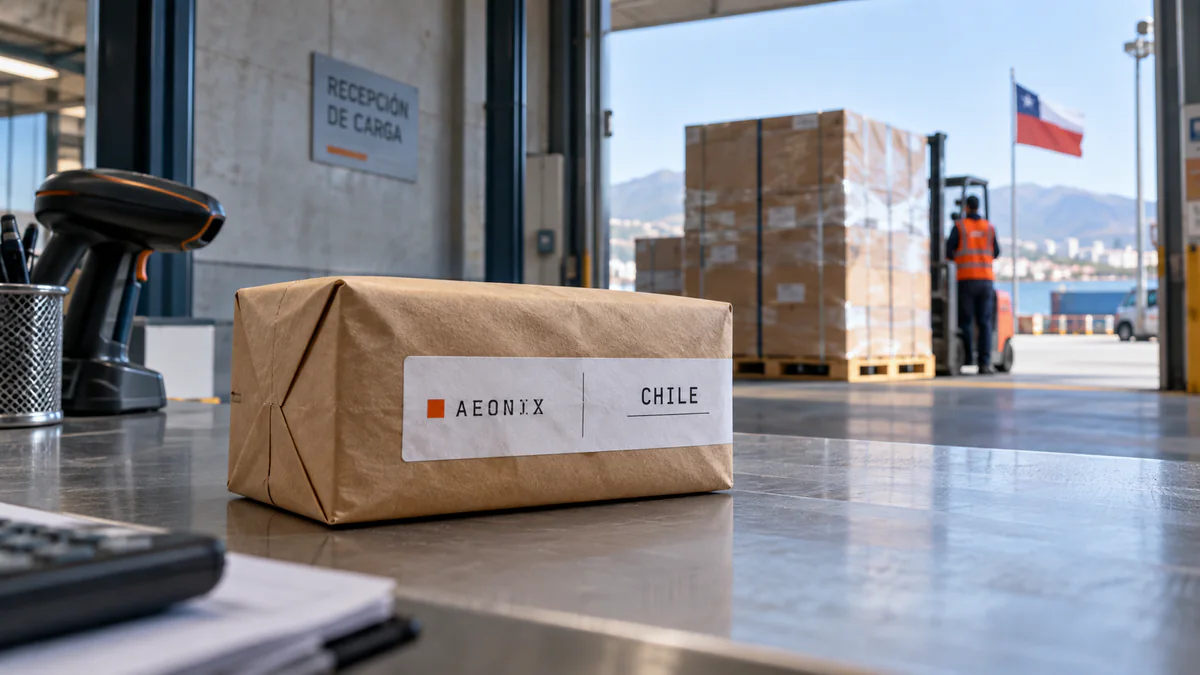
2026 import checklist
Are imported goods expensive in Chile in 2026?
Imported goods can get expensive when customs value, VAT, duty, freight and storage are not modeled before deposit.
- Confirm the importer RUT, customs broker and product classification before paying a deposit.
- Estimate customs value, ad valorem duty, VAT, freight and insurance as a landed-cost range.
- Check SAG, ISP, SEC or other agency certificates when the product category requires approval.
- Prepare invoice, packing list, transport document, origin support and product specification sheets.
- Compare air, LCL and FCL freight against port storage risk, release timing and inland delivery.
Last fact-checked: April 2, 2026. This guide is based on the official sources listed at the end.
Quick answer: Yes, importing from China to Chile can still be worth it in 2026, and for many beginners it is one of the cleaner Latin American starting points. Chile now has a more explicit tax path for smaller remote purchases, while formal commercial imports can still benefit from China-related trade preferences when origin rules are met.
That does not mean every shipment is simple. The real beginner advantage comes from knowing whether the order is still a low-value remote purchase, a courier import, or a formal customs entry before you place the order.
If you want help turning this checklist into a live sourcing plan, see our Chile sourcing support.
Why Chile still makes sense for beginners
Chile remains attractive for small buyers because the official rules make the route distinction clearer than in many neighboring markets. Smaller remote purchases, courier imports, and formal commercial cargo do not all follow the same path, and that clarity helps beginners avoid accidental customs mistakes.
Chile also keeps a visible trade-agreement structure with China. For formal imports, that matters because landed cost may improve when the product qualifies for the applicable trade treatment and the origin proof is handled properly.
- China still gives Chilean buyers flexible MOQ and mixed-order sourcing options.
- Chile's official systems now separate low-value remote goods from formal imports more clearly.
- The market rewards buyers who choose the right customs route before paying the supplier.
The 2025 to 2026 rule change that small buyers should know first
The most important practical change for beginners is Chile's IVA-on-goods regime for remote purchases up to USD 500. This is important because it changes how smaller online or remote purchases are taxed and processed, especially when the platform is registered with Chile's tax authority.
For a beginner, the lesson is simple: do not assume that all small China purchases are treated as ordinary imports at arrival. In some cases, the tax handling already started earlier in the transaction, which changes what happens when the goods enter Chile.

- The low-value remote-goods route is now an explicit planning lane.
- The ordinary import-tax structure still matters outside that simplified regime.
- If the shipment grows, the workflow can change quickly from simple to formal.
What to prepare before you place the order
The first step is to decide what kind of transaction this really is. If the purchase is small and remote, the IVA-goods regime may matter. If it is a courier shipment, the simplified customs route may be available only up to a published threshold. If it is a full commercial import, then origin proof, customs representation, and formal entry planning need to be ready early.
Beginners should also screen whether the goods are prohibited or need prior authorization. That is especially important in food, health, and controlled-product categories where customs readiness depends on more than just freight paperwork.
| Decision line | What to settle before ordering | Why it changes cost or process | Validate with |
|---|---|---|---|
| Remote-goods regime versus ordinary import | The buyer knows whether the transaction still fits Chile's IVA-on-goods lane for remote purchases up to USD 500 or belongs in the ordinary import path. | The tax logic changes before arrival when the transaction sits inside that specific low-value regime. | SII IVA-on-goods regime guidance. |
| Courier threshold versus formal entry | The shipment value still fits the courier threshold, or the buyer has already accepted that the order needs a formal Declaracion de Ingreso route. | A first order becomes confusing when the buyer assumes DIPS applies above the published threshold. | Aduanas courier resolution. |
| Restricted-goods and prior-authorization exposure | The product has been screened for prohibited goods or prior authorizations before the supplier PI is approved. | Some Chile categories stay simple only until the product type triggers a different authority or permission path. | Aduanas prohibited-goods guidance. |
| Origin-proof strategy | If the order is a formal commercial import, the buyer already knows whether China-origin proof will be collected and used properly. | The economics of a formal Chile shipment can change materially once agreement-based treatment is either available or unavailable. | SUBREI Chile-China agreement materials and customs-side file planning. |
| Customs-agent handoff | The buyer already knows whether a customs agent will be required once the cargo crosses out of the simplified lane. | Chile stops feeling simple the moment the shipment outgrows the small-lane assumptions. | Aduanas courier resolution and your customs-side operating plan. |

Starter checklist
- Confirm whether the purchase is a low-value remote buy or a formal import
- Check whether the selling platform is registered for the IVA-goods regime when relevant
- Review product restrictions or prior authorization requirements
- Prepare the invoice, transport documents, and origin proof where needed
- Confirm whether the shipment fits the courier route or needs a customs agent
Courier shipments versus formal imports
This distinction matters more than many beginners expect. Aduanas keeps a simplified route for courier imports up to a published threshold. Above that point, the cargo has to move into formal Declaracion de Ingreso handling with the customs-side formalities that come with it.
That means a buyer can outgrow the easy route without changing product category at all. Sometimes the only thing that changes is shipment value, and suddenly the customs workflow becomes much more formal. That is why the best time to choose the route is before the shipment leaves China.
- A courier-friendly first order does not prove that the next larger order will use the same route.
- If the cargo is above the simplified threshold, treat it as a formal import from day one.
- Origin documentation matters more once the transaction becomes a true commercial import.
What happens when cargo arrives in Chile
At arrival, the handling depends on the route already chosen. In a low-value remote-goods case, the tax treatment may already have been addressed under the new regime. In a courier case, the DIPS route may apply if the shipment stays within the official limit. In a formal import, the Declaracion de Ingreso and the ordinary customs process take over.
In each case, the buyer still benefits from document discipline. If customs or another authority needs to review the file, being organized before arrival is what keeps the first shipment calm.

Starter checklist
- Confirm which tax and customs regime applies at arrival
- Present the DIPS or Declaracion de Ingreso file as required
- Settle the taxes and charges due
- Be ready for aforo or other customs review if assigned
How to choose a sourcing partner for Chile-bound orders
A good sourcing partner for Chile should understand more than supplier pricing. They should know when an order still fits a smaller route, when origin proof matters, and when customs-agent support becomes necessary for a formal import.
The partner should also be direct about limits. If they talk as if every Chile shipment is equally simple, they are probably hiding risk rather than managing it.
Starter checklist
- Ask whether they can support origin-proof collection for China-origin goods
- Ask how they distinguish courier imports from formal commercial imports
- Ask how product restrictions are screened before booking freight
- Ask how customs-agent handoff is handled when the shipment becomes formal
Common beginner mistakes in Chile
The most common mistake is assuming that a small first order proves the entire market is simple. In reality, Chile has several different lanes, and the route changes with value, channel, and product type.
The second mistake is ignoring origin and tax planning until the goods are already moving. If the order is commercial, those details belong in the buying decision from the start.
- Do not assume all Chile imports follow the same tax and customs logic.
- Do not wait until arrival to find out whether a customs agent is required.
- Do not forget origin planning if the shipment is meant to benefit from China-related trade treatment.
Frequently asked questions
Can I still start with a small order in Chile?
Yes. Chile is one of the cleaner starting markets for small buyers, but you still need to know whether the shipment is a remote low-value purchase, a courier import, or a formal commercial entry.
What changed most for small Chile purchases?
The biggest shift is the IVA-on-goods regime for remote purchases up to USD 500, which changed how smaller purchases can be taxed and processed.
When do I need to think like a formal importer?
Once the order goes beyond the simplified courier threshold or becomes a true commercial shipment, you should treat it as a formal import with origin, tax, and customs-entry planning.
What is the safest first-step workflow for Chile?
Decide the route first, then align tax treatment, origin paperwork, and customs support before you place the order with the supplier.
Official sources used in this guide
- SII IVA goods regime: Official page for the IVA regime on remote goods up to USD 500, including 2025 and 2026 implementation dates.
- SII indirect taxes: Official summary of ordinary import taxation in Chile and how trade agreements can affect it.
- SUBREI Chile-China agreement: Official trade-agreement portal for Chile-China materials and origin-related documentation.
- SICEX FAQ: Official single-window FAQ covering digital import-operation support and user access.
- Aduanas courier resolution: Official customs resolution for courier imports, including the DIPS threshold and formal-entry handoff point.
- Aduanas prohibited goods guidance: Official Aduanas page on restricted and prohibited goods and the need for prior authorizations.
Submit sourcing request
Can't find what you need?
Start with a product link or photo, an approximate quantity and destination. Other details can follow.